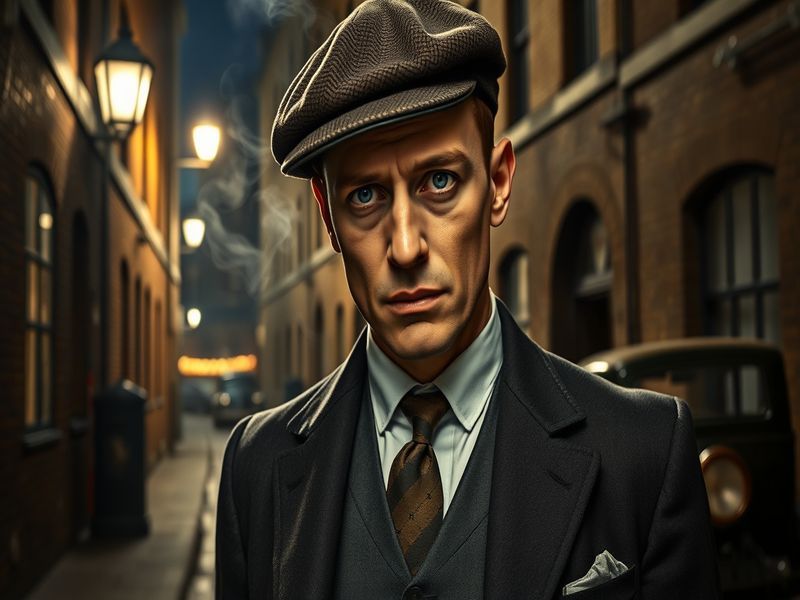
Tommy Shelby: The Complex Antihero of Peaky Blinders Explored
Thomas Shelby, played by Cillian Murphy, is one of modern television’s most compelling characters. From the gritty streets of post-World War I Birmingham to the heights of political and criminal power, Tommy’s journey in Peaky Blinders is a masterclass in ambition, trauma, and moral ambiguity. His story transcends the gangster genre, offering a nuanced exploration of masculinity, class struggle, and the cost of power.
The Rise of a Post-War Outsider
Tommy Shelby emerges from the shadows of the Great War, a decorated soldier haunted by the horrors he witnessed. Unlike the flashy, aristocratic villains of traditional crime dramas, Tommy is a working-class intellectual—self-educated, calculating, and driven by a desire to reclaim agency over his life. The war left him with a limp, a stutter, and a reputation as a ruthless survivor. These vulnerabilities become both his greatest weaknesses and his most potent weapons.
His rise within the Peaky Blinders gang is not just about brute force but strategic brilliance. Tommy recognizes early that the old ways of gang warfare are unsustainable. Instead, he pivots toward legitimate business, leveraging his wartime connections to establish a network of trade and finance. This transition from street thug to corporate mogul mirrors the real-world evolution of organized crime in the 20th century, where power shifted from muscle to money.
A Character Built on Contradictions
What makes Tommy Shelby unforgettable is his paradoxical nature. He is at once:
- Compassionate and calculating: Tommy cares deeply for his family, particularly his younger siblings, but his love is often expressed through manipulation.
- Moral and amoral: He abhors unnecessary violence yet orchestrates some of the series’ most brutal acts.
- Humane and monstrous: His PTSD-driven hallucinations of Grace and his children reveal a man tormented by his choices, yet he remains willing to sacrifice lives for his vision.
This duality forces viewers to confront uncomfortable questions: How much of Tommy’s cruelty is self-defense, and how much is the corruption of absolute power? His relationship with Inspector Chester Campbell, played by Sam Neill, is a particularly fascinating dynamic. Campbell, a Protestant outsider in Catholic Belfast, shares Tommy’s intelligence and ruthlessness. Their verbal sparring is less about good versus evil and more about two men who understand each other’s methods too well.
The Shelby Empire: Power, Family, and Betrayal
The Shelby family is the beating heart of Peaky Blinders, but their loyalty is a fragile thing. Tommy’s leadership is constantly tested by the ambitions of his siblings—Arthur’s volatility, John’s impulsiveness, and Ada’s growing independence. Each sibling represents a different facet of Tommy’s psyche: Arthur embodies his rage, John his recklessness, and Ada his capacity for growth beyond the family’s criminal legacy.
Yet, the Shelby empire is built on shifting sands. Tommy’s marriages—first to the enigmatic Grace, then to the calculating Lizzie—highlight his inability to trust or be vulnerable. Grace’s death leaves a void that no amount of power can fill, while his marriage to Lizzie is a strategic alliance as much as a personal one. The series’ later seasons introduce new threats, from government conspiracies to foreign adversaries, but the most damaging conflicts often come from within. Tommy’s own family becomes his greatest vulnerability, a theme that resonates with real-world dynastic struggles in politics and business.
The Cost of Ambition: Tommy’s Psychological Toll
Tommy Shelby is a man who has everything—wealth, respect, influence—but nothing he truly wants. His nightmares, his reliance on alcohol and morphine, and his obsession with legacy paint a picture of a man trapped by his own success. The series doesn’t shy away from depicting the psychological toll of his choices. In Season 5, his hallucination of Grace forces him to confront the emptiness of his victories. By Season 6, even his trademark stoicism cracks under the weight of his failures.
This psychological depth sets Tommy apart from typical antiheroes. Unlike Tony Soprano or Walter White, who embrace their darker sides, Tommy resists his own humanity. His stutter, a physical manifestation of his trauma, returns whenever he is under extreme stress—a subtle but powerful reminder that the war never truly ended for him. It’s a brilliant performance by Murphy, who communicates volumes with silence and a glance.
Peaky Blinders Beyond the Character: Cultural Impact and Legacy
Tommy Shelby’s influence extends far beyond the confines of the show. Peaky Blinders has become a cultural touchstone, inspiring fashion trends, music playlists, and even political discourse. Tommy’s aesthetic—sharp suits, slicked-back hair, and a cigarette dangling from his lips—has been emulated worldwide. The show’s blend of historical drama, crime saga, and social commentary has redefined prestige television for a new generation.
But the series’ true achievement is its reimagining of the antihero archetype. Tommy Shelby is not a rebel with a cause; he is a man who adopts causes to serve his own survival. His story challenges the glorification of gangsters, presenting Tommy as both a victim and a villain. This complexity invites viewers to question their own moral boundaries. Is Tommy a hero because he fights for his family’s survival, or is he a monster because he sacrifices others to maintain power?
The show’s final season, which explores Tommy’s descent into paranoia and his eventual exile, serves as a cautionary tale about the dangers of unchecked ambition. The Birmingham of Tommy’s youth is gone, replaced by a world where his methods are obsolete. The series ends with him leaving England, a broken man in a world that no longer needs him. It’s a bittersweet conclusion that underscores the transient nature of power.
Why Tommy Shelby Resonates in 2024
In an era where audiences crave morally complex characters, Tommy Shelby stands out. His story reflects contemporary anxieties about class, mental health, and the ethics of capitalism. The rise of populist leaders and the glorification of self-made men in politics and business mirror Tommy’s own trajectory. Yet, unlike many real-world figures, Tommy is forced to confront the consequences of his actions. The show’s exploration of trauma, particularly PTSD, also feels prescient in a world where mental health is increasingly discussed but often misunderstood.
For fans looking to dive deeper into the world of Peaky Blinders, Dave’s Locker offers curated collections of related content. Check out our Entertainment section for more on the show’s cultural impact, or explore our TV Shows category for additional series with complex antiheroes.
Conclusion: The Tragedy of Tommy Shelby
Tommy Shelby is more than a gangster with a sharp suit and sharper mind. He is a tragic figure, a man who wins battles but loses himself in the process. His story is a meditation on the price of survival, the illusion of control, and the inescapable weight of the past. As Peaky Blinders fades into history, Tommy’s legacy endures—not as a conqueror, but as a cautionary tale about the cost of ambition.
In the end, Tommy Shelby reminds us that even the most cunning men are prisoners of their own making. His journey is a reminder that power is fleeting, and the only true victory may be the wisdom to know when to let go.