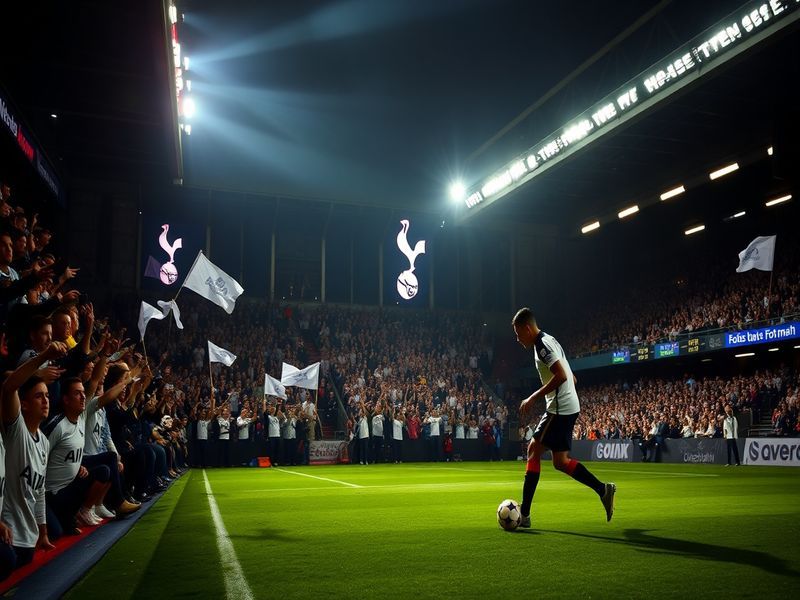
Tottenham Hotspur Football Club, commonly known as Spurs, has long been a fixture in English football’s upper echelons. Yet the past few seasons have seen the North London club navigate a period of significant change, marked by managerial shifts, ownership transitions, and on-field performances that fluctuate between promise and frustration. As the club looks to redefine itself in a competitive Premier League landscape, understanding its current trajectory requires examining its recent history, tactical evolution, and the broader forces shaping its future.
Ownership and Leadership: The Post-Daniel Levy Era
For two decades, Daniel Levy served as the primary face of Tottenham’s ownership, overseeing a period that included the construction of the state-of-the-art Tottenham Hotspur Stadium and multiple Champions League campaigns. His tenure was defined by financial prudence, a focus on long-term planning, and a willingness to invest in world-class talent such as Harry Kane and Son Heung-min. However, after years of speculation about his future, Levy stepped down as executive chairman in February 2024, marking the end of an era.
The shift in leadership has raised questions about the club’s direction. The new ownership group, led by a consortium including ENIC International and new investors, has signaled a desire to accelerate progress while maintaining financial stability. While early indications suggest continuity in sporting strategy, changes in the boardroom often precede broader transformations in club culture and ambition.
- Key appointments: The club has brought in experienced executives from clubs with recent success, aiming to replicate best practices in recruitment and development.
- Stadium utilization: The Tottenham Hotspur Stadium remains a vital asset, hosting not only football but major events, which generates revenue to fund squad improvements.
- Fan engagement: New leadership has emphasized transparency and dialogue with supporters, a shift welcomed after years of perceived distance between the board and the fanbase.
Only time will tell whether the post-Levy era ushers in a new golden age or a period of instability. What is clear is that Tottenham is no longer content to be a mid-table contender—it aims to challenge for titles once again.
On-Field Evolution: From Counterattacking to Possession Football
Tottenham’s style of play has undergone a visible transformation in recent years. Under former manager José Mourinho, Spurs were known for their pragmatic, counterattacking approach, often relying on quick transitions and defensive solidity. While effective in certain contexts, this style limited the team’s ability to dominate possession and control games—a hallmark of elite sides.
Antonio Conte’s arrival in November 2021 marked a turning point. The Italian coach implemented a 3-5-2 formation, emphasizing defensive structure, high pressing, and quick buildup play. The results were immediate: Spurs climbed from mid-table to securing a top-four finish and reaching the League Cup final in the 2021-22 season. However, Conte’s departure in March 2023, amid reports of dressing room tensions, left the project unfinished.
Since then, the club has cycled through managers, including Ange Postecoglou, whose appointment in June 2023 signaled a bold shift toward an attacking, possession-based system. Postecoglou’s Spurs have been characterized by high pressing, fluid attacking movements, and a willingness to take risks—traits that have drawn comparisons to his successful Celtic side. The early results have been mixed, with moments of brilliance overshadowed by defensive lapses.
The challenge for Tottenham now is to refine this philosophy into a consistent, title-challenging identity. The club’s recruitment in the summer of 2023 reflected this ambition, with signings such as James Maddison and Micky van de Ven brought in to bolster creativity and defensive stability, respectively.
Key Players: The Heart of the Team’s Future
No discussion of Tottenham’s present and future is complete without acknowledging its star players. While Harry Kane’s departure to Bayern Munich in 2023 marked the end of an era, the club has moved forward with a new generation of talent leading the charge.
Son Heung-min, now the club’s captain, remains the talismanic figure. His consistency, leadership, and goal-scoring prowess ensure he is central to Spurs’ ambitions. However, at 31 years old, questions linger about the remaining years of his peak.
Dejan Kulusevski and Richarlison have also emerged as pivotal figures. Kulusevski’s creativity and technical ability make him a constant threat in wide areas, while Richarlison’s physical presence and finishing have added a new dimension to Tottenham’s attack. Injuries have disrupted their development at times, but their potential remains undeniable.
The defensive unit has seen significant investment, particularly in the center-back positions. Micky van de Ven, signed from VfL Wolfsburg, has impressed with his pace and composure on the ball, while Cristian Romero provides aggression and leadership at the heart of the defense. However, inconsistency at full-back and in midfield continues to be an area of concern.
The midfield, once the strength of the team under players like Christian Eriksen and Mousa Dembélé, is in a state of flux. James Maddison, with his vision and set-piece delivery, has quickly become a fan favorite. Yet, the need for a more dynamic, box-to-box presence remains pressing as Tottenham seeks to balance control and creativity.
Challenges and Ambitions: Can Spurs Return to the Top?
Despite the progress made in recent years, Tottenham still faces considerable challenges. The Premier League’s financial disparity means that even top-four finishes are often accompanied by a sense of underachievement when compared to clubs like Manchester City and Arsenal. The gap between the elite and the rest has widened, and Spurs must navigate this reality carefully.
One of the club’s most pressing needs is squad depth. Injuries to key players have derailed campaigns in the past, and the lack of reliable backups in critical positions remains a vulnerability. The summer 2024 transfer window will be pivotal in addressing these gaps, with fans expecting targeted signings to bolster both the first team and the academy pipeline.
Another challenge lies in competing in multiple competitions. Tottenham’s participation in the Europa League or Champions League will be crucial not only for prestige but also for financial stability. However, balancing domestic league performance with European campaigns is a delicate task, one that requires smart squad rotation and tactical flexibility.
Looking ahead, Tottenham’s ambitions are clear: to return to the top of English football and compete for major trophies. The roadmap involves a blend of smart recruitment, youth development, and tactical evolution. The club’s academy, which has produced talents like Harry Kane and Ryan Sessegnon, remains a cornerstone of its long-term strategy. Investing in homegrown players not only strengthens the squad but also fosters a deeper connection with the fanbase.
For supporters, the journey is as important as the destination. The memories of near-misses—the 2019 Champions League final, the 2021-22 season’s late surge—serve as both motivation and caution. Tottenham’s identity has always been one of resilience and ambition, and the current era is no different.
As the club continues to evolve under new leadership and a fresh tactical approach, the question on everyone’s mind is whether this will be the season that Spurs finally bridge the gap to the elite. With a talented squad, a world-class stadium, and a passionate fanbase, the ingredients for success are in place. What remains to be seen is whether Tottenham can execute its vision with the consistency and ruthlessness required to end a decade of near-misses.