Iran’s War Strategy: How the Islamic Republic Projects Power Globally
Iran’s Military Posture in the 21st Century
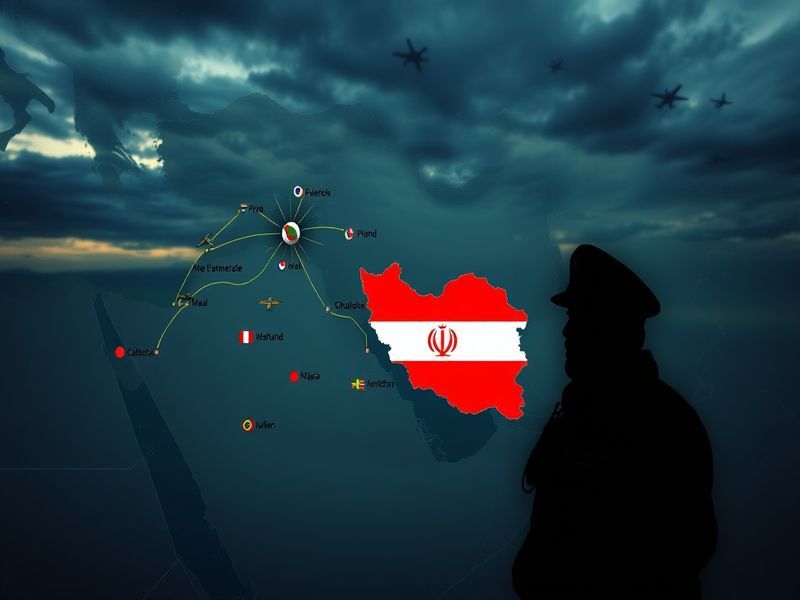
Iran’s approach to warfare has evolved significantly since the Iran-Iraq War of the 1980s. No longer confined to conventional armies or territorial defense, its strategy now blends asymmetric tactics with proxy networks across the Middle East. This shift reflects both necessity and ambition, shaped by decades of isolation, sanctions, and regional rivalry. The Islamic Republic’s military doctrine prioritizes deterrence through plausible deniability, allowing it to project power without direct confrontation.
Central to this strategy is the Islamic Revolutionary Guard Corps (IRGC), which operates both as a military force and a parallel state institution. Unlike the conventional armed forces, the IRGC answers directly to Supreme Leader Ayatollah Ali Khamenei, giving Iran’s leadership a dual-track tool for internal control and external operations. This structure enables rapid deployment of forces, training of allied militias, and covert actions that extend Iran’s influence from Lebanon to Yemen.
The Role of Proxy Forces in Iran’s Military Strategy
Iran’s network of allied militias—often grouped under the “Axis of Resistance”—serves as force multipliers in conflicts where direct Iranian involvement would trigger international backlash. These groups include Hezbollah in Lebanon, the Houthis in Yemen, and various Shia militias in Iraq and Syria. While officially independent, they receive funding, weapons, and tactical guidance from Tehran, turning local grievances into strategic assets.
This proxy system allows Iran to maintain plausible deniability while achieving geopolitical objectives. For example, attacks on oil tankers in the Persian Gulf or drone strikes on Saudi oil facilities in 2019 were attributed to the Houthis, though Western and regional analysts traced the weapons back to Iranian supply lines. Such operations extend Iran’s reach without risking full-scale war—a tactic that complicates deterrence for adversaries like the United States and Israel.
- Hezbollah (Lebanon): Trained and armed since the 1980s, now a major political and military force in Lebanon.
- Houthis (Yemen): Gained prominence after 2014, targeting Saudi Arabia and UAE with ballistic missiles and drones.
- PMF (Iraq): Officially integrated into Iraq’s security apparatus but retains strong IRGC ties.
- Liwa Fatemiyoun (Syria): Afghan Shia fighters deployed to support Assad during the Syrian civil war.
Regional Tensions and the Shadow of Direct Conflict
The assassination of Qasem Soleimani, commander of the IRGC’s Quds Force, in January 2020 marked a turning point. The U.S. strike in Baghdad escalated tensions to their highest level in decades, prompting Iran to retaliate with missile strikes on Iraqi bases housing American troops. While no American lives were lost, the incident underscored the fragility of the region’s security architecture.
Since then, Iran has maintained a policy of “maximum resistance,” combining limited direct engagements with persistent low-intensity conflicts. Attacks on commercial shipping, cyber operations against Israeli and Gulf targets, and periodic rocket fire into northern Israel have become recurring themes. Yet, Iran has avoided actions that would provoke a full-scale Israeli or U.S. response, instead calculating that controlled escalation keeps adversaries off balance.
This calculus has been tested repeatedly. In April 2024, Israel conducted airstrikes on an Iranian consulate in Damascus, killing several IRGC officers, including a senior commander. Iran responded with a direct missile and drone attack on Israel—its first-ever such strike from Iranian soil. While the assault caused minimal damage, it signaled a new threshold in direct confrontation, forcing Israel and its allies to reassess their defense strategies.
Global Implications: Sanctions, Alliances, and Economic Warfare
Iran’s military activities cannot be separated from its economic challenges. International sanctions, particularly those reimposed after the U.S. withdrawal from the JCPOA in 2018, have crippled oil exports and restricted access to global financial systems. Yet, Iran has adapted by deepening ties with Russia, China, and North Korea, trading oil for military technology and political cover.
China, in particular, has become a crucial partner. Bilateral trade has surged, with Beijing importing Iranian oil at discounted rates in exchange for investment in infrastructure and technology. Russia, facing its own isolation over Ukraine, has supplied advanced weapons, including ballistic missiles, to Iran. These partnerships have helped Iran circumvent sanctions, though at the cost of greater dependence on authoritarian regimes.
The relationship with Russia extends beyond arms deals. Both countries have coordinated military support for the Assad regime in Syria, exchanged intelligence on regional threats, and aligned their narratives in international forums. This axis of resistance, now stretching from Tehran to Moscow, presents a growing challenge to U.S. influence in the Middle East and beyond.
Cultural and Domestic Dimensions of Iran’s War Footprint
Within Iran, the military’s role transcends national defense. The IRGC controls vast economic enterprises, from construction to telecommunications, making it a pillar of the regime’s survival. Veterans and families of martyrs receive state benefits, while propaganda glorifies resistance against “arrogant powers” like the U.S. and Israel. This narrative resonates with many Iranians, particularly the working class, who see the IRGC as both defender and provider.
Yet, dissent persists. Protests over economic hardship and government corruption have at times targeted IRGC-affiliated institutions. The 2022 death of Mahsa Amini, while not directly tied to military policy, highlighted the regime’s reliance on coercion to maintain control. The IRGC’s Basij militia has been deployed repeatedly to suppress unrest, blurring the lines between domestic policing and external defense.
Culturally, Iran’s military presence is embedded in art, media, and public discourse. Films like The Glass Agency (1998) and Muhammad: The Messenger of God (2015) depict martyrdom and resistance as virtuous ideals. State media frequently air documentaries about IRGC operations, framing them as acts of divine justice against oppressors. This messaging reinforces the regime’s legitimacy, especially among conservative and rural populations.
The Human Cost: Civilian Impact in Conflict Zones
The human toll of Iran’s proxy wars is most visible in Yemen, where the Houthi rebellion has plunged the country into one of the world’s worst humanitarian crises. Since 2015, the conflict has displaced over 4 million people, with 80% of the population—nearly 30 million—dependent on aid. Saudi-led airstrikes, backed by U.S. intelligence, have exacerbated the suffering, while Iran’s support for the Houthis prolongs the stalemate.
In Syria, Iran’s intervention on behalf of Bashar al-Assad has left hundreds of thousands dead and millions displaced. Iranian advisors and Hezbollah fighters played key roles in recapturing rebel-held areas, but the cost was devastating. Entire cities, like Aleppo and Homs, were reduced to rubble, and war crimes allegations have tarnished Iran’s international standing.
These conflicts have also fueled sectarian tensions across the region. Sunni-majority states like Saudi Arabia and the UAE view Iran’s rise as an existential threat, leading to a proxy war that has destabilized Iraq, Lebanon, and Bahrain. The Sunni-Shia divide, once a theological issue, has become a geopolitical fault line, with Iran at its epicenter.
The Future of Iran’s Military Strategy
Looking ahead, Iran faces a paradox. Its hybrid warfare model has succeeded in expanding its influence but has also isolated it economically and diplomatically. The war in Gaza, which began in October 2023, has drawn Hezbollah and other proxies into a broader confrontation with Israel. While Iran denies direct involvement, its leaders have repeatedly vowed to “annihilate” Israel if provoked—a statement that alarms global leaders.
Meanwhile, Iran’s nuclear program remains a flashpoint. Despite international negotiations, the country continues to enrich uranium to near-weapons-grade levels. The IAEA has documented undeclared nuclear activities, raising concerns that Iran could develop a bomb within months if it chooses. This dual-track approach—military expansion alongside nuclear ambiguity—keeps adversaries guessing while reinforcing Iran’s deterrent posture.
For the United States and its allies, the challenge is clear: how to counter Iran’s asymmetric tactics without triggering a wider war. Diplomacy has failed to curb Iran’s regional ambitions, while military strikes risk escalation. Economic pressure, though damaging, has not halted Iran’s military buildup. The result is a standoff with no clear endgame, where the next crisis could erupt at any moment.
One thing is certain: Iran’s war strategy will continue to adapt. Whether through technological innovation, deeper alliances with non-Western powers, or further expansion of proxy networks, the Islamic Republic remains a formidable player in a region where power is increasingly fragmented and contested.
For deeper analysis on regional conflicts, explore our coverage of Middle Eastern politics, where we examine the shifting alliances and power struggles reshaping the area. Alternatively, read our strategic analysis pieces for insights into how these dynamics influence global security.
This article was researched and written by the editorial team at Dave’s Locker. For corrections or feedback, contact editor@daveslocker.net.