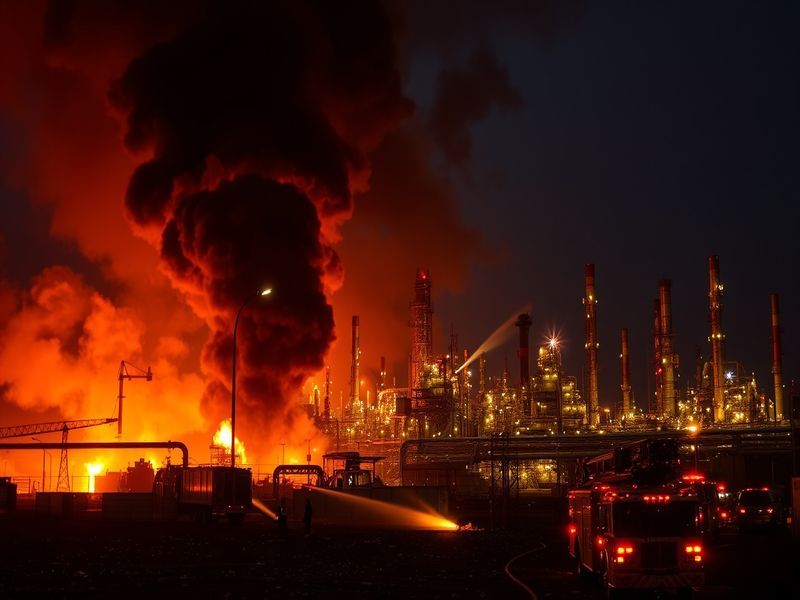
oil refinery fire
Understanding Oil Refinery Fires: Causes and Consequences
Oil refinery fires represent a critical challenge in the global energy sector, combining industrial hazards with environmental and economic repercussions. These incidents, though relatively uncommon, often dominate headlines due to their potential for widespread damage. In recent years, several high-profile fires have highlighted vulnerabilities in refinery infrastructure, raising concerns about safety protocols and emergency response.
Refineries are complex facilities where crude oil undergoes transformation into usable products like gasoline, diesel, and jet fuel. The process involves heating, distillation, and chemical reactions under extreme conditions. When safety measures fail, the consequences can be severe. Fires may originate from equipment malfunctions, human error, or deliberate acts, each carrying distinct implications for mitigation and prevention.
The Global Footprint of Refinery Incidents
Refinery fires occur worldwide, affecting both developed and developing nations. In the United States, the Environmental Protection Agency (EPA) tracks such incidents closely, noting that between 2010 and 2020, an average of 20 serious fires occurred annually. Meanwhile, in Europe, stricter regulations have reduced the frequency of catastrophic events, though smaller fires still pose operational risks. Countries like India and China, where rapid industrialization has outpaced safety upgrades, face a disproportionate share of incidents.
Culturally, these fires often reflect broader attitudes toward industrial regulation and corporate responsibility. In some regions, lax enforcement of safety standards has led to preventable disasters. In others, proactive measures—such as real-time monitoring systems and employee training—have minimized risks. The contrast underscores the importance of global cooperation in establishing universal safety benchmarks.
Key Causes Behind Refinery Fires
Identifying the root causes of refinery fires is essential for prevention. A breakdown of common triggers reveals a mix of technical and human factors:
- Equipment Failures: Piping systems, storage tanks, and reactors operate under high pressure and temperature. Corrosion, material fatigue, or design flaws can lead to leaks and ignition. For example, a 2019 fire at the Philadelphia Energy Solutions refinery was attributed to a corroded pipe that released hydrocarbons into a processing unit.
- Human Error: Despite automation, human oversight remains a significant risk. Miscommunication during maintenance or failure to follow protocols can trigger catastrophic events. A 2012 fire in Venezuela’s Amuay refinery, one of the deadliest in recent history, resulted from a gas leak caused by improper valve operation.
- Deliberate Acts: Sabotage and terrorism also play a role in some regions. The 2005 fire at the Abqaiq facility in Saudi Arabia, linked to a militant attack, demonstrated how geopolitical tensions can manifest in industrial sabotage.
- Natural Disasters: Earthquakes, floods, and lightning strikes can damage refinery infrastructure, leading to fires. The 2011 Tohoku earthquake in Japan caused multiple refinery fires due to ruptured pipelines and electrical failures.
The diversity of causes highlights the need for multifaceted safety strategies, combining technological innovation with rigorous training and oversight.
The Ripple Effects of Refinery Fires
The consequences of refinery fires extend far beyond the immediate blaze. Economically, these incidents disrupt fuel supply chains, leading to price spikes and shortages. For instance, the 2021 fire at the Marathon Petroleum refinery in Garyville, Louisiana, caused gasoline futures to surge temporarily as traders anticipated supply constraints.
Environmentally, fires release toxic fumes, including sulfur dioxide and particulate matter, posing health risks to nearby communities. A 2018 fire at the Irving Oil refinery in Canada released over 200 tons of pollutants, prompting health warnings and legal action from environmental groups. Long-term exposure to such emissions can exacerbate respiratory conditions and contribute to chronic illnesses.
Socially, refinery fires often spark public outrage, particularly in communities already burdened by industrial pollution. Activists frequently leverage these incidents to advocate for stricter regulations or the closure of high-risk facilities. In some cases, fires have galvanized local movements, as seen in the protests following the 2016 fire at the Chevron Richmond refinery in California, which led to a $2 million fine and heightened scrutiny of the facility.
Lessons from Recent Incidents
Analyzing past fires provides valuable insights into prevention and response. The 2020 explosion at the Philadelphia Energy Solutions refinery, one of the largest in U.S. history, resulted in $750 million in damages and the permanent shutdown of the facility. Investigators attributed the blast to a combination of equipment failure and inadequate maintenance. The incident prompted calls for stronger enforcement of the Clean Air Act and increased funding for refinery safety programs.
In contrast, the 2016 fire at the Shell Martinez refinery in California was contained within hours due to rapid response efforts and advanced firefighting technology. The incident underscored the importance of emergency preparedness and real-time monitoring systems, which allowed operators to shut down affected units before the fire spread.
These contrasting outcomes highlight the role of technology in mitigating risks. Modern refineries increasingly rely on sensors, AI-driven analytics, and automated shutdown systems to detect anomalies before they escalate. However, technology alone cannot eliminate human factors, making training and cultural shifts equally critical.
Building a Safer Future for Refinery Operations
Addressing the challenges posed by refinery fires requires a collaborative approach. Governments, corporations, and communities must work together to implement comprehensive safety measures. Key strategies include:
- Enhanced Regulation: Stricter enforcement of safety standards, such as the EPA’s Risk Management Plan (RMP), can reduce the likelihood of catastrophic events. Regular inspections and mandatory third-party audits can identify vulnerabilities before they lead to disaster.
- Investment in Technology: Refinery operators are increasingly adopting digital tools like predictive maintenance and leak detection systems. These technologies use AI and machine learning to analyze data in real time, enabling proactive interventions.
- Workforce Training: Comprehensive training programs that emphasize safety protocols, emergency response, and situational awareness can mitigate human error. Simulations and drills prepare workers for high-pressure scenarios.
- Community Engagement: Refineries must foster transparent communication with nearby communities to address concerns and share safety plans. Public awareness campaigns can educate residents about evacuation procedures and health risks.
While no system is foolproof, these measures can significantly reduce the frequency and severity of refinery fires. The goal is not just to prevent incidents but to create a culture of safety that prioritizes both operational efficiency and human well-being.
Conclusion
Oil refinery fires are a stark reminder of the risks inherent in the global energy infrastructure. From equipment failures to human error, the causes are varied, but the solutions are clear: stronger regulations, technological innovation, and a commitment to safety culture. As the world continues to rely on fossil fuels, the lessons learned from past incidents must guide future policies and practices.
For communities living near refineries, these fires are more than abstract risks—they are daily realities that demand attention and action. By prioritizing safety and transparency, the energy sector can move toward a future where refinery fires are a rarity rather than a recurring headline.
To learn more about industrial safety standards and their global impact, explore our Environment category for in-depth analysis and expert perspectives.