Trainspotting: The Art, Culture, and Enduring Appeal of an Obsession
Trainspotting is more than a hobby—it’s a niche subculture with deep historical roots, a dedicated community, and an undeniable aesthetic. From the rhythmic clatter of wheels on tracks to the thrill of discovery, enthusiasts of this practice find fascination in the overlooked details of railway systems. The term itself evokes a sense of both nostalgia and precision, capturing the essence of an activity that blends observation, documentation, and passion.
The Origins and Evolution of Trainspotting
Trainspotting traces its origins to the early days of rail travel. In the 19th century, as railways expanded across Europe and North America, people began documenting locomotives out of curiosity and practical interest. Railroad enthusiasts, often called railfans, would gather at stations or along tracks to observe passing trains, noting their designs, routes, and mechanical details. This early fascination laid the groundwork for what would become a global phenomenon.
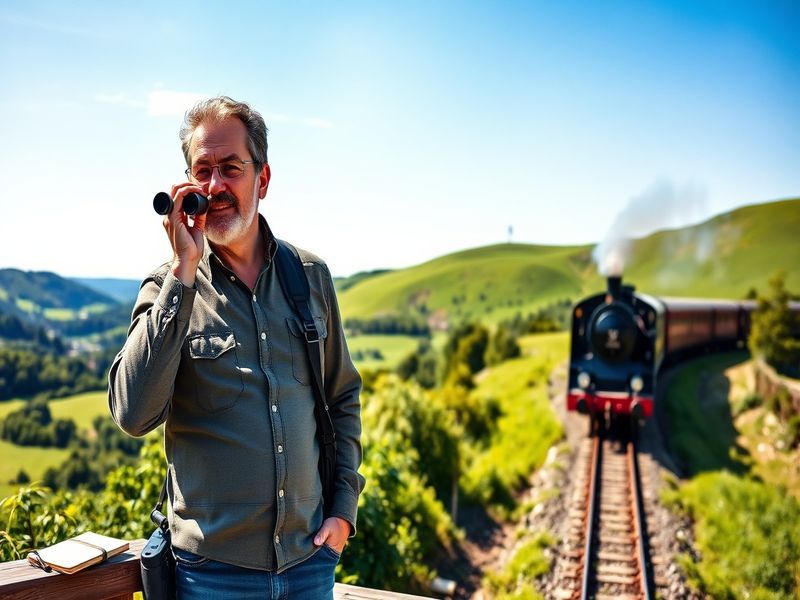
The hobby gained formal structure in the 20th century with the rise of model railroading and photography. Clubs formed to share knowledge, and publications emerged to celebrate the diversity of railway equipment. In the UK, the term “trainspotting” became particularly associated with the act of ticking off locomotives in a notebook—a practice that peaked in the mid-20th century as enthusiasts sought to collect as many unique models as possible. While the method has evolved, the core motivation remains: the pursuit of completeness and the joy of discovery.
A Global Community United by Rails
Today, trainspotting exists in many forms across the world. In Japan, railfans known as “densha otaku” meticulously document train schedules, interior designs, and even the sounds of departures. European enthusiasts often focus on heritage railways and vintage locomotives, preserving history through meticulous observation. Meanwhile, in North America, trainspotting has strong ties to the vast freight rail networks, where enthusiasts track locomotives across state lines.
Online forums and social media have transformed the hobby into a global network. Platforms like Trending and dedicated Discord servers allow enthusiasts to share sightings, photographs, and stories in real time. This digital shift has democratized trainspotting, making it accessible to younger generations who may never have visited a rail yard but still find joy in the art of observation.
The Many Faces of Trainspotting
Trainspotting isn’t a monolithic activity—it encompasses several distinct approaches, each with its own allure. For some, it’s about the thrill of the chase: tracking rare locomotives or spotting elusive models in the wild. Others are drawn to the aesthetic, capturing the beauty of trains in photographs or paintings. A third group focuses on the technical, studying the engineering behind locomotives or the logistics of rail networks.
- Locomotive Spotting: The most traditional form, where enthusiasts aim to “spot” as many unique locomotives as possible. This often involves traveling to different regions or visiting rail yards to document sightings.
- Photography and Videography: Modern trainspotting leans heavily on visual media. Enthusiasts spend hours capturing the perfect shot of a train in motion, often focusing on lighting, composition, and the interplay of motion and stillness.
- Model Railroading: A creative outlet where enthusiasts build and operate scale models of trains. This hobby allows for meticulous attention to detail and offers a hands-on way to engage with railway history.
- Sound Recording: Some enthusiasts are captivated by the sounds of trains—the whistle of a steam engine, the rhythmic clatter of a freight train, or the electric hum of a modern high-speed rail. These recordings become artifacts of railway culture.
The Aesthetic and Cultural Impact of Trains
The allure of trainspotting extends beyond the hobby itself. Trains have long held a prominent place in art, literature, and film, often symbolizing progress, adventure, or escape. The sleek lines of a modern bullet train evoke a sense of futurism, while the weathered charm of a steam locomotive speaks to nostalgia. This duality has made trains a recurring motif in creative works, from the paintings of Edward Hopper to the films of Hayao Miyazaki.
In literature, trains often serve as metaphors for journeys—both literal and metaphorical. They represent transitions, the passage of time, and the unknown. In the 20th century, trains became symbols of industrialization and the relentless march of modernity. Today, they are celebrated for their role in sustainable travel and their potential to reshape urban landscapes.
The cultural impact of trainspotting is perhaps best seen in its influence on photography. Platforms like Instagram and Flickr are filled with images of trains in striking settings—dramatic sunsets, foggy mornings, or urban backdrops. These photographs often transcend the hobby, becoming standalone works of art that capture the intersection of human ingenuity and natural beauty.
Trains in Pop Culture
Trains have left an indelible mark on pop culture, appearing in everything from children’s books to blockbuster films. Iconic locomotives like the Hogwarts Express from the Harry Potter series or the Orient Express have become cultural touchstones. Even video games like Train Simulator and Railway Empire have brought the hobby to digital platforms, allowing players to experience the thrill of railroading from their homes.
Music, too, has been shaped by the rhythm of trains. Folk songs like “Casey Jones” and “Midnight Train to Georgia” immortalize the romance and danger of rail travel. Contemporary artists continue to draw inspiration from trains, using their imagery to evoke themes of movement, freedom, and connection.
The Future of Trainspotting
As rail technology evolves, so too does the hobby of trainspotting. High-speed rail networks, magnetic levitation trains, and automated freight systems are redefining what it means to engage with railways. Enthusiasts now track digital locomotive databases, monitor real-time GPS feeds, and even use drones to capture aerial footage of trains. The digital age has expanded the possibilities, making trainspotting more dynamic and accessible than ever before.
Yet, despite these advancements, the core of trainspotting remains unchanged: the joy of observation and the thrill of discovery. Whether through a camera lens, a notebook, or a smartphone app, enthusiasts continue to find wonder in the world of trains. The hobby’s adaptability ensures its longevity, allowing it to thrive in both traditional and modern forms.
Looking ahead, trainspotting may also play a role in promoting sustainable travel. As climate change becomes an increasingly urgent issue, railways offer a greener alternative to cars and planes. Enthusiasts who advocate for rail travel help shift public perception, highlighting the beauty and efficiency of trains as a mode of transportation.
Why Trainspotting Endures
The enduring appeal of trainspotting lies in its simplicity and depth. It’s a hobby that can be as casual or as obsessive as one desires. For some, it’s a weekend pastime; for others, a lifelong passion. What unites all enthusiasts is a shared appreciation for the artistry, engineering, and history embodied in every train.
In an era of rapid technological change, trainspotting offers a connection to the past. It reminds us of the ingenuity of earlier generations who built the rail networks that still carry us today. It also provides a moment of pause in a fast-paced world—a chance to slow down and appreciate the beauty of motion.
Whether you’re a seasoned railfan or a curious newcomer, there’s always something new to discover in the world of trainspotting. From the humblest freight car to the most advanced high-speed train, each locomotive tells a story. And for those willing to listen, the rails are always ready to reveal their secrets.
For those interested in exploring more about niche hobbies and subcultures, be sure to check out Dave’s Locker Culture section, where we dive into the stories behind the communities that shape our world.