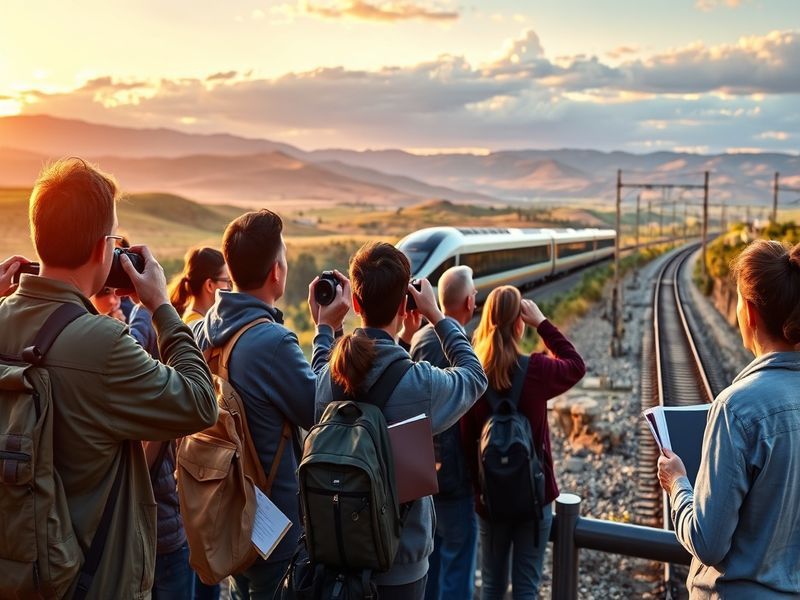
Why Trainspotting Is Still a Beloved Global Hobby
What Is Trainspotting and Why Does It Persist?
Trainspotting is more than a nostalgic pastime—it is a global subculture that thrives on precision, patience, and passion. Enthusiasts, known as railfans or trainspotters, gather near tracks, at stations, or in online forums to document locomotives, record numbers, and share observations. The practice dates back to the early 20th century, when British schoolboys began collecting locomotive numbers on weekend excursions. Today, it has evolved into a diverse hobby embraced by people of all ages across continents.
The appeal is simple yet profound. Trainspotting offers a tangible connection to industrial heritage, mechanical beauty, and the rhythm of transit. In an era dominated by digital speed, the deliberate act of observing and recording trains becomes a meditative counterpoint. Whether under the vast sky of the Canadian Rockies or the neon glow of Tokyo’s Yamanote Line, the ritual remains strikingly consistent: stand, watch, note, and repeat.
The Tools and Techniques of the Trade
Modern trainspotting relies on both analog and digital tools. At its core, the practice begins with keen observation—identifying livery, wheel arrangement, headlight configuration, and even the subtle hum of engines. Dedicated spotters often carry a notebook, pen, and camera, though smartphones now dominate the scene. Apps like TrainTrack or Railfans.net aggregate sightings in real time, turning solitary hobbies into collaborative networks.
Equipment varies widely:
- Binox and spotting scopes: For long-distance viewing, especially in open landscapes.
- DSLRs with telephoto lenses: To capture livery details and high-speed passes.
- Portable audio recorders: Enthusiasts in Europe and Japan record distinctive engine sounds, preserving the aural signature of diesel and electric fleets.
- GPS trackers and digital maps: Used by advanced spotters to predict train movements and log exact locations.
Some railfans adopt a minimalist approach, jotting numbers on their hands or in a pocket notebook. Others curate elaborate databases, tracking every locomotive they’ve seen across multiple countries. The level of commitment often reflects personal goals—some aim to “complete the set” of a national rail operator, while others chase rare or heritage units before they’re retired.
A Global Perspective: Where Trainspotting Thrives
Trainspotting is a truly international phenomenon, though its expression changes with geography. In the United Kingdom, the tradition remains deeply rooted, with enthusiasts congregating at Crewe, Doncaster, and the West Coast Main Line. British trainspotting culture is often romanticized in media, thanks in part to the 1996 film Trainspotting—though the movie’s themes of addiction bear no relation to the hobby itself.
Across the Atlantic, American railfans face a different landscape. Freight railroads dominate, and enthusiasts flock to hotspots like Chicago’s Proviso Yard, Southern California’s Colton Crossing, or the Powder River Basin in Wyoming. The scale of American freight operations—with mile-long coal and intermodal trains—offers unparalleled spectacle. Meanwhile, in Japan, the focus shifts to punctuality, cleanliness, and technological innovation. Spotters gather at Tokyo Station, Osaka Loop Line, or the futuristic Hokkaido Shinkansen, where bullet trains blur past at 320 km/h.
Europe presents a patchwork of regional flavors. In Germany, enthusiasts document the Deutsche Bahn fleet with almost bureaucratic precision. Polish railfans chase the colorful “EURO” liveries of PKP Intercity, while Italian spotters revel in the vintage aesthetics of FS Trenitalia’s historic units. Scandinavia offers a quieter, more contemplative experience—spotters in Norway often combine train watching with fjord views and midnight sun photography.
Challenges and Changing Times
Despite its enduring appeal, trainspotting faces challenges in the 21st century. Safety concerns have tightened access to tracks and yards, pushing enthusiasts toward legal vantage points and online alternatives. The rise of high-speed rail has also shortened observation windows—where once a freight train might crawl past for minutes, a Shinkansen or TGV passes in seconds, leaving only a blur and a sonic boom.
Privacy and surveillance add another layer of complexity. In countries like the UK and US, photographing trains near sensitive infrastructure can draw scrutiny from authorities. Some rail operators now restrict photography altogether, citing security risks. This has led to a quiet schism in the community: purists who insist on in-person spotting versus digital enthusiasts who rely on live streams and webcams.
Yet the spirit endures. Online communities on platforms like Flickr, Facebook Groups, and Discord thrive with thousands of members sharing sightings, livery guides, and travel plans. Virtual trainspotting—watching real-time feeds from cameras mounted at stations—has become a legitimate alternative, especially during travel restrictions or harsh weather.
The Cultural Legacy of Trainspotting
Trainspotting is more than a hobby; it’s a cultural artifact. It has inspired literature, photography, and music. The Swiss photographer Robert Doisneau captured industrial romance in his images of Parisian locomotives, while American photographer O. Winston Link turned nighttime steam-era railroading into art in the 1950s. In Japan, the “Toreiyu” phenomenon—trains with open-air footbaths—blends tourism, wellness, and trainspotting into a unique travel experience.
It also fosters intergenerational bonds. Grandparents teach grandchildren to identify steam whistles or recognize the difference between a GE Dash 9 and an EMD SD70. In an age of disposable technology, trainspotting instills patience, attention to detail, and respect for engineering legacy.
Moreover, it serves as a quiet act of preservation. As diesel fleets are retired and replaced by electric or hydrogen units, spotters become unofficial archivists. Their photos, logs, and videos document fleeting eras—like the final runs of British Rail’s Class 50s or the last days of South Africa’s steam locomotives.
Why It Matters Now
In a world accelerating toward automation and AI, trainspotting reminds us of the value of human observation. It celebrates the beauty of motion, the poetry of steel on steel, and the stories embedded in every locomotive number. Whether you’re watching the Trans-Siberian Railway cut through the taiga or a local commuter EMU pull into a platform in Mumbai, the ritual connects you to a global network of enthusiasts who see magic in the mundane.
Trainspotting is not just about trains. It’s about the quiet joy of noticing. It’s about community built on shared curiosity. It’s about preserving a living history one sighting at a time.
And in an era of constant distraction, that might be its greatest power.