Artemis 2 Launch Date: NASA’s Moon Mission Timeline Explained
NASA’s Artemis program has reached a critical milestone with the upcoming Artemis 2 mission, marking humanity’s return to lunar orbit for the first time since 1972. Scheduled for no earlier than September 2025, this ambitious endeavor will carry four astronauts on an eight-day journey around the Moon, serving as a crucial test before the planned Artemis 3 lunar landing. The mission represents more than just a technical achievement—it’s a strategic step in establishing a sustainable human presence on the Moon while preparing for eventual Mars missions.
The Artemis 2 launch window has been carefully calculated to balance multiple factors: optimal Earth-Moon alignment, daylight conditions for launch and recovery, and the crew’s safety margins. Unlike the uncrewed Artemis 1 mission that tested the Space Launch System (SLS) rocket and Orion spacecraft in late 2022, Artemis 2 will carry a fully qualified crew, making every aspect of the mission critical to get right. The four-person team, announced in April 2023, includes NASA astronauts Reid Wiseman, Victor Glover, Christina Koch, and Canadian Space Agency astronaut Jeremy Hansen, bringing diverse experience from International Space Station missions.
Mission Timeline: From Launch to Lunar Orbit and Return
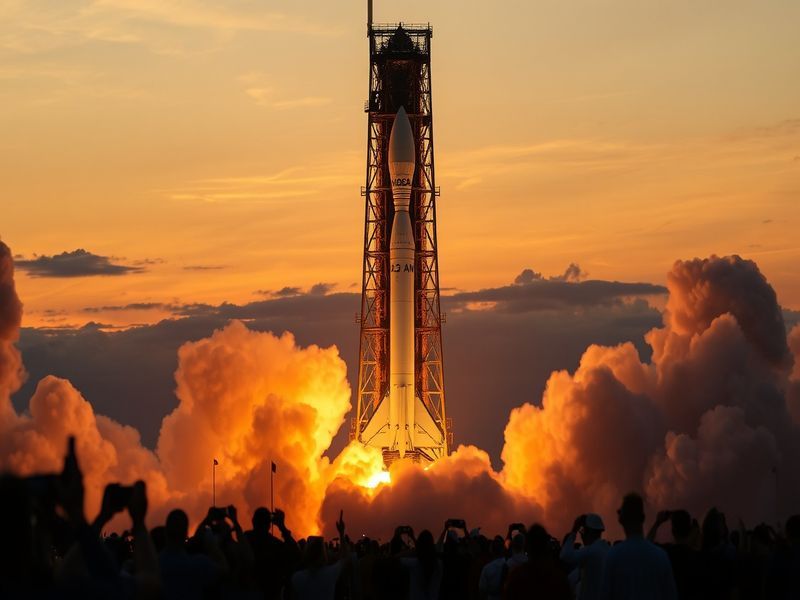
The Artemis 2 mission follows a precisely choreographed timeline that begins long before liftoff. Approximately two days before launch, the crew will enter the Orion spacecraft atop the SLS rocket at Kennedy Space Center’s Launch Complex 39B. The countdown includes several built-in holds to allow teams to resolve any technical issues, with the final hold typically occurring at T-10 minutes before the targeted liftoff time.
Once launched, the mission will unfold in several key phases:
- Ascent and Earth Orbit (First Hour): The SLS rocket will propel Orion to an initial orbit approximately 186 miles above Earth. After two orbits to verify systems, the Interim Cryogenic Propulsion Stage (ICPS) will perform a trans-lunar injection burn, sending the spacecraft toward the Moon.
- Trans-Lunar Coast (Three Days): During this coast phase, the crew will conduct multiple system checks and perform a unique demonstration of Orion’s life support systems by opening the hatch between the crew module and service module. This will test the spacecraft’s ability to support crew operations in deep space.
- Lunar Flyby (Day Four): Orion will pass behind the Moon, losing direct communication with Earth for approximately 45 minutes. This “far side” pass will bring the spacecraft within 6,400 miles of the lunar surface, providing stunning views and critical gravity assist data.
- Return Trajectory and Re-Entry (Final Days): After completing 10 lunar orbits, Orion will use the Moon’s gravity to slingshot back toward Earth. The crew will conduct final system checks before the spacecraft enters Earth’s atmosphere at 24,500 mph, testing its heat shield under lunar return conditions.
The mission will conclude with a Pacific Ocean splashdown, where Navy recovery teams will retrieve the crew and spacecraft. This timeline represents NASA’s most complex crewed mission since the Apollo program, requiring unprecedented precision in both engineering and operational planning.
Technical Challenges and Innovations Powering Artemis 2
Despite sharing the same SLS rocket and Orion spacecraft design as Artemis 1, Artemis 2 incorporates several critical upgrades and new systems that make this mission uniquely challenging. Perhaps the most significant change involves the life support systems, which must now support four crew members for up to 10 days in deep space, compared to the uncrewed Artemis 1’s 25-day mission.
The spacecraft’s Environmental Control and Life Support System (ECLSS) has undergone extensive modifications, including:
- A redesigned carbon dioxide scrubber system that operates more efficiently in microgravity
- Enhanced water recovery systems to handle increased crew consumption
- New waste management systems capable of supporting longer-duration missions
- Upgraded thermal control systems to maintain cabin temperatures during the lunar flyby’s extreme thermal variations
Another major innovation involves the crew’s radiation protection. While Artemis 1 carried mannequins equipped with radiation sensors, Artemis 2 will have real astronauts exposed to deep space radiation levels approximately 1,000 times higher than on Earth’s surface. NASA has implemented several countermeasures, including a modified sleeping area with enhanced shielding and real-time radiation monitoring systems.
The mission also introduces new operational procedures for lunar navigation. Unlike Apollo missions that relied on direct Earth communication, Artemis 2 will test a delayed communication system that simulates the time delays astronauts will experience during Mars missions. This “comm lag” demonstration will help NASA develop protocols for autonomous operations when immediate ground support isn’t available.
Why Artemis 2 Matters for the Future of Space Exploration
Artemis 2 isn’t just a mission to the Moon—it’s a proving ground for technologies and operational concepts that will define the next era of human spaceflight. The lessons learned from this mission will directly inform Artemis 3’s lunar landing attempt, currently scheduled for no earlier than September 2026. More importantly, Artemis 2 represents a critical step toward NASA’s long-term goal of establishing a sustainable lunar presence through the Artemis Base Camp program.
The mission also serves as a strategic counterbalance to other spacefaring nations’ lunar ambitions. China’s Chang’e program has successfully landed multiple robotic missions on the Moon, with plans for crewed landings in the 2030s. Meanwhile, private companies like SpaceX and Blue Origin are developing lunar landers and habitats that could support NASA’s Artemis missions. The international collaboration aspect of Artemis 2—with the Canadian Space Agency’s contribution of the Canadarm3 robotic system—demonstrates how space exploration is increasingly becoming a global endeavor.
From a scientific perspective, Artemis 2 will collect valuable data about the deep space environment that cannot be replicated on Earth or in low Earth orbit. The mission’s trajectory through the Van Allen radiation belts will help scientists better understand the effects of prolonged radiation exposure on human physiology. Additionally, the crew will conduct experiments on plant growth and material science that could benefit both space exploration and terrestrial applications.
Perhaps most significantly, Artemis 2 carries cultural and inspirational weight. For a generation that grew up with the International Space Station but never witnessed a human landing on another world, this mission could reignite public interest in space exploration. The images of Earthrise captured by Apollo 8 in 1968 became iconic symbols of environmental awareness. Artemis 2’s similar vantage point over the lunar horizon may produce equally powerful imagery that reminds humanity of our place in the cosmos.
What Comes Next After Artemis 2
While Artemis 2 captures current attention, NASA’s Artemis program has already outlined a clear roadmap for the coming years. Artemis 3, currently targeting September 2026, will attempt the first crewed lunar landing since Apollo 17, including the first woman and person of color to walk on the Moon. This mission will rely on SpaceX’s Starship Human Landing System (HLS) as the lunar descent vehicle, with Orion serving as the crew’s transportation to lunar orbit.
Following Artemis 3, NASA plans a more sustainable approach with Artemis 4 through Artemis 7, each building toward a permanent lunar outpost. These missions will introduce the Lunar Gateway—a small space station orbiting the Moon that will serve as a staging point for surface missions. The Gateway’s Power and Propulsion Element, built by Maxar Technologies, will provide the first demonstration of solar electric propulsion in lunar orbit.
The long-term vision extends beyond the Moon. Artemis 2’s success will validate many systems that NASA plans to adapt for Mars missions in the 2030s or 2040s. The Orion spacecraft’s heat shield, life support systems, and deep space navigation capabilities are all direct precursors to the systems that will eventually carry humans to the Red Planet. In this context, Artemis 2 serves as both an end goal and a critical milestone in humanity’s expansion into the solar system.
As the September 2025 launch date approaches, NASA faces both technical and political challenges. Budget constraints, competing priorities, and the inherent risks of crewed spaceflight demand constant vigilance. Yet the potential rewards—scientific discovery, technological innovation, and the inspiration of seeing humans once again venture beyond low Earth orbit—make Artemis 2 one of the most significant space missions in decades. The countdown has begun, and the next chapter in humanity’s exploration of the cosmos is about to unfold.
For those eager to follow the mission’s progress, NASA’s Artemis blog and social media channels will provide real-time updates, while educational resources on space science can help explain the mission’s technical complexities to audiences of all ages.