Artemis 2 Launch Date: NASA’s Next Giant Leap for Spaceflight
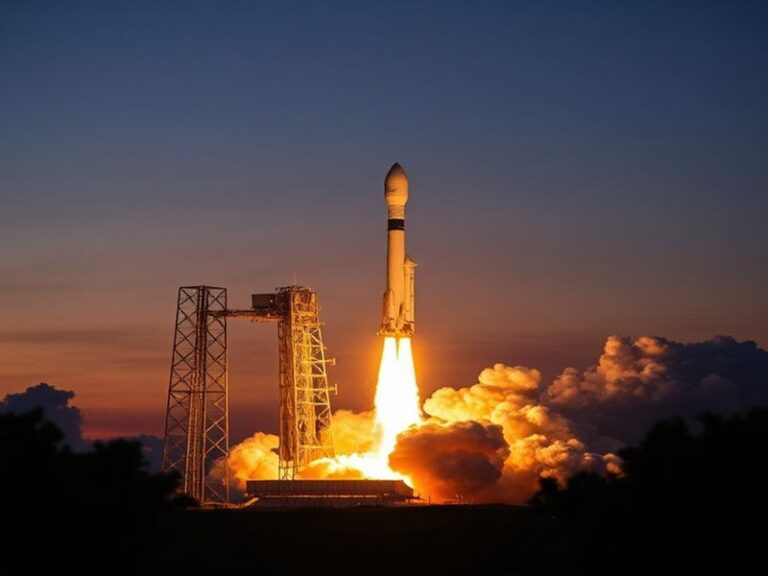
NASA’s Artemis program has reached a critical milestone with the announcement of the Artemis 2 launch date. Scheduled for no earlier than September 2025, this mission represents humanity’s first crewed lunar flyby in over half a century. Unlike its predecessor Artemis 1, which tested the uncrewed Orion spacecraft, Artemis 2 will carry four astronauts on a pioneering journey around the Moon, paving the way for future lunar surface missions.
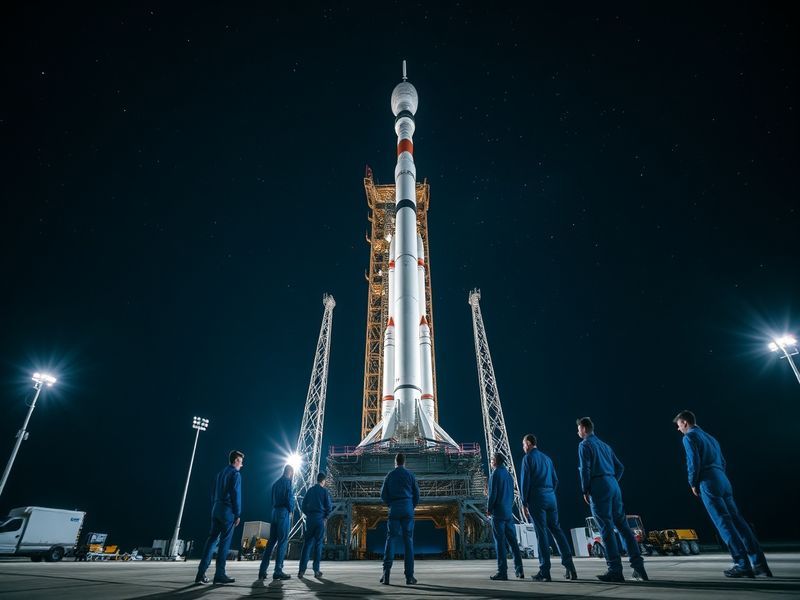
The exact launch window depends on several factors, including spacecraft readiness, weather conditions, and orbital mechanics. NASA’s Exploration Ground Systems team at Kennedy Space Center is currently preparing Launch Complex 39B for the massive Space Launch System rocket. Meanwhile, the Orion spacecraft is undergoing final testing at the Neil Armstrong Operations and Checkout Building. These preparations underscore the complexity of human spaceflight operations.
Mission Objectives and Crew Selection
Artemis 2’s primary objective is to demonstrate Orion’s systems in a crewed deep-space environment. The four-person crew will test the spacecraft’s life support, navigation, and communication systems during their approximately 10-day mission. This flight will serve as a crucial validation step before the Artemis 3 mission, which aims to land astronauts near the lunar south pole.
NASA has not yet announced the final crew assignments, though the agency has revealed that one astronaut will represent Canada through the Canadian Space Agency. The crew selection process involves rigorous psychological and physical evaluations, ensuring that each astronaut can handle the stresses of deep-space travel. Training will include simulations of emergency scenarios, lunar orbit operations, and Earth re-entry procedures.
The mission profile includes a trans-lunar injection burn, followed by a free-return trajectory that will bring the spacecraft around the far side of the Moon. This path ensures that Orion can return to Earth even if propulsion systems fail. The closest approach to the lunar surface will occur at approximately 8,100 kilometers, providing stunning views of the Moon’s craters and mare regions.
Technical Preparations and Challenges
Several key technical challenges must be addressed before the Artemis 2 launch. The Space Launch System’s core stage, manufactured by Boeing, has faced production delays that impacted the original timeline. NASA’s Artemis program manager, Mike Sarafin, has emphasized that schedule confidence remains high despite these hurdles.
The Orion spacecraft’s heat shield, measuring 5 meters in diameter, must withstand temperatures up to 2,800 degrees Celsius during Earth re-entry. Engineers have modified the heat shield design based on data from Artemis 1, which experienced more charring than expected. Additional upgrades include improved life support systems and enhanced radiation shielding for the crew.
Here are the critical systems undergoing final validation:
- Environmental Control and Life Support System (ECLSS): Provides oxygen, removes carbon dioxide, and manages humidity levels.
- Propulsion System: Includes the main engine and 12 auxiliary thrusters for attitude control.
- Avionics and Software: Features redundant flight computers and updated guidance algorithms.
- Power Generation: Solar array wings that provide up to 11 kilowatts of electricity.
Another significant challenge involves the mission’s communication requirements. At its farthest point from Earth, Orion will be 370,000 kilometers away, requiring the Deep Space Network’s most powerful antennas. NASA has upgraded ground stations in California, Spain, and Australia to handle the increased data volume from crewed missions.
International Collaboration and Future Implications
The Artemis program represents the most ambitious international collaboration in human spaceflight since the Apollo era. The Technology section on Dave’s Locker explores how global partnerships are accelerating space exploration. Canada’s contribution includes the Canadarm3 robotic system, which will be essential for future lunar Gateway operations.
Japan and the European Space Agency are also contributing critical components. The European Service Module, built by Airbus, provides propulsion, power, and life support for Orion. This module is a modified version of the Automated Transfer Vehicle, which previously serviced the International Space Station. The collaboration demonstrates how space agencies are sharing resources to achieve common goals.
The Artemis Accords, signed by 28 nations, establish principles for peaceful lunar exploration. These agreements address resource utilization, scientific data sharing, and emergency assistance. The United States has emphasized that the Artemis program will adhere to the Outer Space Treaty, which prohibits national appropriation of celestial bodies.
Public Engagement and Educational Outreach
NASA has prioritized public engagement for the Artemis 2 mission, recognizing the educational value of crewed spaceflight. The agency’s Artemis Student Challenges program invites university teams to develop innovative solutions for lunar surface operations. These competitions range from robotics to habitat design, inspiring the next generation of engineers.
Social media campaigns will provide real-time updates during the mission, with astronauts sharing their experiences through live broadcasts and educational content. NASA’s Artemis program has already generated significant interest on platforms like Twitter and TikTok, where users can follow mission milestones through interactive graphics and 3D animations.
The Science section on Dave’s Locker will feature expert analysis of the mission’s scientific objectives. Researchers anticipate that Artemis 2 will collect valuable data on human performance in deep space, radiation exposure, and the effects of microgravity on biological systems. These findings will be crucial for planning longer-duration missions to Mars.
Artemis 2 also serves as a catalyst for STEM education initiatives across the United States. NASA’s Office of STEM Engagement has partnered with museums and science centers to create interactive exhibits that simulate lunar missions. These programs aim to reach students in underserved communities, fostering diversity in the aerospace workforce.
Conclusion: A New Era of Lunar Exploration
The Artemis 2 launch date marks a pivotal moment in space exploration, demonstrating humanity’s ability to return to the Moon with advanced technology and international cooperation. As the first crewed lunar mission since Apollo 17, Artemis 2 will test critical systems while inspiring a new generation of explorers. The lessons learned from this journey will directly inform the Artemis 3 landing mission and future expeditions to Mars.
NASA’s meticulous approach to safety and innovation ensures that Artemis 2 will be more than just a repeat of past achievements. The mission’s scientific objectives, technological advancements, and educational impact position it as a cornerstone of 21st-century spaceflight. As the world watches, the Artemis 2 crew will carry the hopes of millions, proving that humanity’s reach extends beyond Earth’s orbit.
The countdown to September 2025 has begun, and with it, the promise of a new chapter in human space exploration. Through careful preparation and global collaboration, NASA and its partners are not just returning to the Moon—they are laying the foundation for humanity’s future among the stars.