Severe weather remains one of the most unpredictable yet powerful forces on Earth. Among these, tornadoes stand out for their sudden formation, destructive potential, and the awe they inspire in meteorologists and the public alike. While tornadoes are often associated with the central United States, they occur across the globe, each region facing unique challenges in forecasting, preparedness, and recovery.
This article explores the science behind tornadoes, their global occurrence, cultural perceptions, and the evolving efforts to predict and mitigate their impact. By understanding these storms, communities can better prepare for a natural phenomenon that continues to shape human history.
The Science Behind Tornado Formation
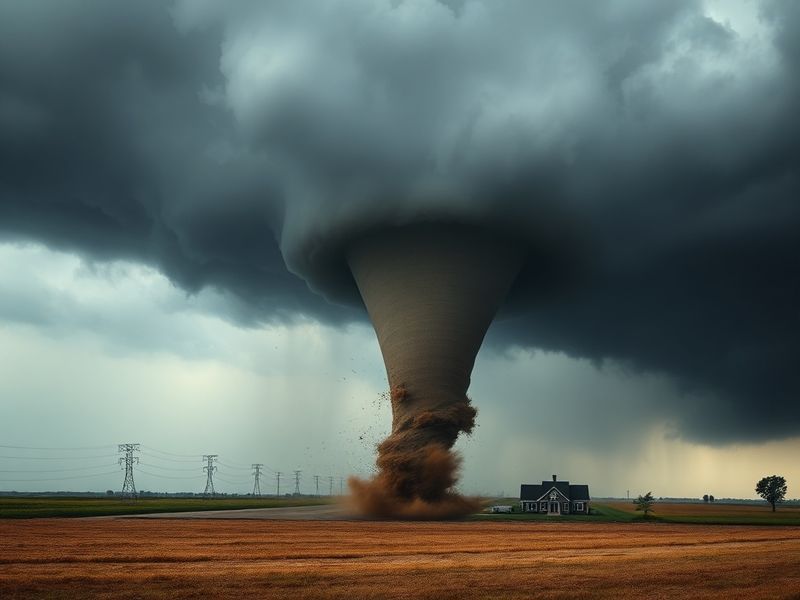
Tornadoes form under specific atmospheric conditions, primarily when warm, moist air collides with cool, dry air. This interaction creates instability in the atmosphere, leading to the development of thunderstorms known as supercells. Within these storms, wind shear—variations in wind speed and direction with altitude—can cause the air to rotate horizontally. If this rotation is tilted vertically by the storm’s updraft, it can form a rotating column of air that extends to the ground, creating a tornado.
Most tornadoes are relatively weak, with winds below 112 miles per hour, but the most violent can exceed 300 miles per hour, leaving behind paths of destruction up to a mile wide. The Enhanced Fujita Scale (EF-Scale) is used to classify tornadoes based on their damage, ranging from EF0 (minor damage) to EF5 (total destruction).
Advances in meteorology have improved warning times, yet tornadoes remain difficult to predict due to their rapid formation and localized nature. Doppler radar systems, such as those used by the National Weather Service, have become essential tools in detecting rotation within storms, giving communities precious extra minutes to seek shelter.
Global Tornado Hotspots Beyond the U.S.
While the central United States—often called “Tornado Alley”—experiences the highest frequency of tornadoes, other regions around the world face similar threats. In South America, Argentina and southern Brazil regularly experience tornadoes, particularly during the spring and summer months. The flat plains of the Pampas region provide ideal conditions for the collision of warm and cold air masses, much like the Great Plains in the U.S.
In Europe, tornadoes are less frequent but still impactful. The United Kingdom records around 30 tornadoes annually, though most are weak. Germany, France, and Italy also experience occasional tornadoes, often associated with severe thunderstorms. The deadliest tornado in European history struck Poland in 1787, killing over 600 people.
Australia and Bangladesh also face significant tornado risks. In Bangladesh, tornadoes can be particularly deadly due to high population density and limited early warning systems. The 1989 Manikganj tornado, one of the deadliest in history, killed approximately 1,300 people.
These global examples highlight the universal threat posed by tornadoes, regardless of geographic location. Improved international collaboration in meteorological research and disaster preparedness could save countless lives in vulnerable regions.
Cultural Perceptions and Historical Impact
Tornadoes have long been a subject of fascination and fear in human culture. In the United States, they are often depicted in film and literature as unstoppable forces of nature, reflecting both dread and respect for their power. The 1996 film Twister popularized the idea of storm chasing, turning meteorologists into unlikely celebrities and inspiring a generation of weather enthusiasts.
In other cultures, tornadoes are sometimes viewed through a spiritual or mythological lens. Some Native American tribes see tornadoes as manifestations of powerful spirits or forces of nature that must be respected. In Japan, tornadoes are less common but are often associated with sudden and violent changes in weather, reflecting the country’s broader experience with natural disasters like earthquakes and typhoons.
The historical impact of tornadoes is also significant. One of the deadliest tornado outbreaks in U.S. history occurred in 1925, when a series of tornadoes swept through Missouri, Illinois, and Indiana, killing over 700 people. The Tri-State Tornado remains a stark reminder of the devastation these storms can cause when communities are unprepared.
How Communities Respond to Tornado Threats
Preparedness is key to minimizing the impact of tornadoes. In the U.S., the National Oceanic and Atmospheric Administration (NOAA) and the Federal Emergency Management Agency (FEMA) provide resources and guidelines for tornado safety. Communities in high-risk areas often conduct regular tornado drills and maintain public warning systems, such as sirens and emergency alerts.
However, not all regions have the same level of infrastructure. In developing countries, where tornadoes are less frequent but often more deadly, early warning systems may be rudimentary or nonexistent. Efforts by organizations like the World Meteorological Organization aim to improve global weather monitoring and disaster response, but funding and technological gaps remain significant challenges.
Innovations in technology are also changing how communities prepare for tornadoes. Mobile apps that provide real-time weather alerts, social media platforms that disseminate warnings, and AI-driven forecasting models are becoming increasingly important tools in the fight against tornado-related disasters.
The Future of Tornado Research and Safety
As climate change continues to alter weather patterns, scientists are studying whether tornadoes will become more frequent or intense. Some research suggests that warmer temperatures could lead to more unstable atmospheric conditions, potentially increasing the likelihood of severe thunderstorms and tornadoes. However, the relationship between climate change and tornadoes is complex and still not fully understood.
One promising area of research is the use of machine learning to improve tornado prediction. By analyzing vast amounts of meteorological data, AI models can identify patterns that human forecasters might miss, potentially extending warning times and reducing false alarms. Projects like the Deep Thunder initiative at IBM are exploring how supercomputing can enhance severe weather forecasting.
Another critical focus is improving building codes in tornado-prone regions. The development of tornado-resistant structures, such as safe rooms and reinforced buildings, can significantly reduce casualties. In 2011, the city of Joplin, Missouri, implemented stricter building codes after a devastating EF5 tornado killed 161 people. These changes have since saved lives in subsequent storms.
Lessons from Recent Tornado Events
Recent years have seen some of the most destructive tornado outbreaks in history. In 2021, a series of tornadoes tore through Kentucky and several other states, killing over 80 people and causing billions of dollars in damage. The event highlighted the need for better communication between meteorologists, emergency responders, and the public.
Similarly, the 2020 Nashville tornado demonstrated how even well-prepared communities can face unexpected challenges. The tornado struck in the early hours of the morning, when many residents were asleep and unaware of the approaching storm. This underscored the importance of multiple warning systems, including wireless emergency alerts and sirens.
These events serve as sobering reminders that while science and technology can improve our ability to predict and respond to tornadoes, complacency is never an option. Vigilance, education, and investment in resilient infrastructure remain our best defenses against these unpredictable storms.
Conclusion: Preparing for an Uncertain Future
Tornadoes are a testament to the raw power of nature, capable of reshaping landscapes and communities in minutes. While their occurrence is often unpredictable, the steps we take to understand, prepare for, and mitigate their impact can make a life-saving difference. From the plains of the U.S. to the floodplains of Bangladesh, the threat of tornadoes is a global reality that demands attention and action.
As technology advances and our understanding of these storms grows, there is hope that communities will become better equipped to face the challenges ahead. Yet, the human element remains crucial. Education, awareness, and a commitment to resilience will ensure that no matter where a tornado strikes, people are ready to protect themselves and each other.
For those living in tornado-prone regions, staying informed through reliable sources like the NOAA National Severe Storms Laboratory can provide the knowledge needed to stay safe. And for the rest of us, recognizing the power of these storms is the first step toward respecting and preparing for the unpredictable forces of nature.