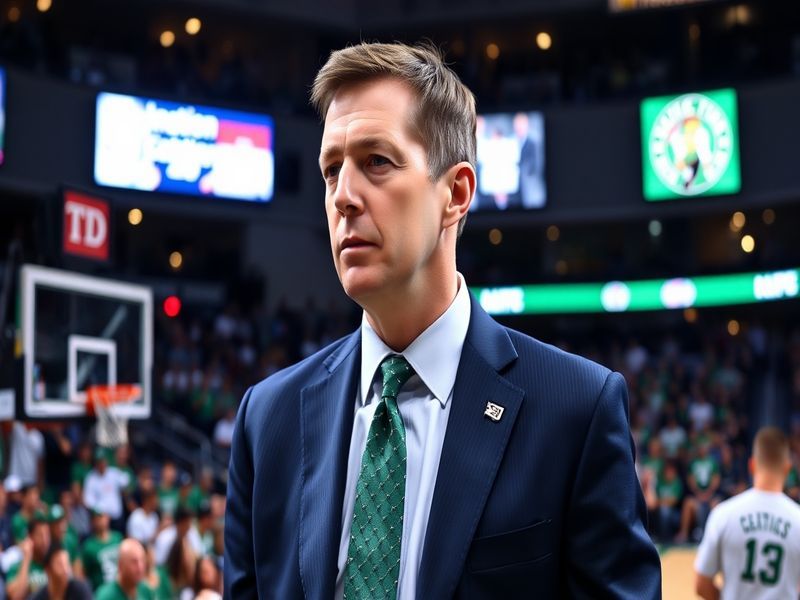
Brad Stevens has spent the better part of two decades reshaping how basketball is played, scouted, and perceived in the NBA. From his early days as a Division III coach to his current role as the president of basketball operations for the Boston Celtics, Stevens has consistently demonstrated an ability to blend analytical rigor with player development. His influence extends beyond wins and losses, touching the very fabric of how modern franchises construct their rosters and strategies.
The Early Years: Building a Foundation
Stevens’ journey to the NBA began in the unlikeliest of places: small-college basketball. After playing at DePauw University, where he earned Academic All-America honors, Stevens transitioned directly into coaching. His first head coaching job came at Butler University in 2007, a program with little national pedigree but a history of overachieving. Under his leadership, Butler reached back-to-back NCAA championship games in 2010 and 2011, defying expectations and capturing the imagination of college basketball fans.
What set Stevens apart during this era wasn’t just his tactical acumen, though that was undeniable. It was his approach to player development and culture-building. He emphasized fundamentals, teamwork, and adaptability—principles that would later define his NBA tenure. His success at Butler wasn’t just about Xs and Os; it was about creating an environment where young players thrived.
Boston Calling: A Cultural Shift in the NBA
In 2013, Stevens joined the Boston Celtics as an assistant coach under Doc Rivers. His rapid ascent was anything but accidental. Within two years, he was promoted to head coach, inheriting a team in transition following the departures of Paul Pierce, Kevin Garnett, and Ray Allen. The Celtics were rebuilding, but Stevens quickly shifted the narrative. His calm demeanor masked a relentless competitive fire, and his ability to maximize limited talent became a hallmark of his tenure.
During his six seasons as head coach, Stevens compiled a 257–144 record, including five playoff appearances. While he never reached the NBA Finals, his teams were known for their discipline, depth, and resilience. Stevens’ leadership style prioritized player autonomy within a structured system, a balance that resonated with a franchise historically defined by its culture of selflessness and hard work.
Key Contributions as Celtics Head Coach
- Player Development: Stevens turned role players like Avery Bradley and Marcus Smart into All-Defensive performers and cornerstone pieces of the franchise.
- Draft Success: He oversaw the drafting of Jaylen Brown (2016) and Jayson Tatum (2017), players who became the foundation of the Celtics’ modern era.
- Culture Reinforcement: Stevens maintained the Celtics’ tradition of accountability and professionalism, even as roster turnover challenged continuity.
- In-Season Adjustments: His ability to adapt mid-game and mid-season kept the Celtics competitive, even when facing stronger opponents.
One of Stevens’ most underrated achievements was his role in the Celtics’ 2017–18 Eastern Conference Finals run. Despite missing Kyrie Irving and Gordon Hayward for long stretches, his team pushed the Cleveland Cavaliers to seven games—a testament to his leadership and the culture he cultivated.
Beyond the Bench: The President’s Role
In 2021, Stevens transitioned into the role of president of basketball operations, a move that signaled a new chapter for both him and the Celtics. His elevation reflected a broader trend in the NBA, where former coaches are increasingly taking on executive responsibilities. Stevens’ appointment underscored the Celtics’ confidence in his ability to oversee both basketball and business operations—a rare dual capacity.
In his first major move, Stevens orchestrated the blockbuster trade that sent multiple assets to the Indiana Pacers in exchange for All-Star forward Jayson Tatum. The deal was a gamble, but it reaffirmed Stevens’ willingness to prioritize star power and long-term flexibility. Since then, he has continued to shape the roster through shrewd drafting (e.g., Payton Pritchard, Al Horford extensions) and calculated free-agent signings.
Stevens’ front-office tenure has also coincided with a league-wide shift toward analytics and positional versatility. His background in college basketball, where resource constraints demand creativity, has translated well into an NBA context where cap management and draft capital are paramount. He has embraced the Celtics’ identity as a team that values intelligence, effort, and adaptability over raw athleticism.
The Stevens Effect: Broader Implications in the NBA
Brad Stevens’ career offers a case study in how coaching philosophies evolve into executive strategies. His success challenges the traditional notion that NBA executives must come from the player path or the analytics side exclusively. Instead, Stevens represents a third path: one rooted in basketball IQ, cultural leadership, and a willingness to trust the process.
His influence is visible across the league. Coaches like Mike D’Antoni and Nick Nurse have cited Stevens as an inspiration for their own adaptive styles. Meanwhile, franchises like the Memphis Grizzlies and San Antonio Spurs have adopted elements of his player-development-first approach. Even in an era dominated by superteams and analytics, Stevens has shown that culture and continuity still matter.
Looking ahead, Stevens’ challenge will be to deliver on the promise of sustained contention. The Celtics remain one of the NBA’s most storied franchises, but the window for a championship is always closing. His ability to navigate the salary cap, manage egos, and develop young talent will determine whether his tenure is remembered as transformative or transitional.
What’s Next for Brad Stevens?
Several narratives surround Stevens’ future:
- Stability in Boston: With Tatum and Brown locked in long-term, Stevens has the core to compete for titles. The question is whether he can add the final piece.
- National Profile: Speculation persists about whether Stevens could one day return to coaching, this time at an even higher level—perhaps even the U.S. Olympic team.
- Legacy Building: Stevens’ impact will ultimately be measured by championships, but his influence on basketball culture is already secure.
- Innovation in the Front Office: As the NBA evolves, Stevens’ ability to blend analytics with traditional scouting will be tested, especially in an era of load management and positional scarcity.
Regardless of what comes next, Brad Stevens has already cemented his place as one of the most influential figures in modern basketball. His career underscores the value of adaptability, preparation, and trust—qualities that transcend the game itself.
For Celtics fans, he represents hope. For the NBA, he is a blueprint. And for aspiring coaches and executives, he is proof that success is not about reinventing the wheel, but about knowing when to push it forward.
As the Celtics continue their pursuit of another banner, all eyes will remain on Stevens—not just for the moves he makes, but for the principles he upholds. In a league obsessed with the next big thing, his steady hand offers a refreshing reminder: sometimes, the smartest strategy is the one that lasts.
Read more Celtics analysis on Dave’s Locker or explore in-depth basketball coverage.