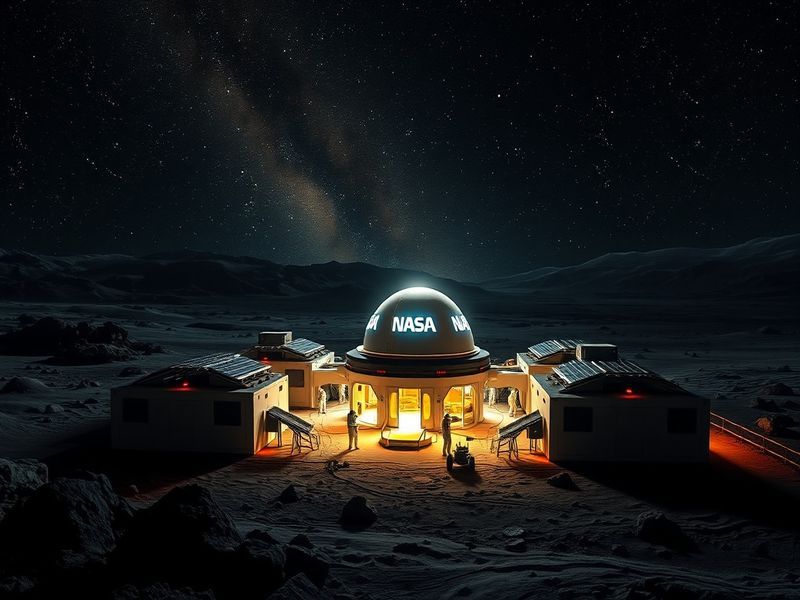
The Vision for a NASA Moon Base
The concept of establishing a permanent NASA Moon base has transitioned from science fiction to a tangible goal. As humanity seeks to explore beyond Earth, the Moon presents a unique opportunity for scientific research and technological advancement. NASA’s Artemis program aims to return humans to the lunar surface by the mid-2020s, paving the way for a sustainable presence on the Moon.
Objectives of the Moon Base
A NASA Moon base would serve multiple purposes, including:
- Scientific Research: Conducting experiments in lunar geology, biology, and astrophysics.
- Technological Development: Testing new technologies that could be used for future missions to Mars and beyond.
- Resource Utilization: Exploring the potential for mining lunar resources, such as water ice and helium-3.
- International Collaboration: Fostering partnerships with other countries and private sectors in space exploration.
These objectives align with NASA’s broader mission of advancing space exploration and understanding our universe. The establishment of a Moon base could act as a stepping stone for human missions to Mars, providing vital insights and experience in long-duration space habitation.
Technological Challenges and Innovations
Building a Moon base is fraught with challenges. The harsh lunar environment, characterized by extreme temperatures, radiation, and micrometeorite impacts, necessitates innovative solutions. NASA and its partners are exploring various technologies that could facilitate lunar habitation.
Key innovations include:
- Habitat Design: Developing structures that can withstand lunar conditions, possibly using local materials.
- Life Support Systems: Creating closed-loop systems for air and water recycling to support human life.
- Energy Generation: Utilizing solar power and other sustainable energy sources to meet the base’s energy needs.
- Transportation: Designing rovers and other vehicles for surface exploration and transportation of materials.
These technological advancements not only contribute to lunar exploration but also have potential applications on Earth. For instance, innovations in life support systems could improve water purification and air filtration technologies.
Broader Implications of a Lunar Presence
The establishment of a Moon base could have far-reaching implications beyond scientific discovery. It represents a significant step in humanity’s journey into the cosmos, fostering a sense of global unity and shared purpose. As nations collaborate on lunar missions, the potential for international conflict over resources may decrease, promoting peace and cooperation.
Moreover, a permanent lunar presence could stimulate economic growth. Investments in space technology and infrastructure could lead to job creation and spur advancements in various industries. As the private sector increasingly participates in space exploration, new markets may emerge, including space tourism and lunar resource extraction.
In conclusion, the vision of a NASA Moon base is an ambitious yet achievable goal that could redefine humanity’s relationship with space. As we stand on the brink of this new frontier, the possibilities for exploration, innovation, and international collaboration are immense. The Moon may soon become a vital hub for future missions to Mars and beyond, marking a new chapter in our quest to understand the universe.
For more insights into the latest developments in space exploration, visit our Science and Technology categories.