South Africa vs New Zealand: Rugby’s Global Rivalry Beyond the Field
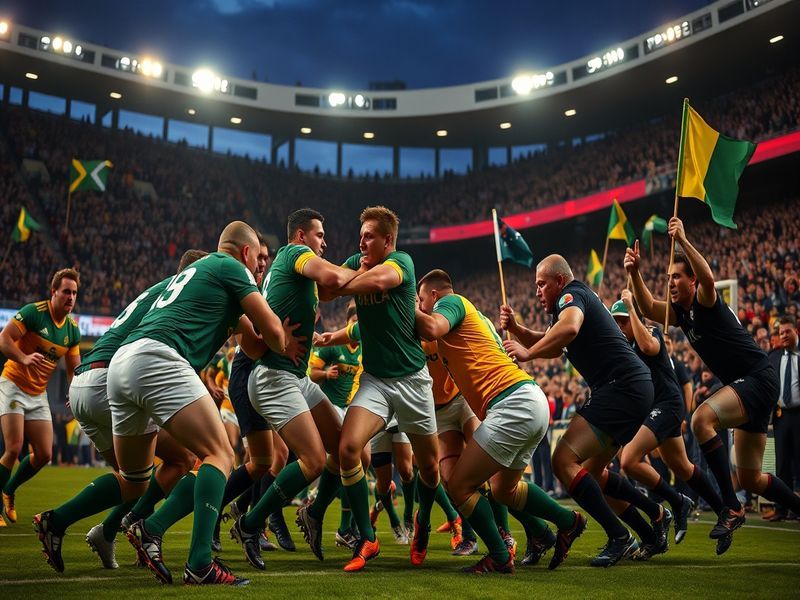
Few sporting rivalries carry the weight of history, culture, and identity like the one between South Africa and New Zealand on the rugby field. This contest transcends mere competition, weaving together narratives of national pride, colonial legacy, and social transformation. While the All Blacks and Springboks have battled for over a century, their encounters reflect deeper global shifts in sport, politics, and identity.
The rivalry began in 1921, when a New Zealand touring team first faced South Africa’s national side. At the time, both nations were British dominions, sharing rugby’s traditions while developing distinct identities. For South Africa, rugby became a symbol of Afrikaner nationalism during the apartheid era, while New Zealand embraced the sport as a unifying force across its multicultural society. These contrasting paths would later make their clashes on the pitch a microcosm of broader societal changes.
The 1981 Tour and the Weight of Apartheid
One of the most contentious moments in rugby history occurred in 1981, when New Zealand’s government controversially allowed a Springbok tour despite international opposition to apartheid. The decision sparked massive protests in New Zealand, with civil disobedience and clashes between police and anti-apartheid activists. The tour went ahead, but it deepened global condemnation of South Africa’s racial policies and reinforced rugby’s role as a political battleground.
By the time Nelson Mandela was released from prison in 1990, the Springboks were still banned from international competition. When South Africa returned to the rugby world stage in 1992, their first major opponent was New Zealand. That match, played in Johannesburg, symbolized a new era. Just four years later, when South Africa hosted and won the Rugby World Cup, Mandela famously wore a Springbok jersey to the final, sending a powerful message of reconciliation to a still-divided nation.
On-Field Brilliance: A Legacy of Dominance and Drama
The All Blacks and Springboks have met 107 times, with New Zealand holding a historical edge in wins. Their clashes are renowned for intensity, skill, and tactical innovation. From the 1995 World Cup final—one of the most watched rugby matches in history—to last year’s dramatic 31-27 victory for South Africa in Wellington, each encounter adds a new chapter to their storied rivalry.
What makes this rivalry unique is the balance of power. Unlike many sporting duopolies, neither team has consistently dominated. Both sides have produced legendary players: New Zealand’s Jonah Lomu, Richie McCaw, and Dan Carter; South Africa’s Bryan Habana, Siya Kolisi, and Faf de Klerk. Their battles are as much about individual brilliance as they are about national honor.
Key moments in their rivalry include:
- 1995 Rugby World Cup Final (Johannesburg): South Africa defeated New Zealand 15-12 in extra time, a match that transcended sport and became a symbol of post-apartheid hope.
- 2009 Tri-Nations Match (Hamilton): New Zealand won 19-15 in a game remembered for Richie McCaw’s leadership and a controversial last-minute penalty decision.
- 2021 Rugby Championship (Cape Town): South Africa beat New Zealand 31-29 in a match that featured a record-equalling five tries from the hosts and cemented their reputation as a team for the big occasion.
Cultural and Global Significance
This rivalry matters beyond the scoreboard. In New Zealand, rugby is woven into the national psyche. The haka—performed before every All Blacks match—is a declaration of strength, identity, and respect. It’s a cultural performance that commands global attention, reinforcing New Zealand’s image as a small but powerful nation that punches above its weight.
In South Africa, rugby’s legacy is more complex. Under apartheid, the Springboks represented white minority rule. After 1994, they became a symbol of unity. Siya Kolisi, South Africa’s first Black captain, leading the team to back-to-back World Cup titles in 2019 and 2023, embodied this transformation. His journey from a township in Port Elizabeth to World Cup glory became a story of national progress.
Globally, the rivalry has helped shape rugby’s international profile. Matches between these two teams draw millions of viewers and generate significant revenue for World Rugby. They also inspire young players across Africa, the Pacific, and beyond, proving that rugby can be both a path to excellence and a platform for social change.
Looking Ahead: What’s Next for the Rivalry?
As rugby evolves, so does this rivalry. The rise of professional competitions like the Rugby Championship and the inclusion of emerging nations like Argentina have added new layers. Yet the core remains: when South Africa and New Zealand meet, it’s more than a game. It’s a collision of histories, values, and dreams.
The next chapter could be written in France, where the 2023 Rugby World Cup left South Africa as champions and New Zealand searching for redemption. With both teams rebuilding and new stars emerging, fans worldwide can expect more drama, more heart, and more stories that go far beyond the try line.
For those who follow sports as a lens on society, this rivalry offers a rare blend of athleticism, politics, and culture. It reminds us that the greatest sporting contests are not just about who wins, but what they represent—and how they inspire generations to come.
The Springboks and All Blacks don’t just play for points. They play for pride, for progress, and for the soul of rugby itself.