Stephen Colbert’s Love for Lord of the Rings: A Pop Culture Bridge
Stephen Colbert’s Love for Middle-earth: A Cultural Bridge Between Comedy and Fantasy
The intersection of comedy and epic fantasy rarely yields moments as memorable as Stephen Colbert’s genuine enthusiasm for The Lord of the Rings. While best known for his sharp wit and political satire on The Late Show, Colbert has repeatedly demonstrated a deep, decades-long affection for J.R.R. Tolkien’s legendarium. This blend of humor and high fantasy offers a unique lens through which to view both the genre and contemporary pop culture.
Colbert’s admiration for Tolkien’s work isn’t merely performative—it’s rooted in a lifelong engagement that predates his fame. As a child, he read the books voracently. As an adult, he has woven references into his comedy, interviewed Peter Jackson, and even hosted a Lord of the Rings-themed segment during the franchise’s 20th anniversary in 2013. These moments reveal how a comedian can become an unlikely ambassador for literary and cinematic worlds.
The Roots of Colbert’s Tolkien Fandom
Born in 1964, Colbert grew up during the era when Tolkien’s books gained widespread popularity in the United States. The 1978 animated adaptation of The Lord of the Rings and the 1982 BBC radio dramatization introduced many young readers to Middle-earth. Colbert, raised in a Catholic household with a strong literary tradition, found solace and inspiration in Tolkien’s themes of hope, resilience, and moral clarity—values that contrast with the cynicism often associated with modern satire.
In a 2014 interview with Peter Jackson, Colbert shared how reading Tolkien as a child helped him cope with loneliness and uncertainty. “There was something about the idea that even the smallest person could do something extraordinary,” he said. This sentiment mirrors the ethos of The Lord of the Rings, where hobbits—small, unassuming beings—carry the fate of the world. It’s a theme that resonates deeply with Colbert’s own journey from a shy, bookish child to one of television’s most influential voices.
Colbert’s On-Air Celebrations of Middle-earth
Colbert has never shied away from celebrating his passion for Tolkien on national television. One of the most iconic moments came during a 2009 episode of The Colbert Report, when he delivered a monologue dressed as Gandalf the Grey, complete with staff and beard. The bit was both humorous and sincere, poking fun at the grandeur of fantasy while honoring its emotional core.
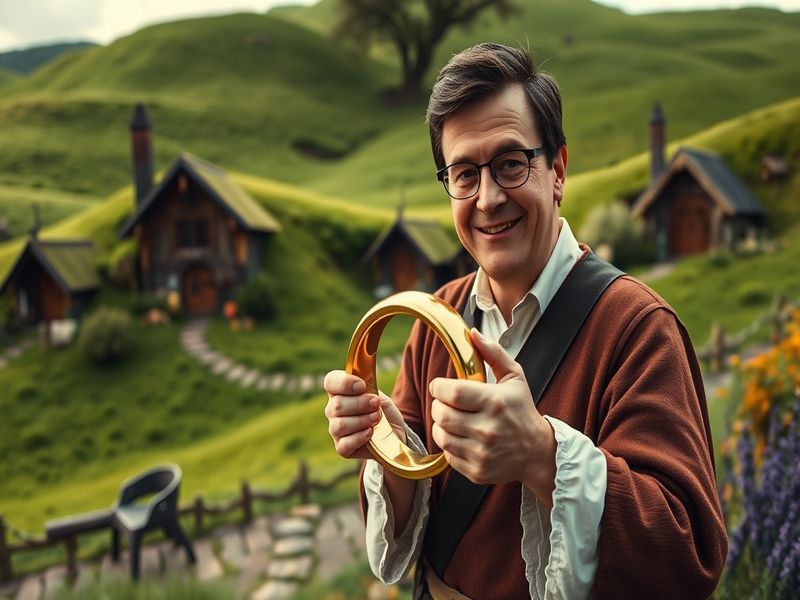
During that segment, Colbert quipped, “You cannot wield the power of the One Ring without being corrupted by it—unless you’re me, of course. I wield the power of the One Pound Sterling, and I am completely corrupt.” The joke underscored the show’s satirical edge while paying tribute to the moral complexity of Tolkien’s narrative.
The host has also used Tolkien references to critique modern politics. In a 2012 segment, he compared the U.S. Congress to the forces of Mordor, suggesting that partisan gridlock was “a shadow of inefficiency” descending upon Washington. The comparison, while humorous, highlighted a deeper truth: the need for unity in the face of existential challenges—a central theme in The Lord of the Rings.
Global Influence: How a Comedian Introduces Tolkien to New Audiences
Colbert’s fandom has contributed to the global longevity of Tolkien’s work, particularly among younger and more diverse audiences who might not otherwise engage with fantasy literature. Through satire, parody, and genuine admiration, he has made Middle-earth accessible to millions who might not pick up a 1,200-page novel.
In countries where The Lord of the Rings films were popular but not universally embraced, Colbert’s segments helped normalize the franchise. For instance, in Japan, where fantasy literature often carries a niche reputation, Colbert’s playful references introduced Tolkien’s world to viewers who might not have encountered it otherwise. This cross-cultural exchange demonstrates how pop culture ambassadors can shape the reception of classic works.
Colbert’s influence extends beyond television. His interviews with Peter Jackson and Viggo Mortensen have been cited by fans as key moments in their own fandom. By blending humor with reverence, he has created a space where both casual viewers and hardcore fans can celebrate Tolkien’s legacy together.
The Legacy of Colbert’s Middle-earth Moments
Stephen Colbert’s relationship with The Lord of the Rings is more than a quirky side note—it’s a testament to how pop culture can evolve across genres and generations. His ability to honor Tolkien’s work while infusing it with humor has made Middle-earth feel relevant to new audiences without diminishing its original power.
In an era where fantasy dominates global box offices and streaming platforms, Colbert’s fandom reminds us that these stories are not just escapist entertainment. They are moral fables, historical allegories, and sources of comfort. Through his comedy, Colbert has helped preserve Tolkien’s vision while making it accessible to millions who might never have picked up a book or bought a ticket to a midnight premiere.
As the franchise continues to inspire new adaptations—from Amazon’s The Rings of Power to potential future films—Colbert’s role as a cultural bridge remains significant. He doesn’t just celebrate Middle-earth; he invites others to see its relevance in their own lives, whether through the lens of satire, politics, or personal growth.
For fans of both comedy and fantasy, Colbert’s journey through Middle-earth is a reminder that great stories transcend their mediums. And in the hands of a master like Colbert, they become something even greater: a shared cultural experience that brings people together across divides of age, geography, and taste.
Whether you’re a lifelong Tolkien devotee or a newcomer curious about the hype, Stephen Colbert’s love for The Lord of the Rings offers a welcoming entry point into a world of adventure, wisdom, and wonder.
Where to Go Next: Tolkien and Pop Culture
If you’re interested in exploring how Tolkien’s work continues to influence modern media, consider diving into these related areas:
- Entertainment: Discover how fantasy films and TV shows are redefining storytelling in the 21st century.
- Culture: Explore the global impact of literary adaptations and how they shape national identity.
- Gaming: See how video games like The Lord of the Rings: Return to Moria are introducing Tolkien’s world to new generations.
Each of these paths offers a deeper understanding of why Tolkien’s work—and Colbert’s affection for it—endures across decades and cultures.