Thunder vs Celtics: How Two NBA Styles Are Redefining Basketball
The Oklahoma City Thunder and Boston Celtics have emerged as two of the NBA’s most compelling teams this season, their rivalry extending beyond the court into a broader conversation about the future of basketball. With contrasting styles and philosophies, this matchup isn’t just about wins and losses—it’s a collision of basketball ideologies that could redefine how the game is played in the coming years.
The Rise of Two Distinct Philosophies
The Thunder represent a new wave of basketball characterized by positionless play and defensive versatility. Led by young stars Chet Holmgren and Jalen Williams, Oklahoma City has built a roster that defies traditional positional labels. Their success stems from players who can switch onto multiple positions, making them uniquely equipped to handle modern offenses.
The Celtics, meanwhile, have doubled down on their identity as a team built around two superstars. Jayson Tatum and Jaylen Brown remain the cornerstones of a franchise that has prioritized individual brilliance within a structured system. Boston’s approach harks back to a more traditional model where elite one-on-one creators anchor championship aspirations.
- Thunder’s style: Positionless basketball, defensive versatility, and player development as a core strategy
- Celtics’ approach: Superstar-driven system with structured roles and championship experience
- Key differentiator: Oklahoma City’s flexibility versus Boston’s reliance on star power
Recent Encounters: A Battle of Styles
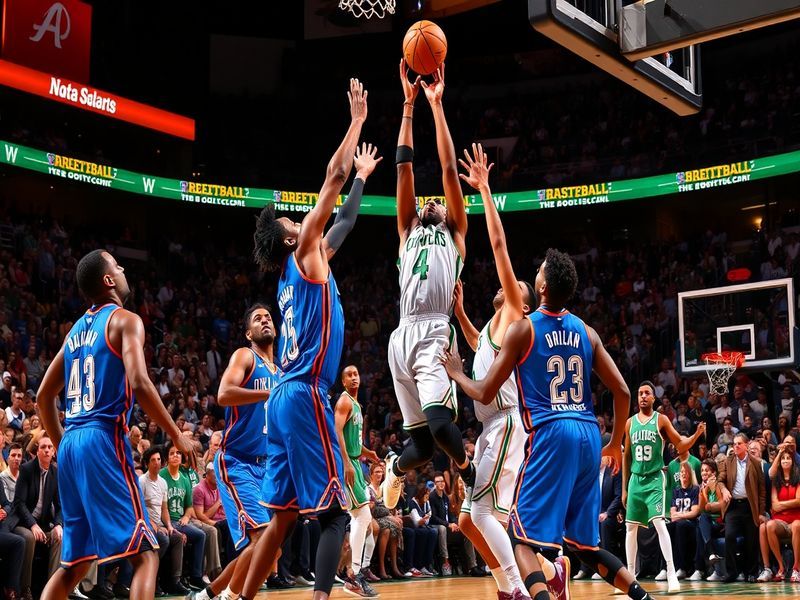
Their most recent series revealed the tactical chess match between these two approaches. In their latest meeting, the Thunder’s length and switching defense stifled Boston’s half-court offense, forcing Tatum into isolation situations where he’s less effective. Oklahoma City’s bench unit, featuring standout performances from rookie Cason Wallace, provided the necessary scoring punch to outlast the Celtics.
Statistically, the Thunder have dominated the glass in these matchups, using their athleticism to overwhelm Boston’s frontcourt. The Celtics, despite their offensive firepower, have struggled to generate second-chance opportunities against Oklahoma City’s long-armed defenders. These trends suggest that the Thunder’s style may have found a way to neutralize Boston’s traditional strengths.
What These Games Reveal About the NBA’s Future
These matchups aren’t just about two teams competing—they represent a microcosm of basketball’s evolution. The Thunder’s success suggests that the league may be trending toward positionless basketball, where versatility and defensive IQ outweigh traditional scoring roles. Meanwhile, the Celtics’ continued excellence indicates that superstar-driven systems still have a place in the modern game.
For fans, this rivalry offers more than just entertainment. It provides a living laboratory where two distinct visions of basketball’s future collide. The outcomes of these games could influence how general managers construct rosters in the coming years, with teams increasingly valuing players who can fulfill multiple roles.
Broader Implications for the League
The Thunder-Celtics dynamic extends beyond their head-to-head battles. Their contrasting approaches reflect a league at an inflection point. The NBA’s rule changes have increasingly favored offense, but the Thunder’s defensive resurgence proves that innovation on that end can still win championships.
For smaller-market teams, Oklahoma City’s model offers a blueprint. By investing in player development and prioritizing system over stars, franchises in less glamorous markets can compete with the big-city powerhouses. The Celtics, meanwhile, demonstrate that even in an era of player empowerment, team-first systems can still achieve sustained success.
As the season progresses, this rivalry will likely intensify. The NBA playoffs often reward teams that can adapt to different styles, and both Oklahoma City and Boston have shown they can adjust mid-game. Their potential postseason meeting would be one of the most fascinating matchups in recent memory, pitting two distinct visions of basketball against each other.
Regardless of how this particular rivalry unfolds, its broader impact on the league is already clear. The Thunder and Celtics are forcing the NBA to confront fundamental questions about how the game should be played. Their success—each team sits comfortably in the top five of their respective conferences—suggests that both philosophies have merit in the modern game.
For fans seeking more analysis on basketball trends, visit our Sports section for regular updates on how these developments shape the league. Those interested in deeper strategic breakdowns should check out our Analysis page, where we dissect basketball trends with data-driven insights.
Conclusion: A Rivalry With Lasting Impact
The Thunder vs Celtics rivalry transcends the typical NBA narrative. It’s not just about two teams trying to outscore each other—it’s about two competing visions for basketball’s future. The Thunder’s positionless approach challenges traditional notions of player roles, while the Celtics’ star-driven system represents the enduring power of elite individual talent.
As the season progresses, their battles will continue to shape how teams build their rosters and develop players. For the NBA, this rivalry offers a glimpse into what the league might look like in five years. The teams that can successfully blend these philosophies—flexibility with star power, defense with offense—will likely be the ones hoisting championships in the years to come.
One thing is certain: the Thunder and Celtics have elevated the league’s discourse. Their rivalry has become a referendum on how basketball should be played in the modern era. Whether you prefer the positional fluidity of Oklahoma City or the structured brilliance of Boston, one thing cannot be denied—the NBA has never been more compelling.