Exploring the Timeless Legacy of The Three Musketeers
The Legacy of The Three Musketeers
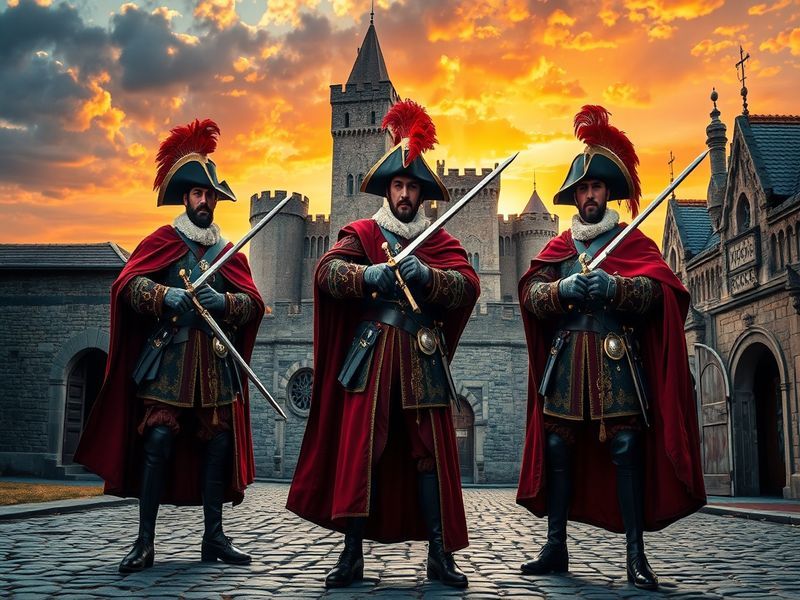
Published in 1844, Alexandre Dumas’ novel “The Three Musketeers” has transcended generations, captivating readers with its themes of friendship, loyalty, and adventure. Set in 17th-century France, the tale revolves around d’Artagnan and his quest to join the elite group of musketeers. Alongside Athos, Porthos, and Aramis, d’Artagnan embarks on a series of thrilling escapades, challenging the corruption of the monarchy and the schemes of Cardinal Richelieu.
This story has evolved from its literary origins into various adaptations across different media, including films, television shows, and even stage performances. Each interpretation brings a new layer to the characters and plot, illustrating the timeless nature of Dumas’ work.
Key Characters and Their Dynamics
The strength of “The Three Musketeers” lies in its richly developed characters. Each musketeer embodies distinct traits that contribute to their dynamic as a group. Here are some essential aspects of each character:
- d’Artagnan: The ambitious young man who seeks glory and honor.
- Athos: The brooding and noble musketeer with a mysterious past.
- Porthos: The larger-than-life character, known for his strength and love of pleasure.
- Aramis: The charming and romantic figure, often torn between duty and desire.
These characters not only represent different facets of masculinity but also illustrate the complexities of human relationships. Their interactions reveal themes of loyalty and betrayal, showcasing how personal ambitions can impact friendships.
Broader Implications of the Story
The narrative of “The Three Musketeers” extends beyond mere adventure. It subtly critiques the political landscape of Dumas’ time, reflecting on power struggles and the nature of loyalty. The musketeers’ allegiance to the king, despite his flaws, raises important questions about duty and morality.
In contemporary contexts, the themes of the novel resonate with ongoing discussions about leadership and integrity. As society grapples with issues of governance, the musketeers serve as a reminder of the importance of standing up for one’s beliefs, even in the face of adversity. Their camaraderie illustrates that true friendship often requires sacrifice, a lesson that remains relevant today.
Adaptations and Their Impact
The numerous adaptations of “The Three Musketeers” reflect its enduring popularity. From the classic 1948 film to modern reimaginings, each version offers a unique lens through which to view the story. Some notable adaptations include:
- 1973 film starring Michael York
- 1993 Disney version featuring Charlie Sheen
- Recent television series that explore deeper character arcs
These adaptations have not only kept the story alive but have also introduced it to new audiences. The reinterpretations often emphasize different themes, whether it be romance, action, or political intrigue, showcasing the versatility of Dumas’ narrative.
Moreover, the continued interest in the musketeers reflects a cultural fascination with heroism and adventure. As modern society seeks figures who embody courage and loyalty, the musketeers serve as archetypes that inspire individuals to pursue their ideals.
Conclusion
“The Three Musketeers” is more than a simple tale of adventure; it is a profound exploration of friendship, loyalty, and the moral dilemmas that arise in the face of power. The characters, with their distinct personalities and complex relationships, offer insights into human nature that remain relevant across time and cultures. As adaptations continue to evolve, the story’s core themes endure, resonating with audiences and prompting reflection on the values we hold dear.
For those interested in further exploring the themes of adventure and loyalty, consider visiting our Culture and Entertainment pages for more engaging content.