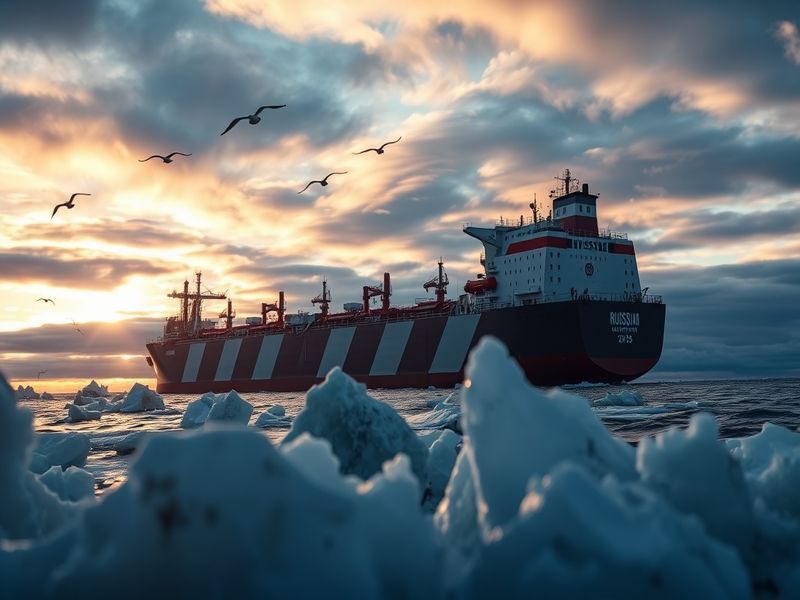
The global oil trade is a vast, intricate network where politics, economics, and geography intersect. At the center of this web are oil tankers—massive vessels that silently ferry millions of barrels across oceans. Among these ships, Russian oil tankers have recently drawn heightened scrutiny due to geopolitical tensions and shifting trade routes. This isn’t just about ships; it’s about the delicate balance of energy dependence, international sanctions, and the evolving dynamics of global power.
The story of Russian oil tankers is one of adaptation, resilience, and the quiet reshaping of maritime trade. As Western sanctions tighten, these vessels are forced into creative maneuvers to keep oil flowing. Some reroute through distant ports, while others adopt shadowy practices to obscure their origins. The result is a market that’s becoming harder to track—and a trade system that’s increasingly vulnerable to manipulation.
The Role of Russian Oil in the Global Market
Russia remains one of the world’s largest oil producers, despite years of sanctions and economic pressures. Its crude oil and petroleum products flow to Europe, Asia, Africa, and beyond, making it a critical player in the energy sector. The country’s oil industry has historically relied on tankers to transport its resources, with routes stretching from the Baltic and Black Seas to the Pacific.
Europe, once the primary destination for Russian oil, has gradually reduced its imports in response to the war in Ukraine. This shift has forced Russia to pivot eastward, forging stronger trade ties with China, India, and other Asian nations. The transition hasn’t been seamless. Longer shipping routes, higher insurance costs, and the threat of sanctions have added layers of complexity to an already volatile trade.
According to industry reports, Russian oil exports to China surged by over 50% in the two years following the invasion of Ukraine. Meanwhile, exports to Europe plummeted. This geographic shift has not only altered trade flows but also intensified competition among shipping companies vying for contracts in the lucrative Asian market.
Key Routes and Challenges
- Arctic Route: Russia has increasingly explored Arctic shipping lanes as melting ice opens new possibilities. However, harsh conditions and limited infrastructure pose significant risks.
- Black Sea Route: Historically a major export corridor, this route has faced disruptions due to conflict and sanctions, pushing traders to seek alternative paths.
- Far East Route: Tankers bound for China and India often take the long journey around the Cape of Good Hope or through the Strait of Malacca, adding weeks to transit times.
- Shadow Fleet: To evade sanctions, some Russian oil is transported using a “shadow fleet” of older, less traceable tankers. These vessels often change names and flags to obscure their origins.
The Shadow Fleet: A Growing Concern
The term “shadow fleet” refers to a network of vessels that operate outside traditional regulatory frameworks. These ships, often aged and poorly maintained, are used to transport sanctioned Russian oil. Their operations highlight the lengths to which traders will go to keep the oil flowing—and the risks they’re willing to take.
Insurance companies, wary of violating sanctions, have become reluctant to cover these vessels. In response, some shipowners have turned to obscure insurers or self-insurance, increasing the financial and operational risks. The shadow fleet isn’t just a logistical challenge; it’s a safety hazard. Older tankers are more prone to accidents, spills, and structural failures, posing threats to both the environment and maritime security.
Environmental groups have sounded alarms about the shadow fleet’s impact. A single spill from an aging tanker could devastate marine ecosystems, particularly in sensitive regions like the Arctic or the Baltic Sea. Yet, the financial incentives to use these vessels remain strong, as the profits from transporting sanctioned oil often outweigh the risks.
Regulatory Crackdowns and Their Limits
Governments and international organizations have struggled to curb the shadow fleet’s operations. The U.S. and EU have imposed sanctions on specific vessels and companies, but enforcement is difficult. Ships can easily change flags, names, and ownership records to evade detection.
In 2023, the U.S. Treasury Department targeted a network of companies linked to the shadow fleet, but the cat-and-mouse game continues. Analysts warn that without stronger international cooperation, the shadow fleet will persist, undermining sanctions and distorting global oil markets.
Cultural and Economic Ripples Across the Globe
The ripple effects of Russian oil tankers extend far beyond shipping lanes. In ports like Rotterdam, Singapore, and Shanghai, the arrival of Russian crude has sparked debates about energy security and ethical trade. European refineries, once heavily dependent on Russian oil, have scrambled to replace lost supplies, driving up costs for consumers and industries alike.
In Asia, the influx of Russian oil has reshaped energy dynamics. China and India, both major importers, have capitalized on discounted Russian crude to bolster their economies. However, this dependence comes with its own set of challenges, including geopolitical pressure from Western allies and the risk of further sanctions.
The cultural impact is equally significant. In countries like India, where energy demand is surging, Russian oil tankers have become symbols of both economic opportunity and geopolitical tension. Meanwhile, in Europe, the decline of Russian oil imports has accelerated the push for renewable energy, as nations seek to reduce their reliance on volatile fossil fuel markets.
Long-Term Implications for Global Trade
The Russian oil tanker saga is more than a short-term disruption—it’s a glimpse into the future of global trade. As geopolitical tensions rise, supply chains are becoming more fragmented, and traditional trade routes are being redrawn. This shift has implications for everything from shipping insurance to port infrastructure.
One of the most significant changes is the growing role of “flags of convenience,” where ships register in countries with lax regulations to avoid scrutiny. This practice, already common in the shipping industry, is now being exploited to evade sanctions and oversight. The result is a trade system that’s increasingly opaque and difficult to regulate.
For consumers, the consequences are already visible. Higher energy prices, supply shortages, and volatility in commodity markets are direct results of these disruptions. Over time, these challenges could drive a fundamental reassessment of how the world sources and consumes energy.
What’s Next for Russian Oil Tankers?
The future of Russian oil tankers hinges on several factors: the outcome of the war in Ukraine, the effectiveness of sanctions, and the global shift toward renewable energy. If sanctions remain in place, the shadow fleet will likely continue to grow, further complicating efforts to track and regulate oil shipments. Alternatively, a negotiated peace could restore traditional trade routes, though the geopolitical landscape may never return to its pre-war state.
One thing is clear: the era of cheap, unchecked Russian oil is over. The global energy market is entering a new phase, where resilience, adaptability, and ethical trade will determine which nations—and which industries—thrive. For shipping companies, insurers, and policymakers, the lessons of the Russian oil tanker saga will shape strategies for decades to come.
For readers interested in the broader implications of global trade, explore our News and Analysis sections for deeper insights into how these trends are reshaping economies and societies worldwide.
Conclusion: A Market in Flux
The story of Russian oil tankers is a microcosm of the global energy crisis. It’s a tale of adaptation, resilience, and unintended consequences, where every decision reverberates across oceans and markets. As the world grapples with the fallout of geopolitical conflicts and the urgent need for sustainable energy, the role of these tankers will remain a critical—and evolving—part of the narrative.
For now, the seas remain crowded with ships carrying Russian crude, their voyages a testament to the enduring power of oil in a changing world. The challenge ahead is to navigate this complexity without sacrificing safety, transparency, or the health of our planet.