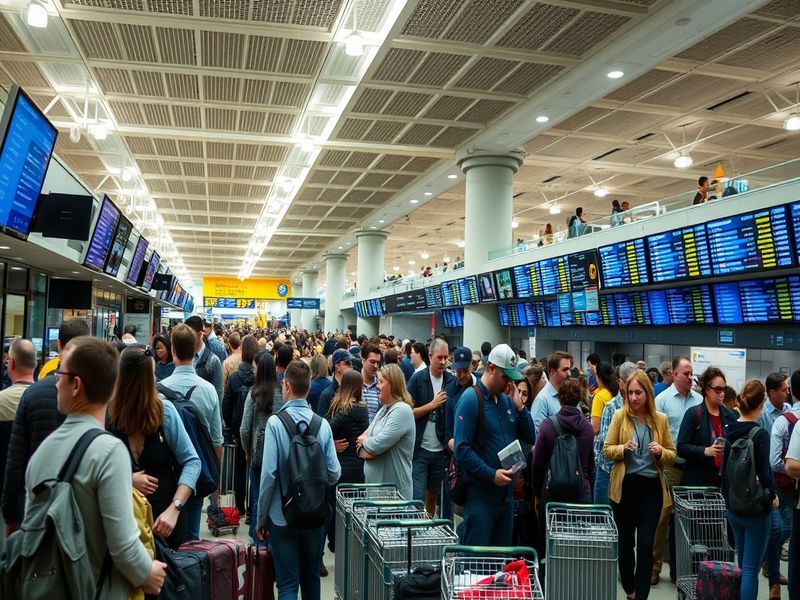
IAH Wait Times Explained: Why Global Airports Are Struggling
Houston’s George Bush Intercontinental Airport (IAH) serves as a critical hub for transatlantic and Latin American travel, yet its wait times frequently make headlines. The airport’s passenger experience is shaped by factors far beyond local control, from global travel trends to geopolitical shifts. Understanding IAH’s wait times requires looking beyond the tarmac to the broader dynamics affecting airports worldwide.
Airport delays are not unique to IAH. In 2023, Europe’s busiest airports like London Heathrow and Paris Charles de Gaulle reported average wait times of over 40 minutes during peak summer months. Similarly, Dubai International, a key Middle Eastern transit point, saw queues exceed 50 minutes during holiday travel periods. These figures reflect a global pattern where demand outpaces capacity, a trend that has intensified since the post-pandemic travel surge.
The Global Context: Why Airports Are Struggling
The rise in wait times at airports like IAH can be traced to several interconnected factors. First, the rebound in air travel demand has been stronger than anticipated. In 2023, global passenger traffic reached 94% of pre-pandemic levels, according to the International Air Transport Association (IATA). This rapid recovery caught many airports off guard, as staffing and infrastructure had not yet fully adjusted.
Staffing shortages have compounded the issue. Many airports, including IAH, faced labor challenges as workers transitioned to other industries during the pandemic and have not returned at the same rate. Security and customs personnel, in particular, remain in high demand but short supply in many regions. The situation is most acute in North America, where the Transportation Security Administration (TSA) reported a 10% shortfall in screeners in 2023.
Infrastructure limitations also play a role. While IAH has expanded its terminals in recent years, the growth in passenger numbers has outpaced physical upgrades. This imbalance is common at major international hubs. For example, Singapore’s Changi Airport, despite its reputation for efficiency, has seen wait times increase by 20% since 2022 due to terminal renovations and increased flight schedules.
Cultural Differences in Airport Efficiency
Wait times are not solely a matter of logistics; they are also influenced by cultural attitudes toward time and service. In some countries, efficiency is prioritized above all else. South Korea’s Incheon International Airport, for instance, consistently ranks among the fastest in the world, with average wait times under 15 minutes. This success is attributed to high automation, strict adherence to schedules, and a cultural emphasis on precision.
In contrast, airports in regions with more relaxed attitudes toward time—such as parts of Latin America and the Middle East—often face longer wait times due to operational inefficiencies. However, this is not a universal rule. Dubai International Airport, despite its cultural context, maintains relatively short wait times due to heavy investment in technology and staff training.
The contrast between these models highlights an important truth: wait times are less about geography and more about policy and investment. Airports that prioritize modernization and staffing tend to perform better, regardless of their location.
The Human Impact: What Long Waits Really Mean
The consequences of long wait times extend far beyond inconvenience. For business travelers, delays can mean missed meetings and lost revenue. A study by the Global Business Travel Association found that executives spend an average of 3.5 hours per trip in airport queues, translating to significant productivity losses. For tourists, long waits can dampen the excitement of travel, turning what should be a seamless experience into a stressful ordeal.
Families traveling with children are particularly affected. The stress of navigating security lines with tired or restless children can turn a routine trip into a challenge. Airports like IAH have attempted to address this by designating family lanes, but these solutions are often temporary fixes rather than long-term remedies.
For airlines, long wait times at airports translate to higher operational costs. Ground crews must manage delayed departures, while flight crews face extended duty periods, both of which increase expenses. These costs are often passed on to consumers, making air travel more expensive for everyone.
What’s Being Done—and What’s Not Working
Airports and governments have taken steps to mitigate wait times, but results have been mixed. The U.S. Transportation Security Administration (TSA) has implemented programs like TSA PreCheck and the Deployment of Innovative Technology (DIT) to speed up security screening. However, these solutions are not universally accessible. TSA PreCheck, for example, requires an application process and fee, which excludes many travelers.
In Europe, the European Union has invested in automated border control systems at major hubs like Amsterdam Schiphol and Frankfurt Airport. These systems use biometric scanning to process passengers in under 20 seconds. While effective, they require significant upfront investment, limiting their adoption in smaller or less wealthy airports.
At IAH, the Houston Airport System has partnered with airlines to expand automated check-in and bag drop services. These efforts have reduced wait times at check-in counters by 15% since 2022. However, the most significant delays still occur at security and customs, areas where automation is less effective due to regulatory requirements.
Short-Term Fixes vs. Long-Term Solutions
Most airports rely on short-term fixes to manage wait times, such as hiring temporary staff or extending operating hours. While these measures provide temporary relief, they do not address the root causes of congestion. Long-term solutions require a combination of infrastructure upgrades, policy changes, and technological innovation.
For example, IAH has proposed a $3.5 billion expansion plan to add new runways and terminals by 2030. If completed, this project could reduce congestion significantly. However, such projects take years to implement and often face regulatory hurdles and community opposition.
Another promising approach is the use of artificial intelligence to predict and manage crowding. Airports like Singapore’s Changi are testing AI-driven systems that analyze passenger flow in real time, allowing staff to adjust resources dynamically. While still in early stages, these technologies could revolutionize airport operations in the coming decade.
The Future of Air Travel: Can Wait Times Be Eliminated?
The dream of seamless, stress-free air travel remains elusive, but progress is being made. Airports like Tokyo Narita and London Heathrow have reduced wait times by 30% over the past five years through a combination of automation, staffing increases, and infrastructure upgrades. These examples suggest that with the right investments, wait times can be significantly reduced.
However, the global nature of air travel means that improvements at one airport can be undermined by problems elsewhere. For example, a delay at a major European hub like Frankfurt can cascade into delays across the Atlantic, affecting IAH and other U.S. airports. This interdependence underscores the need for coordinated international efforts to modernize air travel infrastructure.
For travelers, the best strategy is to plan ahead. Booking early morning flights, enrolling in expedited screening programs, and allowing extra time for connections can mitigate the impact of wait times. Airlines and airports are also improving communication, with real-time updates via apps and digital displays helping passengers make informed decisions.
The challenges facing IAH and airports worldwide are not insurmountable, but they require sustained effort and investment. As air travel continues to grow, the pressure to innovate will only increase. The airports that succeed in the future will be those that embrace technology, prioritize efficiency, and adapt to the evolving needs of passengers.
For now, travelers must remain patient—and perhaps pack an extra book for the security line.
For more insights on travel trends and airport updates, visit our Travel section.
Interested in aviation technology? Check out our Technology category for related articles.