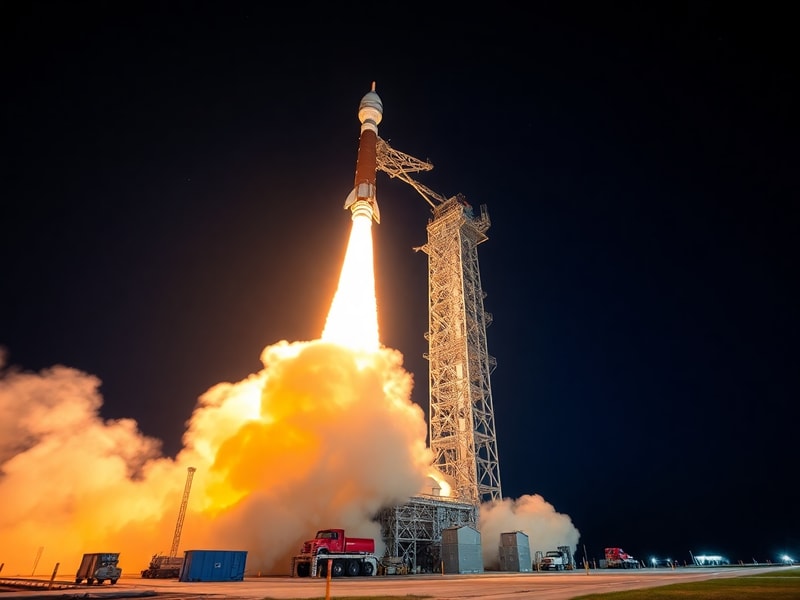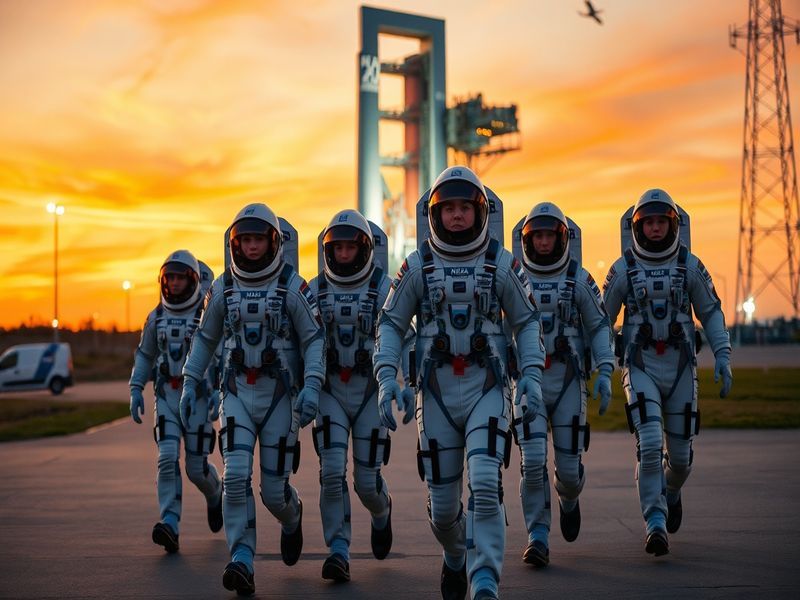
NASA Artemis II Crew Launch: A New Era in Space Exploration
The upcoming launch of NASA’s Artemis II mission marks a significant milestone in humanity’s quest to return to the Moon. Scheduled for late 2024, this mission will be the first crewed flight of the Artemis program, which aims to establish a sustainable human presence on the lunar surface and pave the way for future exploration of Mars. The Artemis II crew will consist of four astronauts who will embark on a journey that holds immense scientific and cultural significance.
The Crew: Pioneers of Space Exploration
The Artemis II mission features a diverse crew, showcasing a blend of experience and expertise. The astronauts selected for this mission are:
- Reid Wiseman – Commander
- Victor Glover – Pilot
- Christina Koch – Mission Specialist
- Jeremy Hansen – Mission Specialist
Each member brings unique skills and backgrounds to the mission. Reid Wiseman, a veteran of the International Space Station (ISS), will lead the crew. Victor Glover, the first African American astronaut to live and work on the ISS, adds a crucial perspective to the team. Christina Koch, known for her record-setting duration in space, and Jeremy Hansen, a Canadian astronaut, round out this historic crew.
Mission Objectives and Goals
The primary objective of Artemis II is to test the Orion spacecraft’s life support systems and demonstrate its capabilities in a crewed environment. The mission will involve a flight that orbits the Moon and returns to Earth, allowing the crew to experience the challenges of deep space travel.
Key goals of the Artemis II mission include:
- Testing the Orion spacecraft’s systems with astronauts aboard.
- Gathering data to prepare for future lunar landings.
- Strengthening international partnerships in space exploration.
- Inspiring the next generation of scientists and engineers.
This mission not only aims to advance technological capabilities but also to foster international collaboration. Countries around the world are watching closely, as they too have interests in lunar exploration and potential resource utilization.
Cultural Impact and Global Significance
The Artemis II mission transcends scientific achievement; it represents a cultural moment in the global landscape. As nations grapple with pressing issues such as climate change and technological advancement, the spirit of exploration serves as a unifying force. The return to the Moon is not merely a technological endeavor; it is a symbol of hope and possibility for humanity.
This mission can inspire future generations to pursue careers in STEM (Science, Technology, Engineering, and Mathematics) fields. The involvement of diverse astronauts highlights the importance of representation in space exploration. By showcasing individuals from different backgrounds, NASA aims to encourage young people, particularly those from underrepresented communities, to dream big.
Moreover, Artemis II can stimulate interest in space-related industries, potentially leading to economic growth. As private companies increasingly collaborate with governmental agencies, the opportunities for innovation expand. This burgeoning sector could play a pivotal role in addressing global challenges, from resource management to environmental monitoring.
Conclusion: Looking to the Future
The Artemis II crew launch is more than just a mission; it embodies humanity’s enduring quest for knowledge and exploration. As we prepare for this historic journey, the excitement surrounding Artemis II is palpable, resonating across borders and cultures. The mission not only aims to return humans to the Moon but also to inspire future generations to reach for the stars.
As we stand on the brink of this new chapter in space exploration, the collaboration among nations and the spirit of discovery will undoubtedly shape our understanding of the universe and our place within it. It’s a thrilling time for scientists, engineers, and dreamers alike, as we look forward to the next steps in our cosmic journey.
For more information on space exploration initiatives, check out our Science section and explore related topics in Technology.