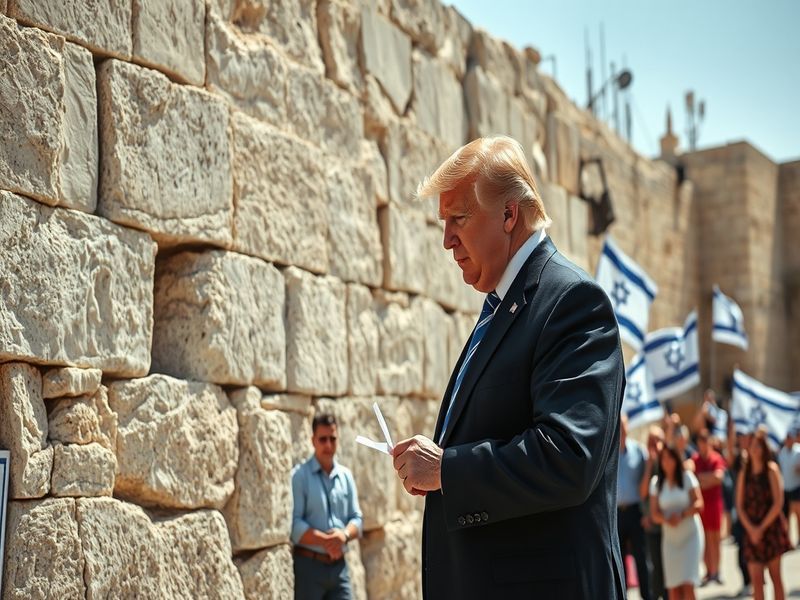
donald trump israel
Donald Trump’s presidency reshaped U.S. foreign policy in the Middle East, particularly regarding Israel. His administration pursued a series of diplomatic, economic, and territorial moves that marked a sharp departure from decades of U.S. policy. From recognizing Jerusalem as Israel’s capital to brokering normalization deals between Israel and Arab states, Trump’s approach prioritized what he called “peace through strength.” Yet this strategy also sparked intense debate about its long-term implications for regional stability and the Israeli-Palestinian conflict.
The Trump administration’s policies were not isolated decisions but part of a broader strategy aimed at recalibrating America’s role in the region. By aligning closely with Israeli Prime Minister Benjamin Netanyahu and adopting a harder line on Iran, Trump sought to redefine U.S. support for Israel in ways that reflected his own transactional approach to diplomacy. This shift included withdrawing from the Iran nuclear deal, moving the U.S. embassy to Jerusalem, and unveiling a controversial Middle East peace plan that was rejected by Palestinian leaders.
The Recognition of Jerusalem as Israel’s Capital
One of the most consequential decisions of Trump’s presidency came on December 6, 2017, when he officially recognized Jerusalem as the capital of Israel. This move reversed decades of U.S. policy, which had deferred to international consensus that Jerusalem’s status should be resolved through negotiations between Israelis and Palestinians.
The announcement was met with swift international criticism. The United Nations General Assembly voted overwhelmingly to condemn the decision, with 128 countries supporting a resolution rejecting it. European allies, including France and Germany, expressed concern that the move would inflame tensions and undermine prospects for a two-state solution. Protests erupted across the Middle East, and the Palestinian Authority cut off ties with the U.S., refusing to engage with the Trump administration as a mediator.
Despite the backlash, Trump followed through on his promise by relocating the U.S. embassy from Tel Aviv to Jerusalem in May 2018. The new embassy was inaugurated on the 70th anniversary of Israel’s declaration of independence, a symbolic date that underscored the administration’s commitment to its policy shift. While Israeli leaders praised the move, Palestinian officials condemned it as a violation of international law and a betrayal of Palestinian aspirations for East Jerusalem as the capital of a future state.
Proponents of the decision argued that it corrected an historical injustice by acknowledging Israel’s right to designate its own capital. They also pointed out that Jerusalem has been the seat of Israel’s government since 1949, and that delaying recognition served no practical purpose. Critics, however, warned that the move sidelined Palestinian claims and complicated future negotiations by prejudging a core issue in the conflict.
The Abraham Accords: A New Era of Normalization?
In August 2020, the Trump administration brokered the Abraham Accords, a series of normalization agreements between Israel and several Arab states, including the United Arab Emirates, Bahrain, Sudan, and Morocco. These deals marked the first time Israel had established formal diplomatic relations with Arab countries since the Israel-Jordan peace treaty in 1994. The accords were hailed by the Trump administration as a historic achievement that could reshape the geopolitical landscape of the Middle East.
The agreements were framed as a strategic realignment against shared threats, particularly Iran. By bringing Israel and Arab states together under a common framework, the Trump administration sought to create a united front against regional adversaries. The UAE and Bahrain, in particular, cited Israel’s advanced technology and intelligence capabilities as valuable assets in countering Iranian influence.
However, the Abraham Accords also raised concerns about the marginalization of the Palestinian issue. Palestinian leaders criticized the deals for sidelining their cause and argued that Arab states were prioritizing economic and security interests over Palestinian statehood. The Trump administration countered that the accords demonstrated that Arab states could normalize relations with Israel without first resolving the Palestinian issue, a departure from the long-standing Arab Peace Initiative.
The economic benefits of the accords were immediately apparent. Trade deals, investment opportunities, and tourism between Israel and the signatory countries began to flourish. In October 2020, Israel and the UAE signed a series of agreements worth billions of dollars, covering areas such as technology, energy, and agriculture. These developments suggested that the accords could have a lasting impact on the region’s economic landscape.
Key Aspects of the Abraham Accords
- UAE-Israel Agreement: Signed in September 2020, this deal included cooperation on COVID-19 research, technology, and tourism. Israel agreed to suspend its plans to annex parts of the West Bank, a move that was welcomed by the UAE.
- Bahrain-Israel Agreement: Following the UAE’s lead, Bahrain normalized relations with Israel in September 2020. The agreement emphasized shared interests in security, technology, and regional stability.
- Sudan-Israel Agreement: In October 2020, Sudan agreed to normalize relations with Israel in exchange for removal from the U.S. list of state sponsors of terrorism. The deal also included economic incentives.
- Morocco-Israel Agreement: In December 2020, Morocco established diplomatic ties with Israel. The agreement included U.S. recognition of Morocco’s sovereignty over Western Sahara, a move that was widely criticized by human rights groups.
The Trump Peace Plan: A Controversial Blueprint
In January 2020, the Trump administration unveiled its Middle East peace plan, titled “Peace to Prosperity.” The proposal was the result of three years of behind-the-scenes diplomacy and was presented by Trump and his son-in-law, Jared Kushner. The plan outlined a vision for a two-state solution, but with significant caveats that favored Israel’s positions.
Key elements of the plan included the recognition of Israeli sovereignty over large parts of the West Bank, the establishment of a Palestinian state with limited sovereignty, and the allocation of $50 billion in economic investment for Palestinians. The plan also called for the demilitarization of any future Palestinian state and the removal of Israeli settlements from areas designated for the Palestinian state.
Palestinian leaders immediately rejected the plan, calling it a “conspiracy” that would deny them statehood. They criticized the proposal for its lack of territorial contiguity for a future Palestinian state and its failure to address core issues such as the right of return for Palestinian refugees. Protests erupted in the West Bank and Gaza, and Palestinian Authority President Mahmoud Abbas declared that the plan was “not worth discussing.”
Israeli leaders, including Prime Minister Benjamin Netanyahu, expressed support for the plan but stopped short of endorsing all its provisions. The plan’s emphasis on Israeli security and its recognition of Israeli settlements as part of Israel’s future borders appealed to Netanyahu’s right-wing base. However, the plan’s call for a Palestinian state was a non-starter for many in Israel’s political spectrum, particularly among those who favored annexation of the West Bank.
The Trump peace plan ultimately failed to gain traction, as neither Israel nor the Palestinians were willing to make the concessions required for its implementation. The plan’s rejection highlighted the deep divisions that persisted between the two sides and the challenges of achieving a lasting peace in the region.
Legacy and Impact: Evaluating Trump’s Israel Policy
The Trump administration’s policies on Israel represented a significant departure from previous U.S. approaches. By recognizing Jerusalem as Israel’s capital, brokering the Abraham Accords, and unveiling a controversial peace plan, Trump sought to redefine America’s role in the Israeli-Palestinian conflict. While his policies were celebrated by some as bold and innovative, they were also criticized for undermining the prospects for a two-state solution and sidelining Palestinian aspirations.
One of the most enduring legacies of Trump’s Israel policy is the normalization of relations between Israel and Arab states. The Abraham Accords demonstrated that Arab countries were willing to engage with Israel despite the lack of progress on the Palestinian issue. This shift could have long-term implications for the region, particularly if more countries follow suit.
However, the Trump administration’s policies also raised concerns about the erosion of U.S. credibility as a neutral mediator in the Israeli-Palestinian conflict. By sidelining Palestinian leaders and adopting a harder line on Iran, Trump’s approach alienated key stakeholders and complicated future negotiations. The decision to cut off aid to the Palestinian Authority and close the Palestinian Liberation Organization’s office in Washington further strained relations.
Looking ahead, the Biden administration has sought to distance itself from some of Trump’s policies while building on the diplomatic momentum created by the Abraham Accords. President Joe Biden has reaffirmed America’s commitment to a two-state solution and restored aid to the Palestiniestinian Authority. However, the normalization deals brokered by Trump remain in place, suggesting that the Middle East’s geopolitical landscape has been permanently altered.
For those interested in exploring the broader context of U.S. foreign policy, Dave’s Locker’s Politics section offers in-depth analysis and commentary on global affairs. Additionally, readers looking for more on the Middle East can explore the site’s Analysis category for thoughtful perspectives on regional dynamics.
Key Takeaways from Trump’s Israel Policy
- Recognition of Jerusalem: The decision to recognize Jerusalem as Israel’s capital was a historic shift that sparked international controversy but fulfilled a campaign promise.
- Abraham Accords: The normalization deals between Israel and Arab states marked a significant realignment in the region’s geopolitics.
- Peace Plan: The Trump administration’s Middle East peace plan proposed a two-state solution but was rejected by both Israelis and Palestinians.
- Legacy: While the Abraham Accords remain a lasting achievement, the Trump administration’s policies also deepened divisions and undermined U.S. neutrality in the conflict.