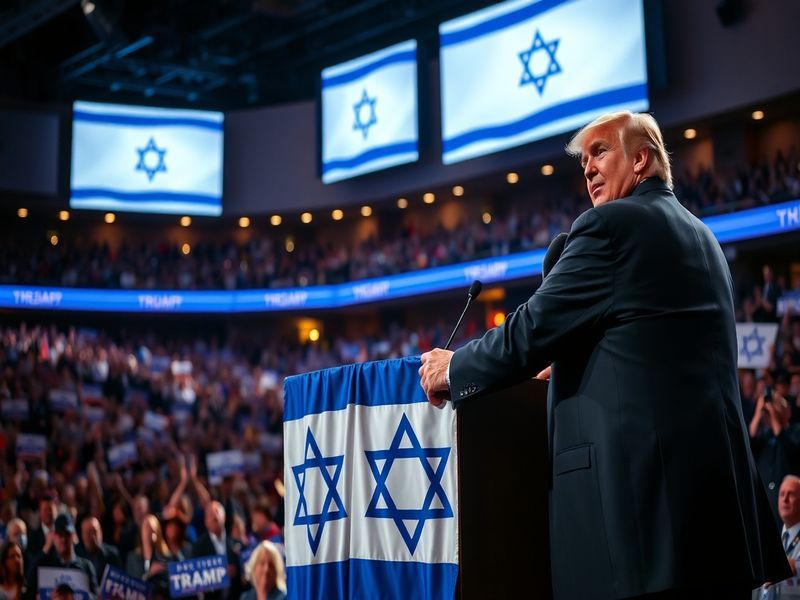
Donald Trump’s Impact on U.S.-Israel Relations and the Middle East
Donald Trump’s Influence on U.S.-Israel Relations
Donald Trump’s presidency marked a significant shift in U.S.-Israel relations. His administration took bold steps that altered the dynamics of Middle Eastern politics. From recognizing Jerusalem as Israel’s capital to brokering normalization agreements between Israel and several Arab nations, Trump’s actions were both controversial and transformative.
Recognition of Jerusalem as the Capital
One of Trump’s most notable actions was the recognition of Jerusalem as the capital of Israel in December 2017. This decision reversed decades of U.S. policy and sparked reactions across the globe. Supporters hailed it as a long-overdue acknowledgment of Israel’s claim to the city, while critics feared it would inflame tensions in an already volatile region.
The move was accompanied by plans to relocate the U.S. embassy from Tel Aviv to Jerusalem, which officially took place in May 2018. This event was celebrated by many in Israel but condemned by Palestinian leaders, further complicating the peace process.
Normalization Agreements with Arab Nations
During his tenure, Trump also facilitated the Abraham Accords, a series of normalization agreements between Israel and several Arab countries, including the United Arab Emirates, Bahrain, Sudan, and Morocco. These agreements marked a significant departure from the traditional Arab stance of non-recognition of Israel until the Palestinian issue was resolved.
The accords were seen as a diplomatic triumph for the Trump administration. They aimed to foster economic cooperation and security collaboration among the nations involved. However, the long-term implications of these agreements remain to be seen, particularly concerning the Palestinian territories.
Impact on Palestinian Relations
Trump’s approach to the Israeli-Palestinian conflict was characterized by a lack of emphasis on Palestinian statehood. His administration cut funding to Palestinian organizations and declared that the U.S. would not support a two-state solution unless it was agreed upon by both parties. This stance was perceived as a departure from previous U.S. policies, which typically advocated for a balanced approach.
Many analysts argue that Trump’s policies have left the Palestinian leadership in a precarious position, further diminishing their ability to negotiate effectively. The lack of U.S. support has raised concerns about the viability of future peace efforts.
Conclusion
Donald Trump’s presidency significantly shaped U.S.-Israel relations, introducing both bold initiatives and controversial policies. His recognition of Jerusalem as Israel’s capital and the facilitation of normalization agreements with Arab nations represent a departure from traditional diplomatic practices. However, the implications of these actions on the peace process and the Palestinian situation continue to unfold.
As political dynamics in the region evolve, the legacy of Trump’s policies will likely spark discussions and analyses for years to come. For further insights into international relations, visit our Politics section or explore our News category for the latest updates.