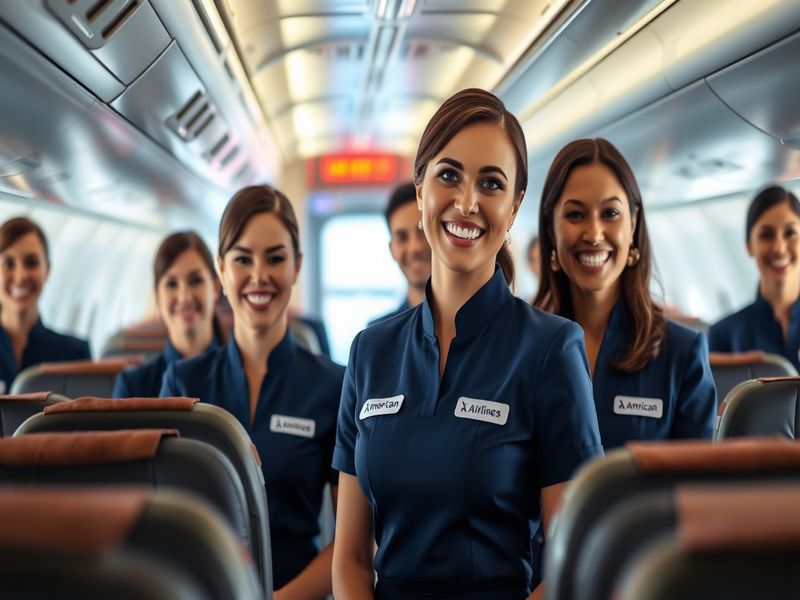
How American Airlines Flight Attendants Shape Global Travel Culture
Flight attendants are the unsung ambassadors of the skies, and those serving with American Airlines (AA) operate in one of the most complex aviation networks in the world. With a fleet spanning 800 aircraft and routes touching six continents, AA’s cabin crew reflect a microcosm of global culture, professionalism, and service excellence. These professionals don’t just ensure safety—they shape passenger experiences that define American aviation’s reputation overseas.
Operating under the banner of the American Airlines website, flight attendants undergo rigorous training that blends technical drills with cultural sensitivity modules. Their role extends beyond standard safety protocols to include multilingual communication, conflict resolution, and even culinary diplomacy when serving international passengers. In destinations like Tokyo, Dubai, or São Paulo, AA flight attendants often serve as the first point of cultural contact for travelers entering the United States.
The Making of a Flight Attendant: Training and Professionalism
Becoming an American Airlines flight attendant is not merely about securing a job—it’s about earning a badge of global mobility. Candidates undergo weeks of training at the airline’s Flight Service Training Center in Fort Worth, Texas. The curriculum covers emergency procedures, first aid, fire suppression, and even the physics of cabin pressurization. But the training also emphasizes soft skills: conflict de-escalation, hospitality in high-pressure environments, and sensitivity to diverse passenger needs.
Cultural fluency is no longer optional. Flight attendants on transpacific or transatlantic routes often learn basic phrases in Mandarin, Spanish, French, or German. This linguistic preparation reflects the airline’s commitment to passenger comfort and safety, especially during medical diversions or in-flight disputes. The result is a workforce that doesn’t just fly planes—it bridges cultures.
Many AA flight attendants begin their careers with prior experience in hospitality, customer service, or nursing. The airline values these backgrounds, as they translate into better passenger interactions and smoother operations. Senior flight attendants often mentor newcomers, reinforcing a culture of mentorship that has become a hallmark of AA’s cabin operations.
Diversity and Representation in the Cabin Crew
American Airlines operates in a world where representation matters. Its flight attendants mirror the diversity of its passenger base—Black, Latino, Asian, LGBTQ+, and people with disabilities all serve in visible leadership roles. This diversity is not accidental. AA has actively recruited from historically underrepresented communities, partnering with organizations like the Organization of Black Aerospace Professionals and the National Gay Pilots Association.
Such representation extends beyond optics. Studies show that diverse teams improve problem-solving and adaptability—critical traits in an industry where conditions change rapidly. Whether assisting a family with special needs or handling a medical emergency in Japanese airspace, a culturally aware crew can prevent escalation and enhance safety.
In 2023, AA reported that over 40% of its new hires in flight service roles identified as people of color. This shift reflects broader industry trends toward inclusion, though challenges remain in achieving parity at senior levels. Still, the airline’s progress has made it a model for other carriers seeking to diversify their workforce.
Global Impact: Flight Attendants as Cultural Ambassadors
When an American Airlines flight lands in Mumbai or Lagos, the flight attendants on board carry more than meal trays—they carry the values of the United States. In many parts of the world, U.S. airlines are seen as extensions of national identity. AA’s crew, therefore, play a subtle diplomatic role. A smile, a kind word, or even a well-timed joke can soften geopolitical tensions in the confined space of an airplane cabin.
This role becomes especially visible during crises. During the 2020 evacuation of U.S. citizens from Kabul, flight attendants worked alongside pilots and ground crews to manage chaotic and emotionally charged flights. Their ability to maintain calm under pressure earned public recognition and underscored their role as first responders in the global mobility network.
Moreover, AA flight attendants often become unofficial tour guides, offering recommendations on U.S. destinations, cultural etiquette, and even local slang. This informal guidance helps international travelers transition smoothly into American culture—long before they step off the plane.
Challenges and Evolving Expectations
Despite their professionalism, flight attendants face significant challenges. Irregular schedules, jet lag, and exposure to health risks like communicable diseases are part of the job. The COVID-19 pandemic amplified these stressors, as cabin crews became frontline workers in a high-risk environment. Many reported burnout, leading AA to enhance mental health support and flexible scheduling options.
Passenger behavior has also evolved. Incidents of unruly conduct increased post-pandemic, with some travelers refusing to comply with safety directives. Flight attendants have had to balance firm enforcement with diplomacy, often in the public eye. AA responded by strengthening crew training in de-escalation and legal protections for staff.
The rise of ultra-long-haul flights—like nonstop routes from Dallas to Sydney—has introduced new physical demands. Flight attendants on these routes must manage extended duty periods, complex meal services, and passenger fatigue across multiple time zones. The airline has responded by adjusting crew ratios and introducing wellness programs to support long-term health.
Key Challenges Faced by American Airlines Flight Attendants
- Irregular schedules and circadian disruption: Rotating layovers and overnight flights disrupt natural sleep patterns.
- Increased passenger aggression: Post-pandemic, incidents of verbal and physical confrontations have risen.
- Health risks: Exposure to communicable diseases and cabin air quality concerns remain ongoing issues.
- Long-haul fatigue: Ultra-long flights demand heightened stamina and adaptability from crew members.
- Career stagnation: Competition for senior positions can be intense in a large workforce.
Despite these challenges, job satisfaction remains high among AA flight attendants. Many cite the opportunity to travel the world, meet diverse people, and contribute to a vital public service as key motivators. The role offers a unique blend of adventure, responsibility, and purpose—qualities that continue to attract new generations to the profession.
Looking Ahead: The Future of Flight Service at American Airlines
The future of flight attendants at American Airlines is being shaped by technology, sustainability, and changing passenger expectations. Automation and AI are beginning to assist in routine tasks like meal ordering and safety checks, but the human element remains irreplaceable. Flight attendants will increasingly focus on emotional intelligence, crisis management, and personalized service—areas where machines cannot compete.
Sustainability is another frontier. AA has committed to achieving net-zero emissions by 2050, and flight attendants will play a role in communicating this transition to passengers. From promoting electric ground vehicles at airports to encouraging reusable packaging, crew members are becoming ambassadors for eco-friendly travel.
The gig economy’s rise has also influenced the profession. Some former flight attendants now work as travel wellness coaches, flight attendants for private jets, or even as social media influencers documenting life in the skies. This diversification reflects the adaptability of the role in a rapidly changing labor market.
As American Airlines continues to expand its global network—adding new routes to Africa and Southeast Asia—the demand for skilled, culturally competent flight attendants will grow. The airline’s ability to attract, train, and retain such talent will determine its reputation as a leader in international aviation.
In an era where travel is both a privilege and a necessity, the flight attendant remains a symbol of human connection across borders. On American Airlines, these professionals do more than ensure safe journeys—they carry forward a legacy of service, resilience, and global citizenship.