How Trump’s Policies Reshaped U.S.-Israel Relations
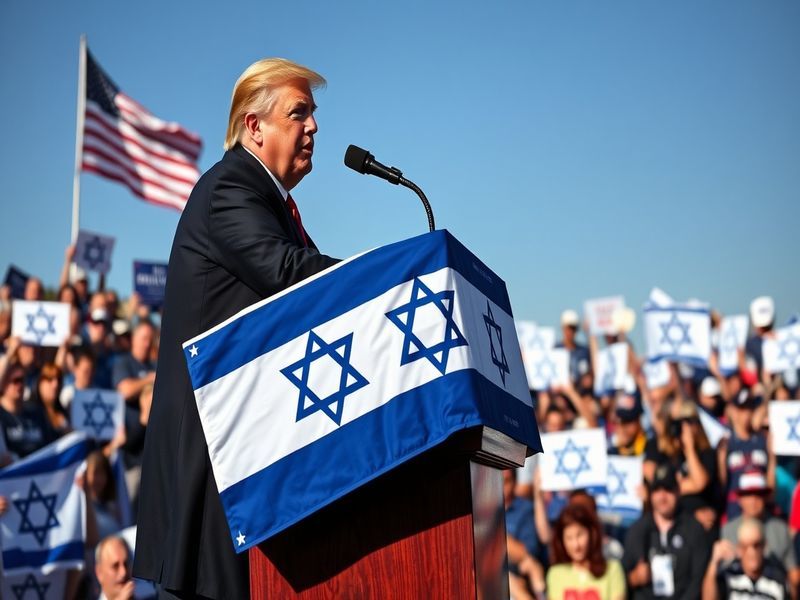
Donald Trump’s presidency reshaped U.S. foreign policy in the Middle East, particularly regarding Israel. His administration’s decisions—from recognizing Jerusalem as Israel’s capital to brokering the Abraham Accords—left a lasting imprint on the region. These moves were both praised for their boldness and criticized for upending decades of diplomatic norms. Understanding Trump’s approach requires examining the key policies, their consequences, and the broader geopolitical shifts they triggered.
The Jerusalem Embassy Act and Recognizing Jerusalem as Israel’s Capital
In December 2017, President Trump fulfilled a campaign promise by formally recognizing Jerusalem as the capital of Israel. The move was a stark departure from the longstanding U.S. position, which had deferred to international consensus on the status of Jerusalem pending a final peace agreement. The decision was met with immediate backlash from Palestinian leaders and international bodies like the United Nations, which passed a resolution condemning the move.
Despite the controversy, the Trump administration followed through by relocating the U.S. embassy from Tel Aviv to Jerusalem in May 2018. The embassy’s new location in Jerusalem was a symbolic victory for Israel and its supporters, reinforcing the idea that the U.S. would no longer treat Jerusalem’s status as negotiable. For many in Israel, this was a historic validation of their claims to the city, which both Israelis and Palestinians view as their capital.
The decision also had practical implications. It energized Trump’s evangelical base, a key constituency that sees Israel’s control over Jerusalem as biblically significant. However, it further strained U.S.-Palestinian relations, leading to the cancellation of U.S. aid to Palestinian refugee programs and the closure of the Palestinian Liberation Organization’s office in Washington, D.C.
Key Reactions to the Jerusalem Decision
- Israeli Government: Welcomed the move as a long-overdue acknowledgment of reality.
- Palestinian Leadership: Condemned it as a violation of international law and a barrier to peace talks.
- International Community: Most countries, including U.S. allies in Europe, criticized the decision but did not follow suit in relocating their embassies.
- U.S. Domestic Response: Split along partisan lines, with Republicans largely supportive and Democrats critical of the unilateral approach.
The Abraham Accords: Normalizing Relations in the Middle East
One of Trump’s most significant achievements in the Middle East was brokering the Abraham Accords, a series of normalization agreements between Israel and several Arab nations. Signed in 2020, the accords established diplomatic relations between Israel and the United Arab Emirates, Bahrain, Sudan, and Morocco. These agreements marked the first time Israel had normalized relations with Arab states since the 1994 Israel-Jordan peace treaty.
The accords were framed as a way to counter Iran’s influence in the region and promote economic cooperation. Unlike previous peace deals, such as the Oslo Accords, the Abraham Accords did not address the Israeli-Palestinian conflict directly. Instead, they focused on mutual interests, such as trade, technology, and security. The UAE, in particular, saw economic opportunities in partnering with Israel, a global leader in innovation and defense technology.
Critics argued that the accords sidelined Palestinian aspirations for statehood, as none of the agreements included provisions for Palestinian statehood or an end to Israel’s occupation of the West Bank. However, supporters contended that the accords demonstrated that Arab states could engage with Israel independently of the Palestinian issue, potentially paving the way for future agreements.
Impact of the Abraham Accords
- Economic Growth: Bilateral trade between Israel and the UAE has surged, with sectors like tech, healthcare, and energy benefiting from new partnerships.
- Security Cooperation: Israel and Arab states have increased intelligence sharing and military coordination, particularly in countering Iran’s regional ambitions.
- Diplomatic Shift: The accords have encouraged other Arab nations to consider normalizing relations with Israel, though progress has been slow.
- Palestinian Response: Palestinian leaders viewed the accords as a betrayal, arguing that Arab states were prioritizing economic interests over Palestinian rights.
Trump’s Broader Middle East Strategy and Its Legacy
Beyond Jerusalem and the Abraham Accords, Trump’s Middle East policy was defined by a transactional approach to diplomacy. His administration withdrew from the Iran nuclear deal (JCPOA), reimposed sanctions on Iran, and maintained a hardline stance against groups like Hamas and Hezbollah. This strategy was rooted in the belief that economic pressure and military deterrence could force Iran to renegotiate and weaken groups opposed to Israel.
However, critics argued that Trump’s policies exacerbated tensions in the region. The withdrawal from the JCPOA, for example, left Iran free to resume uranium enrichment, raising concerns about a nuclear arms race. Meanwhile, the administration’s close ties with Israeli Prime Minister Benjamin Netanyahu and its uncritical support for Israel’s actions in the West Bank and Gaza drew condemnation from human rights organizations.
The Trump administration also played a key role in brokering the 2020 normalization deals between Israel and Arab states, which were later expanded under President Joe Biden. These agreements, however, did little to advance the Israeli-Palestinian peace process. Instead, they reflected a growing willingness among some Arab states to engage with Israel despite the lack of progress on Palestinian statehood.
Long-Term Implications of Trump’s Policies
- Shift in U.S. Diplomacy: Trump’s approach prioritized unilateral actions over multilateral diplomacy, setting a precedent that future administrations may struggle to reverse.
- Regional Realignment: The Abraham Accords have reshaped Middle East alliances, with Israel emerging as a key partner for Arab states seeking to counter Iran.
- Impact on Palestinian Statehood: The accords have sidelined the Palestinian issue, raising questions about whether a two-state solution remains viable.
- Global Perceptions of U.S. Neutrality: Trump’s policies have led some to question whether the U.S. can still act as an impartial mediator in the Israeli-Palestinian conflict.
Conclusion: A Polarizing Legacy
Donald Trump’s policies toward Israel were transformative, reshaping the dynamics of Middle East diplomacy. His recognition of Jerusalem as Israel’s capital and the Abraham Accords were historic moves that reinforced U.S. support for Israel while sidelining Palestinian aspirations. These decisions were celebrated by his base and some international partners but condemned by critics who saw them as undermining peace efforts.
The long-term impact of Trump’s policies remains uncertain. While the Abraham Accords have opened new avenues for cooperation, they have done little to address the core issues of the Israeli-Palestinian conflict. Meanwhile, the U.S. withdrawal from the JCPOA and its hardline stance on Iran have left the region in a state of heightened tension. As the Middle East continues to evolve, the question remains: Will Trump’s policies lead to lasting stability, or will they deepen divisions in an already volatile region?
One thing is clear: Trump’s approach to Israel has left an indelible mark on U.S. foreign policy, one that future administrations will have to navigate carefully. For better or worse, his policies have redefined the parameters of Middle East diplomacy and set the stage for the next chapter in the region’s complex and often contentious history.
For more insights into U.S. foreign policy and its global implications, explore our Politics and News sections on Dave’s Locker.