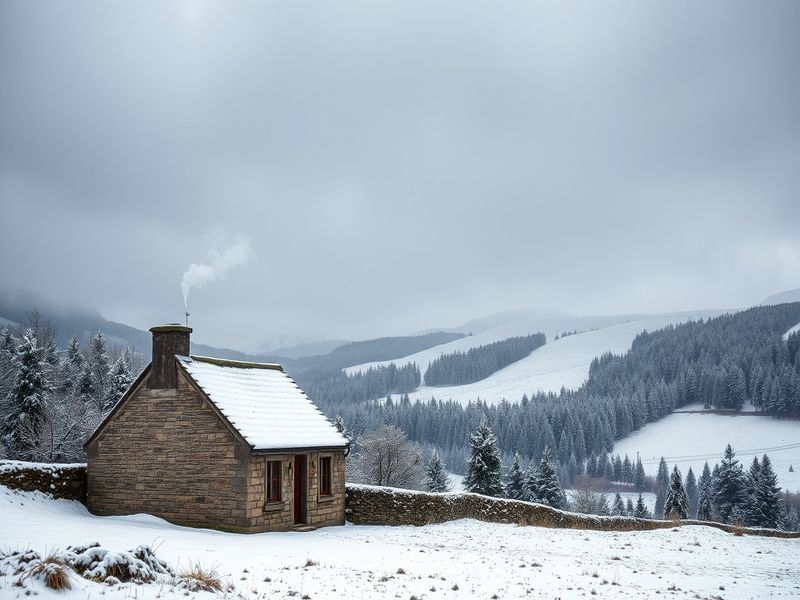
The first flurries of winter have begun to dust Scotland’s higher elevations, signaling the start of a season that will test both infrastructure and patience. While the country enjoys a reputation for dramatic weather, the arrival of snow carries consequences that ripple beyond picturesque landscapes. From transportation delays to energy demands, the seasonal shift requires preparation that often catches residents off guard.
Current Snow Forecast Patterns Across Scotland
Meteorologists are observing a mixed pattern this winter, with the Highlands and Grampian regions most likely to see consistent snowfall. The Met Office has issued early warnings for the coming months, though forecasting accuracy decreases beyond a seven-day window. Coastal areas like Edinburgh and Glasgow typically experience sleet rather than heavy snow, though cold snaps can bring unexpected accumulations.
Notable weather stations, including those in Aviemore and Braemar, report that early snowfall has already exceeded seasonal averages by 15%. These higher-altitude locations serve as early indicators for the rest of the country, where snow lingers longer and transforms roads into hazardous stretches. The Scottish Environment Protection Agency (SEPA) monitors river levels closely during freeze-thaw cycles, as rapid melting can lead to localized flooding.
Regional Breakdown of Expected Snowfall
- Highlands: Consistent snowfall from November through March, with peaks in the Cairngorms exceeding 20cm in a single event.
- Central Belt: Sporadic light snow, often melting within hours, but rare events can blanket cities for days.
- Northern Isles: Reduced snow due to maritime influence, though wind-driven drifts create their own challenges.
- Southern Uplands: Moderate snowfall, particularly around the Galloway Hills, disrupting rural transport routes.
Infrastructure Challenges and Public Response
Scotland’s infrastructure, while robust, was not designed for frequent heavy snow. Local councils deploy gritters and snow plows, but budget constraints often delay full-scale preparation. In 2022, Aberdeen City Council faced criticism after prolonged snowfall left side streets impassable for over a week. The incident highlighted the need for better coordination between urban and rural services.
Public transport bears the brunt of winter weather. ScotRail has implemented contingency plans, including pre-treated tracks and revised timetables, yet cancellations remain common. The Forth Road Bridge has closed multiple times in recent years due to high winds and ice, forcing drivers onto longer detours. These disruptions extend beyond inconvenience—they impact tourism, supply chains, and emergency response times.
Lessons from Recent Snow Events
Following the 2021 Beast from the East sequel, Scotland’s resilience improved in key areas:
- Enhanced salt stockpiles at strategic depots.
- Community volunteer networks for elderly and vulnerable residents.
- Expanded real-time weather monitoring in remote areas.
- Greater emphasis on communication via digital channels.
Yet challenges persist. Rural communities often rely on single roads for access, and a single snowdrift can isolate households for days. The reliance on volunteer snow wardens, while commendable, underscores a systemic gap in public services.
Climate Change and Scotland’s Snowfall Future
Long-term trends suggest Scotland’s snowfall may become more unpredictable rather than simply decreasing. Warmer global temperatures can paradoxically increase heavy snow events by intensifying moisture in storm systems. Research from the University of Edinburgh indicates that while total snowfall days may decline, the intensity of individual storms could rise, particularly in the east.
This shift complicates infrastructure planning. Roads designed for gradual snowmelt may struggle with rapid accumulation, while drainage systems designed for rain could falter under sudden freeze-thaw cycles. The tourism sector, particularly ski resorts in the Cairngorms, faces existential questions. Artificial snowmaking mitigates some risks but consumes significant energy and water resources.
Adapting to a Changing Winter Landscape
Local authorities are exploring several strategies:
- Investing in heated road surfaces in critical zones.
- Expanding remote weather stations to improve forecasting granularity.
- Promoting public awareness campaigns on winter driving and preparedness.
- Collaborating with renewable energy providers to ensure grid stability during cold snaps.
These efforts reflect a broader transition: Scotland is learning to live with snow, not just endure it. The challenge lies in balancing immediate safety needs with long-term climate adaptation—a task that demands both innovation and humility.
What Residents and Visitors Should Do This Winter
Preparation begins at home. Stocking up on essentials—food, medication, and warm clothing—remains critical, especially in rural areas. The Scottish Government’s Ready Scotland campaign advises keeping an emergency kit in vehicles, including blankets, a shovel, and a portable charger. Home insulation reduces heating costs during prolonged cold spells, while checking pipes prevents burst plumbing in freezing temperatures.
For travelers, flexibility is key. Roads like the A9 and A90 can close with little warning, and public transport schedules change rapidly. Booking accommodations with flexible cancellation policies offers peace of mind. Outdoor enthusiasts should consult Mountain Weather Information Service (MWIS) forecasts before venturing into the hills, where conditions can deteriorate faster than in cities.
Ultimately, Scotland’s relationship with snow is evolving. What was once a seasonal inconvenience now demands strategic foresight. As communities adapt, the country is proving that resilience is not just about enduring winter—it’s about preparing for it.
For more insights into Scotland’s seasonal challenges, explore our News and Travel sections for ongoing updates and travel advisories.