Artemis 2 Launch: NASA’s 2025 Moon Mission Timeline & Details
NASA’s Artemis program continues to push the boundaries of human space exploration, with the Artemis 2 mission serving as the first crewed lunar flyby since 1972. Scheduled for no earlier than September 2025, this mission represents a critical milestone in NASA’s ambitious timeline to establish a sustainable human presence on the Moon and eventually reach Mars. The four-person crew will conduct a 10-day journey around the Moon, testing the Orion spacecraft’s life support and navigation systems in deep space.
The Artemis 2 launch date has been carefully calculated to align with optimal celestial mechanics and mission parameters. Unlike its predecessor, Artemis 1 which was uncrewed, this mission will carry astronauts farther from Earth than any humans have traveled before. The Orion spacecraft will reach a maximum distance of approximately 230,000 miles from Earth, venturing thousands of miles beyond the Moon before returning home.
The Technical Preparations Behind the Artemis 2 Launch Window
NASA’s Space Launch System (SLS) rocket, the most powerful rocket ever built, will propel the Orion spacecraft into orbit. The agency has established a rigorous testing and validation process to ensure all systems meet the highest safety standards. The four astronauts selected for the mission—three NASA astronauts and one Canadian Space Agency astronaut—have undergone extensive training in spacecraft systems, emergency procedures, and lunar flyby simulations.
Key technical preparations include:
- Orion Spacecraft Upgrades: Modifications to the heat shield to handle higher re-entry speeds (24,500 mph) and enhanced radiation shielding for crew protection during the deep space journey.
- Life Support Systems: Testing of advanced environmental control and life support systems designed for multi-week missions, including carbon dioxide scrubbing and oxygen generation.
- Communication Networks: Validation of the Deep Space Network’s ability to maintain continuous contact with the spacecraft at lunar distances, including high-definition video transmission.
- Navigation Systems: Upgrades to Orion’s optical navigation system that will allow the crew to determine their position relative to the Moon and Earth without relying solely on ground-based tracking.
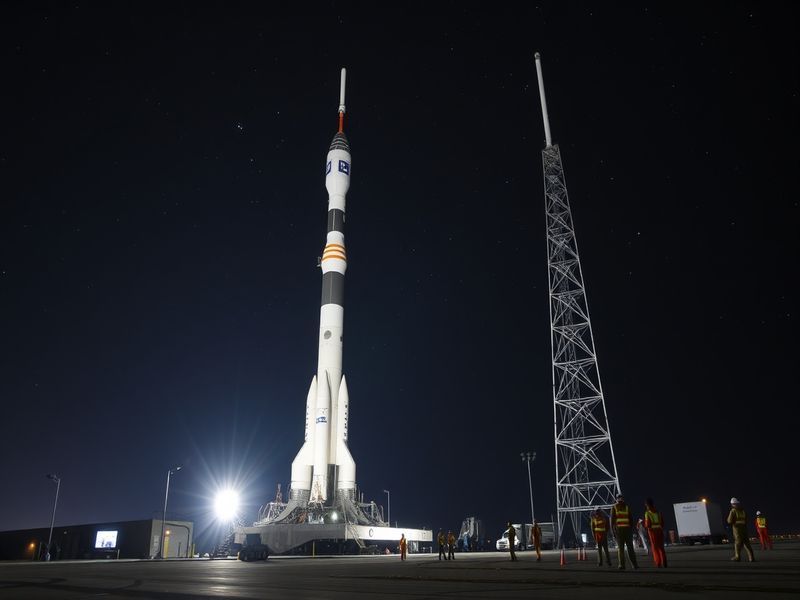
The Artemis 2 launch will occur from Kennedy Space Center’s Launch Complex 39B, the same pad that sent Apollo missions to the Moon. However, the infrastructure has been significantly modernized with upgraded umbilicals, flame trenches, and mobile launcher systems to support the SLS rocket’s massive size and thrust.
The Crew and Their Mission Objectives
The Artemis 2 crew was announced in April 2023, representing a diverse team of experienced astronauts. Commander Reid Wiseman, a veteran of the International Space Station Expedition 41, will lead the mission. Pilot Victor Glover, the first Black astronaut to travel beyond low Earth orbit, brings extensive spacecraft experience from his time on the ISS. Mission Specialists Christina Koch and Jeremy Hansen round out the crew—Koch as the first woman to venture beyond Earth’s immediate vicinity and Hansen as the first Canadian to participate in a lunar mission.
The crew’s primary objectives include:
- Validating Orion’s systems in the deep space environment, including propulsion, navigation, and life support.
- Conducting live broadcasts from inside the spacecraft to engage the public and demonstrate the mission’s progress.
- Testing emergency procedures and abort scenarios that could be required during the lunar flyby.
- Collecting valuable data on radiation exposure and its effects on the human body during extended deep space travel.
During the mission’s closest approach to the Moon, the crew will perform a powered flyby at an altitude of approximately 6,400 miles above the lunar surface. This trajectory will allow them to harness the Moon’s gravity to slingshot back toward Earth, demonstrating the navigation techniques that will be critical for future Artemis missions.
Challenges and Contingencies in the Artemis 2 Timeline
While NASA has established a firm launch date for Artemis 2, the agency maintains flexibility in the schedule to address potential challenges. Weather delays, technical issues, or unexpected findings during final preparations could necessitate schedule adjustments. The most significant risks include:
- Spacecraft Readiness: The Orion spacecraft must complete all environmental qualification tests, including thermal vacuum testing and electromagnetic interference checks.
- Launch Vehicle Certification: The SLS rocket’s core stage and solid rocket boosters must demonstrate flawless performance during the final integrated tests.
- Radiation Environment: While the mission will pass through the Van Allen radiation belts twice, engineers have designed shielding to protect the crew. However, solar activity during the mission could pose additional risks.
- Recovery Operations: NASA’s recovery teams must be prepared to retrieve the Orion capsule and crew within hours of splashdown in the Pacific Ocean, regardless of weather conditions.
The Artemis program has faced its share of budgetary and political challenges since its inception in 2017. However, the program has maintained bipartisan support in Congress, with consistent funding allocations that have allowed for steady progress. The total cost of Artemis 2 is estimated at approximately $4.1 billion, covering launch services, ground operations, and mission execution.
One notable contingency involves the potential for delays in the development of the Lunar Gateway, NASA’s planned orbiting outpost around the Moon. While Artemis 2 will not dock with the Gateway, its successful deployment will be critical for future Artemis missions that aim to establish a sustainable lunar presence.
Looking Ahead: The Future of Artemis and Beyond
Artemis 2 serves as a precursor to the Artemis 3 mission, currently targeted for 2026, which aims to land the first woman and the next man on the lunar surface. This mission will rely on the SpaceX Starship as the human landing system, requiring multiple refueling missions in Earth orbit before attempting a lunar touchdown. The knowledge gained from Artemis 2’s crewed lunar flyby will directly inform these subsequent missions, particularly in areas of navigation, communication, and life support.
The long-term vision of Artemis extends beyond lunar exploration. NASA Administrator Bill Nelson has emphasized that the Moon serves as a proving ground for technologies that will be essential for future Mars missions. The agency plans to leverage lunar resources, such as water ice, to produce oxygen and rocket propellant, demonstrating technologies that could be scaled for Martian missions.
For space enthusiasts and the general public, Artemis 2 offers a rare opportunity to witness human spaceflight at its most ambitious. Unlike robotic missions, this crewed flight will provide a visceral connection to the vastness of space and the challenges of deep space travel. NASA has committed to extensive media coverage, including live broadcasts of key mission events and educational programming for students worldwide.
As the Artemis 2 launch date approaches, the excitement builds not just within the space community but among people who remember the Apollo era. This mission represents more than technological achievement—it embodies humanity’s enduring spirit of exploration and the collective aspiration to push beyond current limits. The lessons learned from this journey will shape the future of space exploration for generations to come.
For those interested in following the mission’s progress, detailed updates will be available on Dave’s Locker Science section, where our team provides real-time coverage of NASA’s most ambitious endeavors. The Artemis program invites everyone to look skyward and imagine what might be possible when humans once again set foot on the Moon.