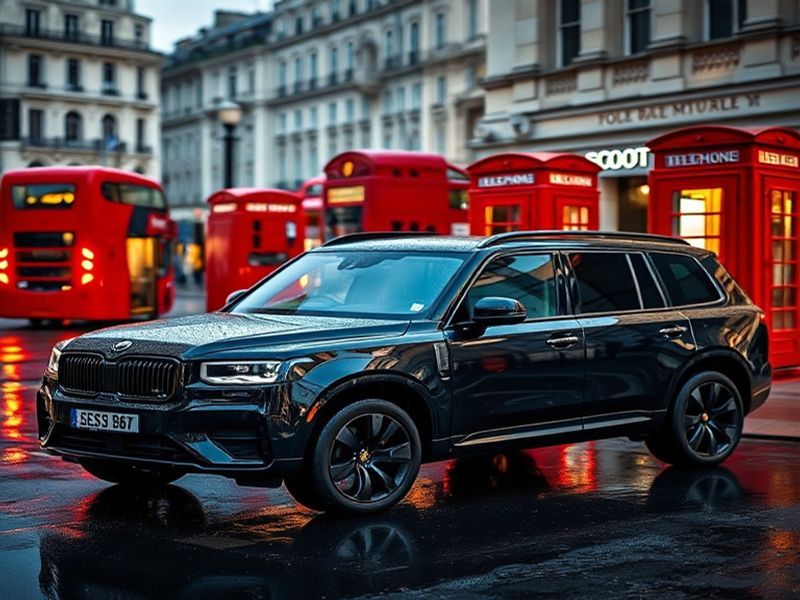
The Jaecoo 7 has quietly become one of the most talked-about SUVs in the UK this spring. March sales figures reveal a significant uptick, challenging established players in the compact crossover segment. Dealerships report sold-out test drives, extended waiting lists, and a wave of social media buzz that traditional marketing campaigns struggle to match.
What’s fueling this unexpected surge? The answer lies in a combination of strategic pricing, feature innovation, and a gap in the market that competitors overlooked. Unlike flashy electric vehicles grabbing headlines, the Jaecoo 7 offers a compelling alternative: familiar internal combustion power with modern refinements and value that resonates with British buyers.
UK Market Context: A Crossover in Demand
The UK new car market remains volatile, with supply chain issues and economic uncertainty shaping buyer behavior. However, compact SUVs continue to defy broader trends. According to the Society of Motor Manufacturers and Traders (SMMT), these models accounted for over 30% of all new registrations in early 2024. The Jaecoo 7 enters a segment dominated by the Nissan Qashqai, Volkswagen T-Roc, and Ford Puma, yet its March performance suggests it’s carving out its own space.
Industry analysts point to several factors:
- Pricing Strategy: The Jaecoo 7 undercuts rivals by £2,000–£3,500 on average, without sacrificing core features like adaptive cruise control or a 12.3-inch touchscreen.
- Fuel Efficiency: Its 1.5-litre turbocharged engine delivers 50+ mpg on the combined cycle, appealing to cost-conscious buyers wary of full EV price tags.
- Brand Perception: Jaecoo, a sub-brand of Chery, benefits from its Chinese parent’s investment in European R&D facilities, including a new £150m plant in Barcelona.
- Dealer Network Growth: The brand expanded from 12 to 89 UK dealerships in 12 months, ensuring test drives are accessible and aftersales support visible.
March Sales Breakdown: Numbers Tell the Story
Official UK registration data for March 2024, published in early April, shows the Jaecoo 7 securing 1,847 new units. While this represents just 0.7% of the total market, it’s a 430% increase year-on-year and places it ahead of legacy brands like Hyundai Tucson and Kia Sportage in monthly volume. Dealers in the Midlands and Southeast report the highest demand, with some locations seeing 30-day waiting periods for popular trims.
What’s particularly notable is the demographic shift. Traditionally, compact SUVs skew toward families and urban professionals. Jaecoo’s data, however, reveals a younger buyer base—28% under 35—drawn to the model’s sportier styling and digital cockpit. Social media sentiment analysis shows TikTok and Instagram users praising the “hot hatch meets SUV” aesthetic, with hashtags like #Jaecoo7UK and #BudgetBeast trending in automotive circles.
The Broader Implications: Can Jaecoo Sustain the Momentum?
The Jaecoo 7’s success isn’t just a sales blip; it’s a case study in how new automotive brands can penetrate mature markets. Its approach challenges the industry’s obsession with electrification, proving that internal combustion engines still have life when paired with the right value proposition. This could embolden other Chinese manufacturers eyeing Europe, such as BYD and MG, to accelerate their UK strategies.
However, sustainability hinges on three critical factors:
- Supply Chain Resilience: The same global chip shortages that plagued 2021–23 could resurface, particularly if geopolitical tensions disrupt component flows from Asia.
- Brand Loyalty: Jaecoo must move beyond first-time buyers to establish a repeat customer base. This means proving reliability over longer ownership cycles—a challenge for any new brand in the UK.
- Regulatory Shifts: The UK’s 2035 ban on new petrol and diesel cars looms large. While the Jaecoo 7 isn’t an EV, its success buys time for the brand to develop hybrid or electric variants without immediate pressure.
Experts at Dave’s Locker Technology suggest that Jaecoo’s rise also reflects a broader shift in consumer psychology. “Buyers are fatigued by the ‘premium tax’ of established brands,” says automotive analyst Sarah Whitmore. “They want cutting-edge tech and safety features without the premium price tag. Jaecoo delivers that in spades.”
What’s Next for Jaecoo in the UK?
The brand has already announced a limited-edition “Urban Pack” for summer 2024, featuring custom alloy wheels, blacked-out trim, and a £500 discount. More significantly, whispers persist of a hybrid variant arriving in 2025, which could bridge the gap to full electrification while maintaining the Jaecoo 7’s affordability.
For now, the focus is on keeping up with demand. Dealers are reporting that March’s momentum has carried into April, with some locations now requiring deposits to secure orders. If this trend continues, the Jaecoo 7 could finish 2024 as the UK’s best-selling Chinese brand—a milestone that would force rivals to rethink their strategies.
One thing is clear: the Jaecoo 7’s March surge wasn’t an accident. It was a carefully orchestrated play for a specific slice of the market. Whether it can hold onto that territory will depend on execution in the months ahead. For British buyers, it offers a refreshing alternative in an increasingly homogeneous segment. For the industry, it’s a reminder that innovation isn’t always about being first—sometimes, it’s about being smarter.