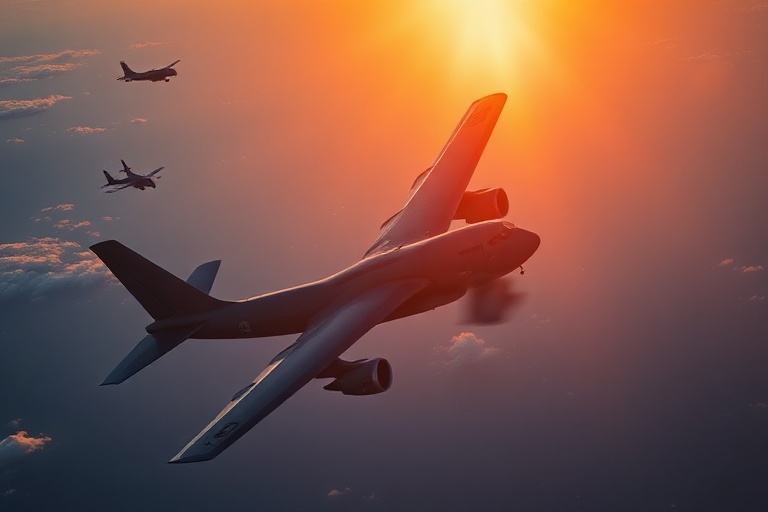
The Boeing KC-135 Stratotanker has quietly dominated the skies for over six decades. Designed during the Cold War era, this aerial refueling tanker remains a cornerstone of global military operations. Its endurance and adaptability have made it indispensable in conflicts, humanitarian missions, and strategic deterrence.
A Legacy Born from Cold War Strategy
Developed in the early 1950s, the KC-135 emerged from the U.S. Air Force’s urgent need for a jet-powered aerial refueling platform. The design drew heavily from Boeing’s 707 commercial airliner, leveraging commercial aviation advancements to create a military workhorse. The first prototype took flight in August 1956, and by the following year, the KC-135 entered service with Strategic Air Command (SAC).
Its primary role was to extend the range of nuclear-capable bombers like the B-52, ensuring they could reach targets deep within Soviet territory. While the Cold War’s intensity has faded, the KC-135’s operational relevance has only grown. Today, it refuels everything from fighter jets to unmanned aerial vehicles, proving its versatility in modern warfare.
Key Features that Define the KC-135
- Jet-Powered Efficiency: Unlike its propeller-driven predecessors, the KC-135 uses turbofan engines, allowing it to refuel at higher altitudes and speeds.
- Flying Boom System: Its signature “flying boom” enables precise fuel transfer to receiver aircraft, a capability no other tanker can match.
- Global Reach: With a range of over 1,500 miles and the ability to carry nearly 200,000 pounds of fuel, it can support missions worldwide.
- Adaptability: The KC-135 has been modified for reconnaissance, command-and-control, and even transporting VIPs when needed.
Operational Impact: How the KC-135 Shapes Modern Warfare
The KC-135’s influence extends far beyond its refueling role. It enables sustained air operations in distant theaters, reducing the need for forward bases. During the Gulf War, KC-135s flew over 18,000 sorties, delivering more than 275 million pounds of fuel to coalition aircraft. This logistical backbone was critical to the war’s success.
In more recent conflicts, such as the fight against ISIS, the KC-135 ensured continuous air coverage by keeping fighters like the F-22 and F-35 airborne for extended periods. Its ability to operate from austere airfields also makes it invaluable in humanitarian crises, like delivering aid to disaster-stricken regions.
The Future of the KC-135
Aging airframes and rising maintenance costs have prompted calls for its replacement. The U.S. Air Force’s KC-46 Pegasus, a next-gen tanker, is slowly entering service. However, the KC-135’s retirement has been repeatedly delayed due to budget constraints and the need for interim capacity.
Some experts argue that the Stratotanker’s retirement is long overdue, citing its outdated avionics and fuel inefficiencies. Others point to its proven track record, suggesting that upgrades and sustainment programs could keep it viable for decades. The debate highlights a broader challenge: balancing modernization with operational necessity.
Broader Implications: Why the KC-135 Still Matters
The KC-135’s story is more than just a tale of military hardware—it reflects broader themes in defense strategy. Its longevity underscores the importance of incremental upgrades in extending an aircraft’s lifespan. Programs like the Avionics Modernization Program have kept the KC-135 relevant, integrating digital cockpits and improved navigation systems.
Moreover, the Stratotanker’s global operations demonstrate how airpower can project influence without boots on the ground. Its presence in allied nations during exercises like NATO’s Air Defender ensures interoperability and deterrence. In an era where great-power competition is resurging, platforms like the KC-135 remain vital.
Yet, the KC-135’s future is not guaranteed. The Air Force faces a capability gap as it transitions to newer tankers. The KC-135’s retirement will leave a void that may take years to fill, particularly if procurement delays persist. This raises questions about the Pentagon’s long-term planning and the risks of over-reliance on aging systems.
Lessons from the KC-135’s Era
The KC-135’s success is a testament to the value of adaptability. Unlike some military platforms designed for a single mission, it has evolved to meet changing demands. Its story offers lessons for modern defense procurement, emphasizing flexibility over rigid specifications.
For aviation enthusiasts and defense analysts alike, the KC-135 remains a fascinating subject. It embodies the intersection of engineering, strategy, and endurance. As it approaches its 70th year of service, the Stratotanker’s legacy is far from over—it is merely entering a new chapter.
The KC-135 Stratotanker is more than a machine; it is a symbol of resilience. In an era of rapid technological change, its ability to adapt while maintaining core capabilities is a rare feat. Whether in the skies over Iraq or the Pacific, it continues to prove that some platforms are timeless.