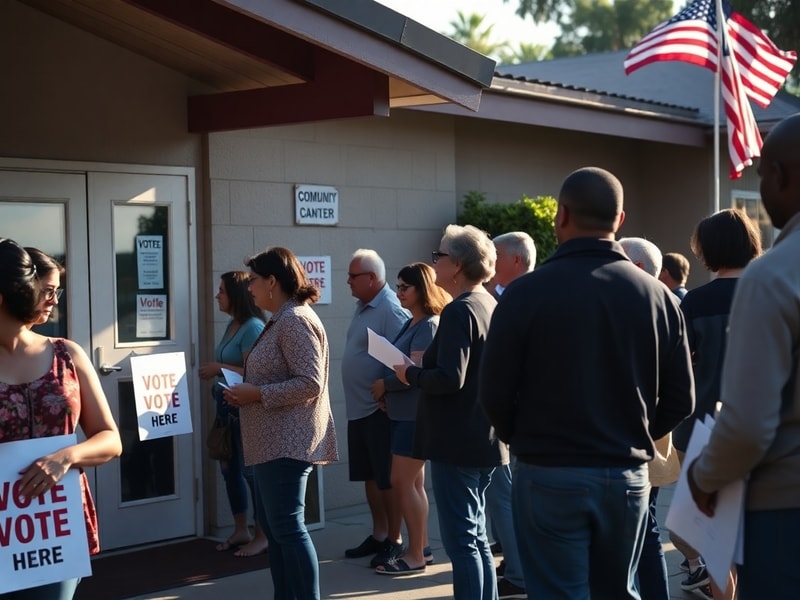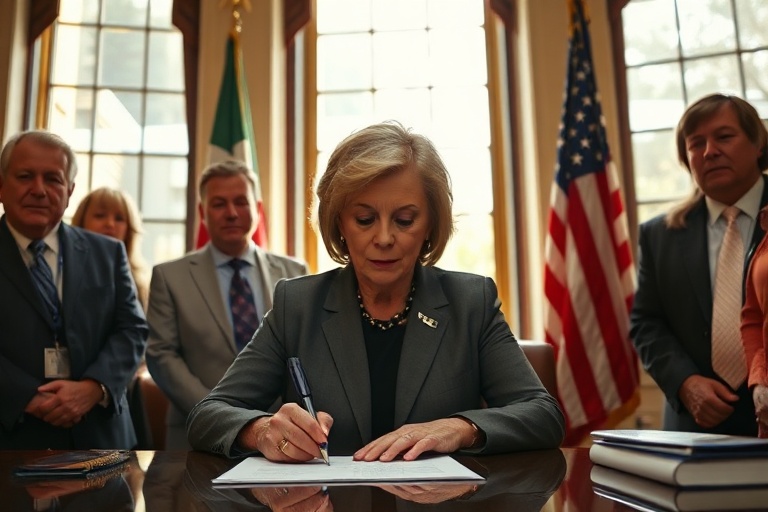
Alabama’s latest redistricting battle has become more than a regional political dispute—it reflects broader global tensions over representation, race, and power. The state’s Republican-led legislature recently approved new congressional maps that critics argue dilute the voting power of Black residents, a move that has drawn scrutiny from civil rights groups and federal courts alike. This conflict sits at the intersection of American democracy and international debates about electoral fairness.
Redistricting occurs every decade after the U.S. Census, but Alabama’s case has taken on unusual significance. The U.S. Supreme Court’s 2019 decision in Rucho v. Common Cause barred federal courts from policing partisan gerrymandering, leaving voting rights advocates to rely on claims of racial discrimination under the Voting Rights Act. This legal battleground has made Alabama’s redistricting fight a test case for how electoral systems worldwide can either entrench or challenge existing power structures.
The Legal and Historical Context of Alabama’s Redistricting Fight
The current dispute traces back to a 2022 U.S. Supreme Court ruling that found Alabama’s 2021 congressional map likely violated the Voting Rights Act by diluting Black voting power. The court ordered the creation of a second majority-Black district in a state where Black residents make up about 27% of the population. Alabama’s Republican legislature responded by crafting a map that increased the Black voting-age population in one existing district from 36.6% to 42.7%, while keeping Black residents concentrated in a single district. Civil rights organizations called this approach insufficient and filed a new lawsuit.
Historically, Alabama’s redistricting battles have mirrored broader struggles over racial equity in American politics. The state was one of the most resistant to the Voting Rights Act of 1965, and its electoral maps have long been scrutinized for maintaining white political dominance. The current fight echoes similar redistricting disputes in other countries where ethnic or racial minorities push for greater representation. In South Africa, for example, post-apartheid electoral reforms sought to ensure proportional representation for historically marginalized groups. Meanwhile, in Northern Ireland, the Good Friday Agreement established mechanisms to prevent either the Protestant or Catholic majority from dominating electoral outcomes.
Key Players and Their Stakes in the Redistricting Battle
The redistricting conflict involves a complex cast of stakeholders, each with competing visions for Alabama’s political future:
- Alabama Legislature: The Republican-controlled body that drew the contested maps, arguing they comply with federal law while preserving GOP electoral advantages.
- Civil Rights Groups: Organizations like the NAACP and the Southern Poverty Law Center that have sued to block the maps, arguing they violate the Voting Rights Act.
- Federal Courts: The U.S. Supreme Court has already weighed in once, and a three-judge panel is now reviewing the latest iteration of the maps.
- Black Voters in Alabama: A demographic that has seen its political influence fluctuate with each redistricting cycle, often finding itself concentrated in districts that dilute its broader impact.
- National Political Parties: The Democratic and Republican parties are watching closely, as Alabama’s redistricting could influence control of the U.S. House of Representatives in future elections.
The stakes extend beyond Alabama’s borders. The U.S. Justice Department has intervened in the case, signaling the federal government’s commitment to enforcing the Voting Rights Act. Meanwhile, advocacy groups like the American Civil Liberties Union have framed the dispute as part of a global struggle for voting rights, pointing to similar battles in places like Brazil, where indigenous groups fight for fair representation, or Hungary, where opposition parties accuse the government of gerrymandering to maintain power.
Global Parallels: How Other Countries Handle Redistricting and Representation
Alabama’s redistricting fight is not unique. Many democracies grapple with the challenge of balancing fair representation with political stability. In Canada, for instance, independent boundary commissions draw electoral maps to reduce partisan influence, a system that has helped maintain public trust in the process. Germany uses a mixed-member proportional system that ensures even smaller parties gain representation, reducing the incentive to gerrymander.
Contrast this with countries where redistricting is highly politicized. In the United Kingdom, parliamentary boundary reviews have historically favored the party in power, leading to accusations of gerrymandering. Australia, meanwhile, has an independent electoral commission that draws maps without political interference, a model that has contributed to the country’s reputation for clean elections. These international examples highlight how the rules governing redistricting can either reinforce democratic principles or undermine them.
In some nations, the debate over redistricting intersects with broader cultural and historical tensions. In India, for example, the redrawing of electoral boundaries often sparks disputes between religious and ethnic groups, reflecting the country’s diverse and often divided society. In South Africa, the post-apartheid government has used electoral reforms to ensure representation for marginalized groups, though critics argue these measures have sometimes hardened ethnic divisions.
The Cultural and Social Implications of Redistricting
Beyond the legal and political dimensions, Alabama’s redistricting battle carries cultural significance. The state’s history of racial segregation and voting discrimination looms large in the current debate. Alabama was the site of some of the most violent resistance to the civil rights movement, including the 1965 Selma to Montgomery marches. Today, the redistricting fight is seen by many as a continuation of that struggle for equality.
Culturally, the dispute has reignited conversations about race and power in America. Black artists, writers, and activists have long used their platforms to critique systemic inequities, and Alabama’s redistricting battle has become a symbol of these broader struggles. For example, the hip-hop collective Entertainment industry has frequently addressed issues of racial justice, with artists like Killer Mike and Lecrae using their music to highlight voting rights and political representation. Similarly, the film and television industry has explored these themes in works like Selma and Just Mercy, which depict Alabama’s fraught racial history.
The redistricting debate also intersects with economic disparities. Black Alabamians are more likely to live in poverty and face barriers to political participation, from voter ID laws to limited access to polling places. These economic inequities are compounded by the redistricting process, which can further marginalize communities of color. Globally, this dynamic is familiar: marginalized groups often bear the brunt of political systems that fail to represent their interests.
What’s Next for Alabama and the Broader Redistricting Landscape
The immediate future of Alabama’s redistricting battle hinges on the federal court’s decision. If the court rules against the state’s maps, Alabama may be forced to redraw them yet again, potentially creating a second majority-Black district. If the court upholds the maps, the fight will likely continue in the political arena, with civil rights groups pushing for federal intervention or grassroots mobilization to challenge the status quo.
Regardless of the outcome, Alabama’s redistricting dispute serves as a reminder of the fragility of democratic institutions. Around the world, democracies are grappling with similar challenges: how to ensure fair representation in an era of rising polarization and distrust in government. In the United States, the Supreme Court’s decision to limit federal oversight of gerrymandering has left voting rights advocates with fewer tools to challenge unfair maps. This has led to a patchwork of state-level battles, where the outcomes often depend on the political leanings of local courts and legislatures.
For Alabama, the redistricting fight is a microcosm of broader struggles over race, power, and democracy. The state’s history of racial injustice looms large, but so does its potential for progress. As the legal and political battles continue, the eyes of the nation—and the world—remain fixed on Alabama, watching to see whether the state can break from its past or whether it will repeat the mistakes of history.
Globally, the lessons from Alabama’s redistricting battle are clear: fair representation is not a given. It requires constant vigilance, robust legal protections, and a commitment to equity. As other nations watch Alabama’s struggle, they are reminded that the fight for democracy is never truly over.