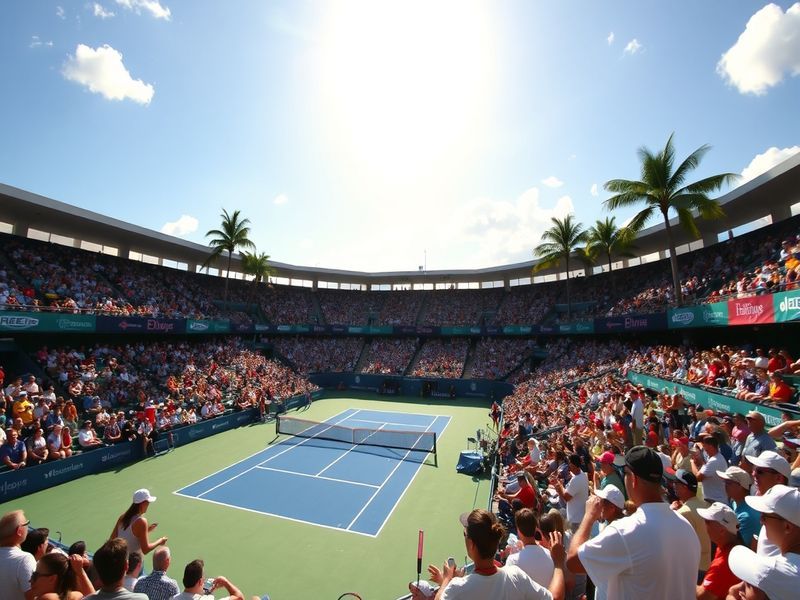
Exploring the Miami Open: A Premier Tennis Tournament
Overview of the Miami Open
The Miami Open is a premier tennis tournament held annually in Miami, Florida. It attracts top players from around the globe, making it one of the most significant events on the ATP and WTA tours. The tournament has a rich history, dating back to its inception in 1985, and has evolved into a key fixture in the tennis calendar.
Traditionally held in March, the Miami Open serves as a vital lead-up to the clay court season. Players often use this tournament to fine-tune their skills and prepare for the French Open. The event is known for its vibrant atmosphere, drawing fans from various backgrounds and cultures, who come together to celebrate their love for tennis.
Historical Significance
The Miami Open has undergone several transformations since its beginnings. Originally known as the Lipton International Players Championships, it was played in Boca Raton before moving to Key Biscayne in 1994. This change allowed for greater attendance and a more festive environment. The tournament has witnessed legendary matches and has hosted some of the greatest names in tennis, including Serena Williams, Roger Federer, and Novak Djokovic.
Throughout its history, the Miami Open has not only showcased athletic prowess but has also served as a cultural melting pot. The tournament features a variety of events, including food festivals, live music, and art exhibitions, reflecting Miami’s diverse culture. This blend of sports and entertainment enhances the overall experience for attendees.
Player Participation and Competition
The Miami Open consistently attracts top-tier talent, making it a highly competitive event. Players from around the world vie for the prestigious title, and the tournament often serves as a stage for emerging stars to make their mark. The draw typically includes:
- Top-ranked players from the ATP and WTA tours
- Up-and-coming young talents
- Former champions looking to reclaim their titles
The competition is fierce, with matches often showcasing thrilling rallies and intense rivalries. The unique hard court surface also influences playing styles, making for exciting encounters. The Miami Open has seen many memorable moments, including dramatic upsets and nail-biting finishes.
Impact on Local and Global Communities
The Miami Open’s impact extends beyond the tennis court. Locally, the tournament generates significant economic activity, drawing thousands of visitors to the area. Hotels, restaurants, and local businesses benefit from the influx of fans and players alike. It also serves as a platform for community engagement, with initiatives aimed at promoting youth sports and health awareness.
On a global scale, the Miami Open fosters international camaraderie and cultural exchange. As players from various countries compete, they bring their unique styles and traditions to the forefront, enriching the tournament’s atmosphere. The event also garners extensive media coverage, allowing fans worldwide to connect with the sport and its athletes.
Furthermore, the tournament’s social media presence has expanded its reach, allowing fans to engage with players and follow the action in real-time. This interaction fosters a sense of community among tennis enthusiasts, transcending geographical boundaries.
Conclusion
The Miami Open stands as a testament to the sport of tennis, combining elite competition with cultural celebration. Its rich history, diverse atmosphere, and global reach make it a must-see event on the tennis calendar. As the tournament continues to evolve, it remains dedicated to enhancing the experience for players and fans alike.
For those interested in exploring more about sports events, check out our Sports section on Dave’s Locker for the latest updates and insights.