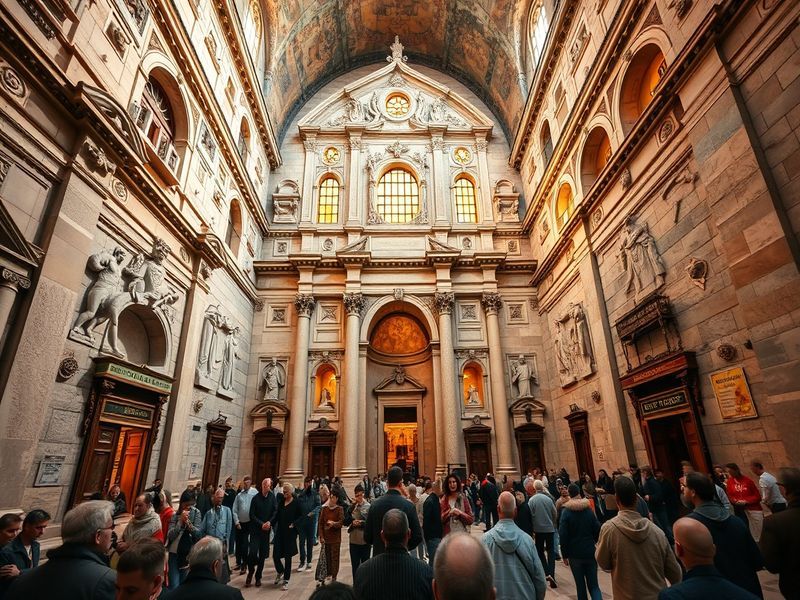
The Church of the Holy Sepulchre stands as one of Christianity’s most revered sites, a place where history, faith, and architecture converge. Located in Jerusalem’s Old City, this ancient church marks the believed locations of Jesus Christ’s crucifixion, burial, and resurrection. Its existence spans nearly two millennia, surviving conquests, fires, and political upheavals to remain a living testament to Christian devotion.
The church’s significance extends beyond its religious importance. It is a focal point for interfaith dialogue and a symbol of Jerusalem’s layered cultural heritage. For pilgrims, historians, and travelers alike, the Holy Sepulchre offers a tangible connection to the origins of Christianity, making it a destination unlike any other.
A Brief History of the Holy Sepulchre
The story of the Holy Sepulchre begins in the 4th century when Emperor Constantine’s mother, Helena, identified the site during her pilgrimage to Jerusalem. Tradition holds that she discovered the True Cross—the cross used in Jesus’ crucifixion—buried beneath a temple to Venus built by Emperor Hadrian. Construction of the first church began in 326 AD, blending Roman and early Christian architectural styles.
Over the centuries, the church faced destruction and reconstruction. In 614, the Sassanid Persians sacked Jerusalem, severely damaging the structure. The Byzantine Emperor Heraclius later restored it, only for it to be destroyed again by Caliph al-Hakim in 1009. The church’s current form largely dates to the Crusader period (12th century), with later additions and restorations.
Despite its turbulent past, the Holy Sepulchre has remained a continuous place of worship. Its endurance reflects the resilience of faith and the enduring allure of Jerusalem as a spiritual crossroads.
Architectural and Spiritual Significance
The Church of the Holy Sepulchre is not a single structure but a complex of chapels, altars, and shrines, each with deep spiritual meaning. Key areas include:
- Golgotha (Calvary): The hill where Jesus was crucified, marked by a rocky outcrop beneath the church’s main dome. Pilgrims often touch or pray at the stone traditionally believed to bear the cross’s imprint.
- The Stone of Anointing: A slab where Jesus’ body was prepared for burial. Pilgrims kneel and touch the stone, often leaving flowers or handkerchiefs.
- The Tomb of Jesus: A small, enclosed shrine housing the tomb where Christ is said to have risen. The current structure dates to 1810 but follows a tradition stretching back centuries.
- Latin, Greek, and Armenian Altars: The church is shared among multiple Christian denominations, each maintaining control over specific areas. This division reflects centuries of theological and political rivalry.
The church’s architecture blends Byzantine, Crusader, and modern elements. The Rotunda, built over the tomb, features a massive dome adorned with intricate mosaics. The façade, rebuilt after the 19th-century fire, showcases a mix of medieval and Ottoman influences.
For believers, the Holy Sepulchre is more than an architectural marvel; it is a place of divine encounter. The air is thick with incense, chanting, and the murmur of prayers, creating an atmosphere of reverence that transcends time.
Interfaith Dynamics and Modern Challenges
The Holy Sepulchre’s shared custody among six Christian denominations—Greek Orthodox, Roman Catholic, Armenian Orthodox, Coptic, Syriac, and Ethiopian—creates a unique but often tense coexistence. The Status Quo, a 19th-century Ottoman decree, governs the church’s administration, outlining each group’s rights and responsibilities. Disputes occasionally flare over maintenance, processions, or control of shared spaces.
Despite these challenges, the church remains a rare example of interfaith cooperation in a region often defined by division. Its preservation requires delicate negotiation, reflecting the broader struggle to maintain Jerusalem’s sacred sites amid political and religious conflict.
In recent years, the Holy Sepulchre has faced new threats, including environmental wear and the pressures of mass tourism. Restoration efforts, such as the 2016–2017 stabilization of the Edicule (Jesus’ tomb), highlight the global commitment to preserving this irreplaceable heritage.
Why the Holy Sepulchre Matters Today
The Church of the Holy Sepulchre is more than a relic of the past; it is a living symbol of Christianity’s enduring legacy. For millions, it represents the heart of their faith, a place where heaven and earth seem to meet. Its preservation is not just a matter of historical conservation but of spiritual continuity.
Beyond its religious significance, the church serves as a reminder of Jerusalem’s role as a bridge between cultures and traditions. In a world often divided by sectarianism and nationalism, the Holy Sepulchre stands as a testament to the possibility of shared reverence.
Visiting the Holy Sepulchre is an experience that transcends mere tourism. It is an encounter with history, faith, and humanity’s deepest longings. Whether one comes as a pilgrim, a historian, or a curious traveler, the church leaves an indelible impression.
As Jerusalem continues to evolve, the Holy Sepulchre remains a constant—a beacon of continuity in a world of change. Its story is far from over, and its spiritual resonance shows no signs of fading.
Plan Your Visit
The Church of the Holy Sepulchre is open daily, though hours vary by denomination. Be prepared for crowds, especially during Easter and Christmas. Modest dress is recommended, and visitors should respect the sacred rituals taking place within its walls.
For more on Jerusalem’s sacred sites and their cultural impact, explore our Travel and Culture sections.