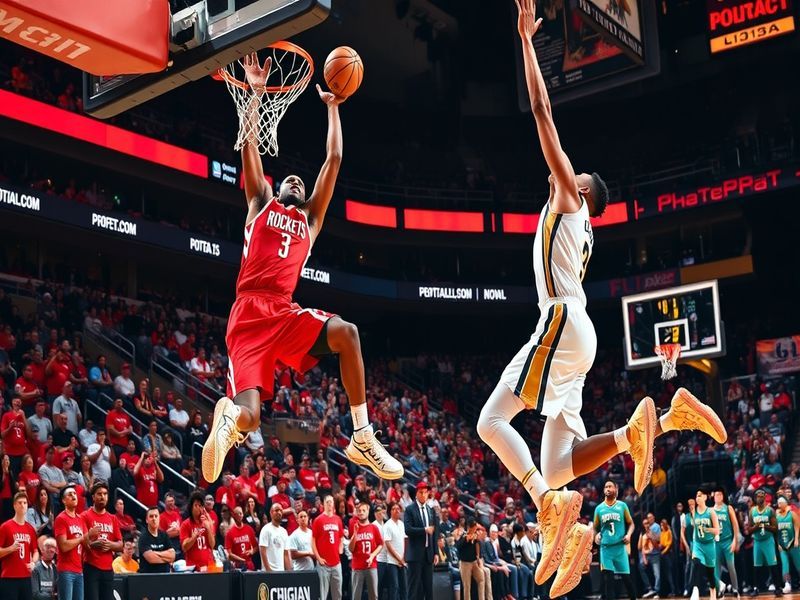
Rockets vs Pelicans: How Two NBA Styles Collide
The Houston Rockets and New Orleans Pelicans have emerged as two of the NBA’s most intriguing teams this season, each bringing a distinct philosophy to the court. While the Rockets prioritize speed and three-point shooting, the Pelicans blend athleticism with developing young talent. Their matchups offer more than just wins and losses—they reveal deeper trends in modern basketball.
The Rockets, led by Fred VanVleet and Alperen Sengun, continue to rely on their trademark fast-paced offense. Meanwhile, the Pelicans, under the guidance of Willie Green, have become one of the league’s most efficient transition teams. When these two styles collide, the result is often a high-scoring affair with contrasting approaches to efficiency and defense.
Offensive Philosophies: Three-Pointers vs Transition Play
The Rockets’ offense remains rooted in analytics-driven basketball. Houston ranks among the league leaders in three-point attempts per game, a strategy that has defined their identity since the James Harden era. This season, they average 42.3 three-point attempts per game, converting at a 37.1% rate. Their half-court sets often involve frequent ball movement and quick relocations to generate open looks.
The Pelicans, however, have redefined offensive efficiency through transition play. New Orleans ranks second in the NBA in fast-break points per game (18.7), leveraging the elite athleticism of Zion Williamson and Brandon Ingram. Their half-court offense, while improving, still prioritizes quick triggers over prolonged possessions. This contrast creates an interesting dynamic when the two teams face off.
In their most recent meeting, the Rockets attempted 45 three-pointers while the Pelicans generated 22 fast-break points. Despite the disparity in styles, both teams shot over 50% from the field in transition-driven sequences. This suggests that while their approaches differ, both prioritize high-percentage scoring when possible.
Defensive Adjustments: Switchability vs Rim Protection
Defensively, the Rockets and Pelicans present opposing challenges. Houston, despite their offensive firepower, often struggles with defensive versatility. The Rockets rank 22nd in defensive rating, largely due to their lack of traditional rim protection. While Amen and Sengun provide some interior presence, teams frequently exploit their perimeter-oriented rotations.
The Pelicans, on the other hand, have built a surprisingly stout defense around switchable wings and improved rim protection. Herb Jones and Trey Murphy III anchor a unit that ranks in the top 10 in defensive efficiency. Their ability to contain dribble penetration and rotate quickly has been key to their recent success.
When these teams meet, the Pelicans’ defensive versatility often forces the Rockets into tough mid-range jumpers—an area where Houston struggles. Conversely, Houston’s perimeter defense can disrupt New Orleans’ rhythm by pressuring ball handlers and forcing turnovers. The matchup becomes a chess game of personnel and scheme.
Key Player Matchups That Define the Rivalry
A handful of individual battles shape the outcome whenever these teams meet. Zion Williamson vs. Alperen Sengun stands out as a clash of styles—raw power against refined post play. Zion’s ability to bully smaller defenders contrasts with Sengun’s nimble footwork and passing vision. In their last meeting, Zion dominated the paint while Sengun responded with a triple-double, highlighting their contrasting impact.
Another critical matchup involves Brandon Ingram and Fred VanVleet. Ingram’s mid-range mastery forces Houston’s defense to choose between guarding him tightly or conceding easy looks. VanVleet, meanwhile, thrives in catch-and-shoot scenarios, often bailing out Houston’s offense with timely threes. Their battle reflects the broader narrative of isolation specialists versus movement shooters.
The Pelicans’ depth also presents challenges. CJ McCollum and Trey Murphy III provide secondary scoring that keeps defenses honest. Houston’s role players, including Jalen Green and Amen Thompson, must stay engaged to prevent New Orleans from exploiting mismatches late in games.
Statistical Trends and What They Reveal
Over the past three seasons, the Rockets and Pelicans have split their four meetings, with each game decided by fewer than 10 points. A closer look at the numbers reveals why these matchups are so competitive:
- Three-Point Shooting: Houston averages 15.8 more three-point attempts per game, converting at a 36.2% rate compared to New Orleans’ 34.8%.
- Transition Defense: The Pelicans allow the fewest fast-break points in the league (9.2 per game), while Houston ranks 24th (12.1 per game).
- Free Throw Rate: New Orleans draws more fouls (24.1 per game) than Houston (20.3 per game), reflecting their aggressive driving style.
- Turnover Margin: The Rockets commit fewer turnovers (12.8 per game) than the Pelicans (14.2 per game), a testament to their ball movement.
These statistics underscore why their games often come down to execution in the final possessions. The Rockets’ reliance on threes can backfire if the Pelicans’ defense forces tough looks. Meanwhile, New Orleans’ transition game can swing momentum quickly if Houston’s defense fails to secure stops.
What This Matchup Tells Us About the NBA’s Future
The Rockets and Pelicans represent two distinct paths to success in today’s NBA. Houston’s model leans heavily on analytics and spacing, while New Orleans blends athleticism with developing young talent. Their matchups offer a glimpse into the league’s evolving strategies.
For the Rockets, the challenge lies in balancing their offensive identity with defensive improvement. If they can enhance their rim protection and defensive rotations, they could become a legitimate contender. The Pelicans, meanwhile, must prove they can sustain their success beyond the regular season, particularly in playoff environments where spacing and execution become even more critical.
As these teams continue to evolve, their rivalry highlights the NBA’s growing emphasis on versatility and adaptability. The Rockets’ three-point barrage and the Pelicans’ transition dominance are more than just stylistic choices—they reflect broader trends in how the game is played at the highest level.
For fans, these matchups deliver excitement, strategy, and compelling narratives. Whether it’s Zion’s relentless drives or VanVleet’s clutch shooting, Rockets vs. Pelicans games always provide plenty to discuss.
As the season progresses, these two teams will likely remain in the playoff hunt, making their head-to-head battles even more significant. Their contrasting styles ensure that every meeting is unpredictable, with outcomes hinging on execution rather than predictability.
For more NBA analysis and game breakdowns, visit our Sports section.
Explore in-depth player profiles and team strategies on Analysis.