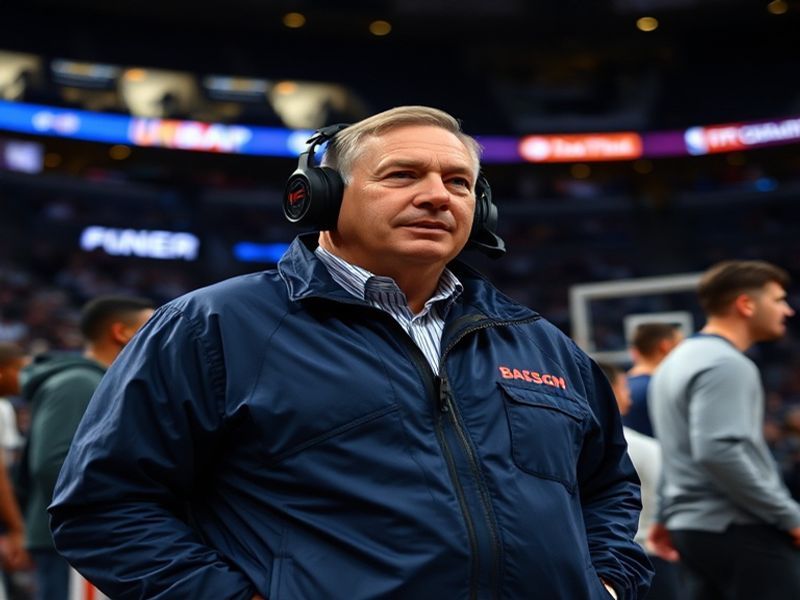
Glenn Anton “Doc” Rivers has spent over three decades in the NBA, transitioning from a respected point guard to one of the league’s most influential coaches. Known for his sharp basketball mind and motivational leadership, Rivers has left an indelible mark on multiple franchises. His career spans stints with the Atlanta Hawks, Boston Celtics, Los Angeles Clippers, and Philadelphia 76ers, where he has consistently adapted to the evolving demands of professional basketball.
Rivers’ coaching philosophy blends traditional fundamentals with innovative strategies, making him a bridge between eras of the game. His ability to manage locker rooms, develop young talent, and implement winning systems has earned him widespread respect. Beyond the court, Rivers is also recognized for his media presence and philanthropic efforts, further solidifying his legacy as both a leader and a public figure.
Early Career and Rise to Prominence
Rivers began his basketball journey as a player, drafted 31st overall by the Atlanta Hawks in 1983. Over 13 seasons, he established himself as a reliable floor general, earning an All-Star selection in 1988. His leadership and court vision set the stage for his eventual transition into coaching, which began as an assistant with the Hawks in 1999.
His first head coaching role came in 2004 with the Boston Celtics, where he quickly turned the franchise around. By 2008, Rivers had orchestrated one of the most dominant teams in NBA history, leading the Celtics to an NBA championship alongside Paul Pierce, Kevin Garnett, and Ray Allen. This victory cemented his reputation as a coach capable of building championship-caliber teams from the ground up.
During his tenure in Boston, Rivers also became known for his calm demeanor and ability to manage strong personalities. His leadership style emphasized trust and communication, principles he carried with him throughout his career. This approach would later define his coaching in other organizations, proving adaptable whether in rebuilding phases or contention windows.
Coaching Philosophy and Adaptability
Rivers’ coaching methodology is rooted in flexibility. He has repeatedly demonstrated the ability to adjust systems based on roster strengths and league trends. For example, his time with the Los Angeles Clippers from 2013 to 2020 showcased his knack for maximizing superstar talent while maintaining team chemistry. Under his guidance, the Clippers became perennial contenders, reaching the Western Conference Finals in 2020.
A key aspect of Rivers’ approach is his emphasis on player development. He has mentored several All-Stars, including Jayson Tatum and Kyrie Irving in Boston, and Kawhi Leonard and Paul George in Los Angeles. His ability to connect with players on a personal level while pushing them to reach their potential has been a hallmark of his career.
Rivers also prioritizes defensive discipline, a principle evident in his teams’ consistent rankings among the league’s best in defensive efficiency. While often overshadowed by offensive innovations, his defensive schemes have been critical in playoff runs, including the 2008 championship. This balance between offense and defense reflects his comprehensive understanding of the game.
In recent years, Rivers has faced criticism for some strategic decisions, particularly during playoff exits. However, his willingness to evolve and learn from setbacks has allowed him to remain relevant in an increasingly competitive league. His adaptability ensures he remains a sought-after voice in basketball circles, even as he navigates new challenges.
Leadership Beyond the Bench
Rivers’ influence extends far beyond Xs and Os. He has become a prominent voice in basketball discourse, frequently appearing on ESPN’s NBA Countdown as an analyst. His insights, delivered with clarity and experience, offer viewers a deeper understanding of the game’s nuances. This media role has amplified his presence in the sport, even after stepping away from coaching.
In 2019, Rivers launched the Doc Rivers Foundation, focusing on youth empowerment and education. The organization partners with schools and community centers to provide resources for underserved students, reflecting Rivers’ commitment to social impact. His philanthropic efforts align with his belief in using platforms for positive change, a principle he instilled in his players throughout his career.
Rivers is also a vocal advocate for social justice, using his platform to address racial inequality and police brutality. During the 2020 NBA bubble season, he played a pivotal role in organizing player-led initiatives to amplify marginalized voices. This activism underscored his belief that athletes have a responsibility to drive meaningful conversations beyond sports.
Legacy and Future Prospects
As Rivers continues to shape the NBA’s landscape, his legacy is defined by longevity, adaptability, and leadership. He ranks among the top 10 winningest coaches in NBA history, a testament to his consistency and effectiveness. His career spans four decades, a rarity in a league where coaching tenures often fluctuate with front-office changes.
Looking ahead, Rivers’ future may include more media opportunities or executive roles within the NBA. His deep relationships with players, coaches, and executives position him as a bridge between generations. Whether behind the bench or in the broadcast booth, his insights will continue to influence the game.
For aspiring coaches, Rivers’ career offers a masterclass in resilience and evolution. His ability to thrive in different eras—from the physical play of the 1990s to the analytics-driven 2020s—demonstrates the timeless value of basketball IQ and adaptability. As the NBA evolves, Rivers remains a symbol of what it means to lead with purpose.
Key Takeaways from Doc Rivers’ Career
- Championship Pedigree: Won an NBA title as head coach in 2008 with the Boston Celtics.
- Player Development: Mentored All-Stars like Kevin Garnett, Paul Pierce, Kawhi Leonard, and Jayson Tatum.
- Defensive Focus: Teams consistently ranked among the league’s best in defensive efficiency under his leadership.
- Social Impact: Established the Doc Rivers Foundation to support youth education and empowerment.
- Media Presence: Serves as a prominent analyst on ESPN’s NBA Countdown, offering expert insights.
Doc Rivers’ career is a testament to the power of adaptability and leadership in sports. From his playing days to his coaching tenure and beyond, he has consistently demonstrated what it means to evolve while staying true to core values. As the NBA continues to change, Rivers’ influence will endure, both on and off the court.