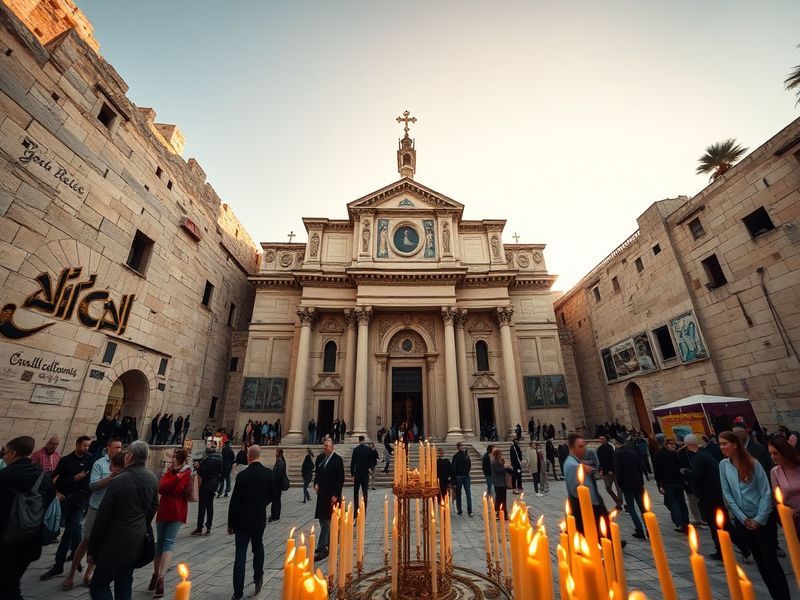
The Church of the Holy Sepulchre: A Pilgrimage Site of Significance
Exploring the Church of the Holy Sepulchre
The Church of the Holy Sepulchre, located in the heart of Jerusalem, stands as one of the most significant religious sites in Christianity. It is believed to be the site of both the crucifixion and burial of Jesus Christ, making it a focal point for pilgrims and tourists alike. Its rich history and architectural grandeur draw visitors from around the globe, each seeking to connect with the spiritual legacy embedded within its walls.
A Brief History
The origins of the Church of the Holy Sepulchre date back to the 4th century AD when Emperor Constantine commissioned its construction. The site was identified by Helena, his mother, as the location of Jesus’ crucifixion and burial. Over the centuries, the church has undergone numerous renovations and restorations due to destruction during various conflicts, including the Persian conquest in 614 AD and the Crusades.
Today, the church is divided among several Christian denominations, including the Roman Catholic, Eastern Orthodox, and Armenian Apostolic Churches. This division reflects not only the theological differences among these groups but also highlights the ongoing complexities of religious coexistence in Jerusalem.
Key Features of the Church
The Church of the Holy Sepulchre is renowned for its stunning architecture and sacred relics. Visitors can explore several key areas within the church:
- The Stone of Unction: This is believed to be the stone where Jesus’ body was prepared for burial. Pilgrims often touch or kiss the stone as a sign of reverence.
- The Edicule: A small shrine that houses the tomb of Jesus. This area has been the center of devotion for centuries.
- The Crucifixion Site: Marked by a beautiful altar, this area commemorates the place where Jesus was crucified, known as Golgotha or Calvary.
- The Chapel of Adam: Located beneath the Edicule, this chapel is believed to be the burial site of Adam, symbolically linking the crucifixion to the fall of man.
The Broader Implications
The Church of the Holy Sepulchre is not merely a historical landmark; it represents the ongoing struggle for religious identity and coexistence in Jerusalem. The shared reverence for this sacred site among different Christian denominations illustrates both the unity and division within Christianity itself. Each group brings its own traditions, rituals, and interpretations, leading to a rich tapestry of worship that is both beautiful and complex.
Furthermore, the church serves as a microcosm of the broader religious landscape in Jerusalem, a city that holds significance for Judaism, Islam, and Christianity alike. The interactions among these faiths at this site can often reflect larger geopolitical tensions, but they also offer moments of unity and shared reverence.
As global interest in religious tourism continues to grow, the Church of the Holy Sepulchre remains a pivotal destination. Pilgrims and tourists alike often leave with a deeper understanding of not only their own faith but also of the historical and cultural exchanges that have shaped Christianity over the centuries.
Conclusion
The Church of the Holy Sepulchre is a remarkable testament to the enduring legacy of Christianity and the complexities of religious coexistence. Its historical significance, architectural beauty, and spiritual depth make it a must-visit site for anyone interested in the rich tapestry of faith that characterizes Jerusalem. As visitors walk through its ancient halls, they are not only connecting with their own beliefs but also engaging with a shared human heritage that transcends individual denominations.
For more insights into religious sites and their impact on culture, visit our Culture and Travel pages.