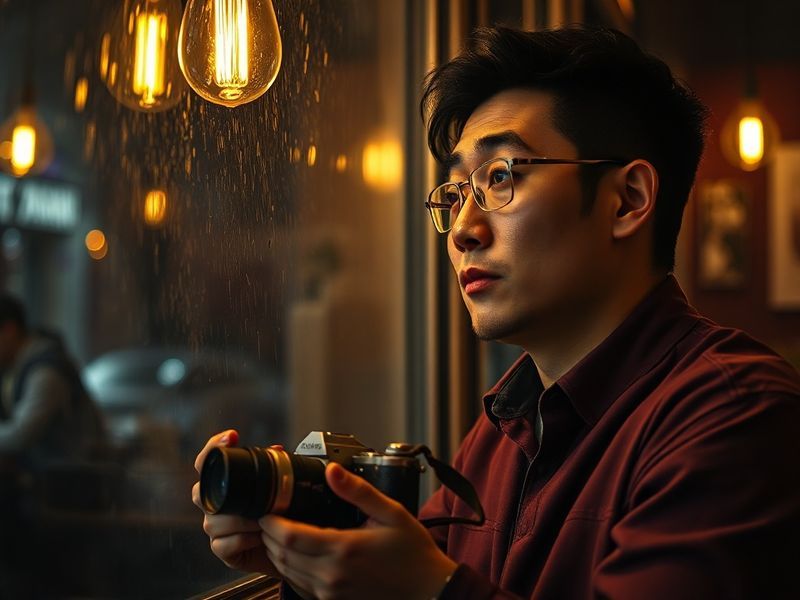
Who Is Dante Chen? The Artist Redefining Modern Expression
“`html
Dante Chen: The Emerging Voice Reshaping Modern Narratives
By Jane Holloway | Published
Dante Chen’s work stands at the intersection of raw creativity and deliberate precision. In an era where digital expression often defaults to noise, Chen’s projects cut through the clutter with clarity and purpose. Whether through visual art, written word, or multimedia installations, Chen consistently delivers work that feels both deeply personal and universally resonant.
The Early Years: Formative Influences and Artistic Awakening
Born and raised in Toronto, Dante Chen grew up surrounded by a mix of cultural influences—from the city’s vibrant immigrant communities to its quiet suburban edges. Chen’s parents, both educators, encouraged intellectual curiosity and artistic exploration early on. At age 10, Chen began experimenting with photography, using a disposable camera to document neighborhood life. By high school, this hobby had evolved into a disciplined practice.
Chen’s formal education in visual arts began at Ryerson University (now Toronto Metropolitan University), where they studied under photographers known for their conceptual rigor. It was here that Chen developed a signature style: blending documentary realism with surrealist touches. A pivotal moment came during a 2018 residency in Montreal, where Chen explored themes of migration and identity through a series of mixed-media portraits. This project, titled Thresholds, marked Chen’s first major public recognition, winning the Emerging Artist Award at the Toronto Art Fair.
Defining Style and Creative Philosophy
Chen’s work is difficult to categorize, slipping between mediums with ease. Photography remains central, but Chen frequently incorporates text, sound, and found objects to create immersive experiences. Their philosophy revolves around what they describe as “controlled chaos”—a deliberate balance between spontaneity and structure. “I don’t believe in accidents in art,” Chen once remarked in an interview. “Even the unplanned elements are part of a larger composition.”
This approach is evident in Chen’s 2022 project Fragments of Home, a multimedia installation that reimagines domestic spaces through fragmented narratives. Using audio recordings of immigrant families sharing stories, paired with abstract photographs of their homes, Chen created an environment that felt both intimate and disorienting. Critics praised the work for its emotional depth and technical innovation, with The Globe and Mail calling it “a meditation on belonging that doesn’t flinch from complexity.”
Key Elements of Chen’s Style
- Hybrid Mediums: Chen often merges photography with soundscapes, text, and sculptural elements to create multisensory experiences.
- Narrative Fragmentation: Their work embraces non-linear storytelling, inviting viewers to piece together meaning from disparate visual and auditory cues.
- Cultural Juxtaposition: Chen frequently explores themes of migration, diaspora, and cultural hybridity, often through personal and collective lenses.
- Minimalist Aesthetic: Despite the complexity of their concepts, Chen’s visual output remains clean and deliberate, avoiding visual overwhelm.
Broader Implications: Art as a Tool for Dialogue
Chen’s influence extends beyond galleries and into public discourse. In an age of algorithmic curation and curated identities, their work challenges audiences to engage more deeply with ambiguity and contradiction. This is particularly relevant in discussions about representation in contemporary art. Chen’s focus on immigrant narratives and diasporic experiences fills a critical gap in mainstream cultural conversations, where such stories are often marginalized or simplified.
Another layer of Chen’s impact lies in their commitment to accessibility. Unlike artists who prioritize exclusivity, Chen makes their work available through open digital archives and community workshops. In 2023, they launched Found Voices, a free online platform where emerging artists can share and discuss their work globally. The initiative has since grown to include contributors from over 40 countries, demonstrating how art can function as a democratizing force.
The Road Ahead: What’s Next for Dante Chen
Chen shows no signs of slowing down. Their next major project, Echo Chambers, is slated for release in late 2024. This immersive sound and light installation will explore the ways digital spaces shape—and sometimes distort—human connection. Early teasers suggest a collaboration with a renowned electronic musician, hinting at a fusion of visual art and experimental audio.
Beyond Echo Chambers, Chen has expressed interest in expanding into film. They’ve begun preliminary work on a short documentary about second-generation immigrants navigating cultural identity in Toronto’s tech industry. If successful, this could mark a significant pivot toward moving images, further diversifying Chen’s already multifaceted practice.
Why Dante Chen Matters Now
In a cultural landscape saturated with performative activism and hollow trends, Chen’s work offers something rare: authenticity grounded in craft. Their refusal to be boxed into a single genre or identity reflects a broader generational shift toward fluidity in expression. For younger artists, Chen serves as a model of how to remain true to one’s vision while engaging critically with the world.
Moreover, Chen’s success underscores the enduring power of slow art in a fast-paced digital economy. In an environment where content is consumed and discarded within seconds, Chen’s projects demand—and reward—patient attention. This alone positions them as a vital counterpoint to the ephemeral nature of online culture.
Conclusion: A Lasting Mark on the Cultural Landscape
Dante Chen’s trajectory is still unfolding, but their impact is already undeniable. By blending technical mastery with urgent social themes, they’ve carved out a space that feels both essential and deeply human. Whether through a gallery installation, a community workshop, or a digital archive, Chen consistently reminds us that art isn’t just about beauty—it’s about truth, connection, and the courage to see the world clearly, even when it’s messy.
As Chen continues to evolve, one thing is certain: the art world—and the world beyond it—will be watching.
Explore more trending artists on Dave’s Locker or dive into cultural analysis and commentary for deeper insights.