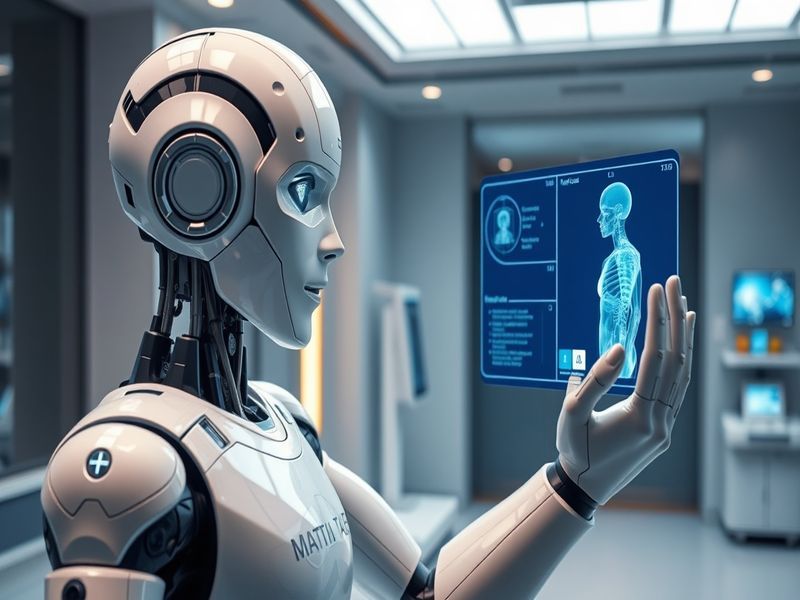
Exploring the Impact of AI in Healthcare: The AI Doc
Understanding “The AI Doc”: Transforming Healthcare
The AI Doc represents a significant advancement in the intersection of artificial intelligence and healthcare. As technology evolves, healthcare providers are increasingly leveraging AI systems to enhance patient care, streamline operations, and improve diagnostic accuracy. This article explores the various facets of AI in healthcare, its benefits, challenges, and the future it holds.
Applications of AI in Healthcare
AI technology is finding its way into various aspects of healthcare, from administrative tasks to complex diagnostic processes. Here are some notable applications:
- Diagnostic Assistance: AI systems can analyze medical images, such as X-rays or MRIs, with remarkable accuracy, often identifying conditions that may be missed by human eyes.
- Predictive Analytics: Predictive models can forecast patient outcomes based on historical data, helping doctors make informed decisions about treatment plans.
- Personalized Medicine: AI can analyze genetic information to tailor treatments specifically to individual patients, increasing the likelihood of successful outcomes.
- Operational Efficiency: AI tools can automate administrative tasks, such as scheduling and billing, allowing healthcare professionals to focus more on patient care.
Benefits of AI in Healthcare
The integration of AI into healthcare offers numerous advantages. One of the most significant benefits is the potential for improved patient outcomes. Enhanced diagnostic tools can lead to earlier detection of diseases, which is crucial for conditions like cancer.
Moreover, AI can help reduce costs by minimizing human error and streamlining processes. For example, AI-driven systems can manage patient data more efficiently, which can reduce time spent on paperwork and administrative tasks. This allows healthcare providers to allocate more resources to direct patient interaction.
AI also has the potential to ease the burden on healthcare systems. With an increasing global population and rising healthcare demands, AI can help manage the workload effectively, ensuring that patients receive timely care.
Challenges and Considerations
Despite its many advantages, the implementation of AI in healthcare is not without challenges. Concerns about data privacy and security are paramount, especially with sensitive patient information being processed by AI systems. Ensuring that these systems comply with regulations such as HIPAA is crucial.
Additionally, there is the issue of trust. Healthcare professionals must be able to trust AI systems to provide accurate and reliable information. This necessitates thorough training and validation of AI algorithms before they are integrated into clinical settings.
Another consideration is the potential for job displacement. As AI systems take on more tasks, there is a concern that this could lead to reduced job opportunities for healthcare workers. However, many experts argue that AI should be viewed as a tool to assist rather than replace human professionals.
The Future of AI in Healthcare
The future of AI in healthcare is promising. As technology continues to advance, we can expect to see even more innovative applications of AI that enhance patient care and operational efficiency. Research and development in this field are rapidly progressing, with significant investments being made by tech companies and healthcare organizations alike.
Collaboration between healthcare providers and AI developers will be essential for creating solutions that meet the needs of patients and practitioners. As this partnership evolves, it is likely that AI will become an integral part of the healthcare landscape.
To stay updated on the latest developments in technology and healthcare, consider visiting our Technology and Health sections.
In conclusion, the AI Doc signifies a transformative shift in healthcare. While challenges exist, the potential benefits of AI technology are vast. By addressing concerns related to privacy, trust, and job displacement, the healthcare industry can harness the power of AI to improve patient outcomes and operational efficiency. The journey of integrating AI into healthcare is just beginning, and its future holds exciting possibilities.