Understanding Auroras: Nature’s Light Show
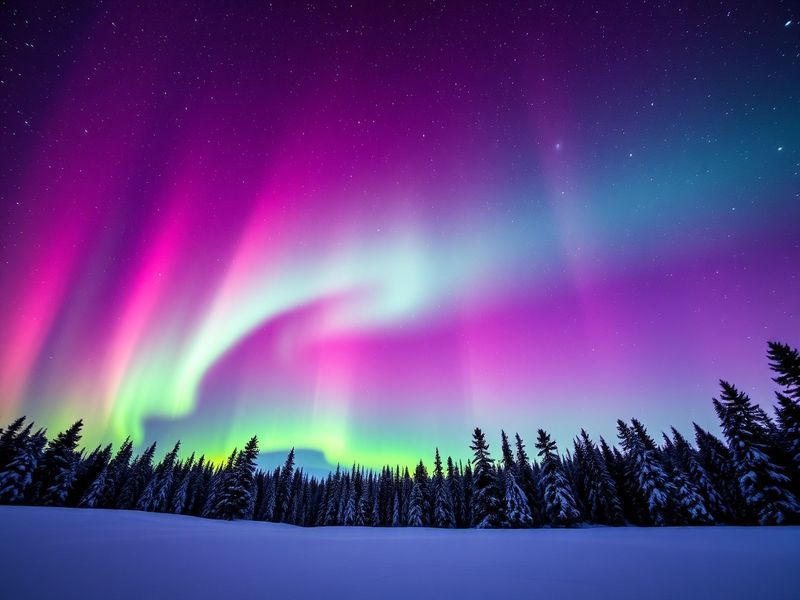
Auroras are one of the most spectacular natural phenomena on our planet. Often seen in polar regions, these vibrant displays of light captivate observers with their ethereal beauty. Known as aurora borealis in the Northern Hemisphere and aurora australis in the Southern Hemisphere, these lights are the result of complex interactions between solar wind and Earth’s magnetic field.
The Science Behind Auroras
The formation of auroras is fundamentally linked to solar activity. When the sun emits charged particles, known as solar wind, these particles collide with gases in Earth’s atmosphere. The energy released during these collisions produces the beautiful colors associated with auroras.
The primary gases involved are nitrogen and oxygen. Depending on the type of gas and the altitude at which the collisions occur, different colors emerge:
- Green: The most common color, caused by oxygen at lower altitudes (around 100 km).
- Red: Produced by oxygen at higher altitudes (above 200 km).
- Purple and Blue: Result from nitrogen interactions, typically at lower altitudes.
Where and When to See Auroras
Auroras are predominantly visible in high-latitude regions near the Arctic and Antarctic Circles. Locations such as Norway, Canada, Alaska, and parts of Russia are renowned for offering breathtaking views of these lights. The best time to witness auroras is during the winter months when nights are longer, and skies are darker.
However, solar activity can vary, leading to periods of increased aurora activity known as solar storms. Monitoring solar wind forecasts can enhance the chances of viewing these stunning displays. Websites and apps often provide real-time updates on geomagnetic activity, allowing enthusiasts to plan their aurora-chasing adventures effectively.
The Broader Implications of Auroras
While auroras are visually stunning, they also serve as indicators of solar activity and its effects on Earth. Understanding these phenomena can lead to insights into various aspects of our planet’s environment and technology. For example, increased solar activity can disrupt communication systems and power grids. As our reliance on technology grows, the ability to predict and mitigate these disruptions becomes increasingly important.
Furthermore, auroras have cultural significance in many societies. Indigenous peoples in the Arctic regions have long viewed these lights as spiritual phenomena, often embedding them into their folklore and traditions. Learning about auroras can foster a deeper appreciation for the natural world and its influence on human culture.
Conclusion
Auroras are not only breathtaking spectacles but also serve as vital indicators of solar and atmospheric interactions. Their beauty is matched by their complexity, and understanding them opens a window into both scientific and cultural realms. As we continue to explore the mysteries of our planet, auroras remind us of the intricate connections between the sun and Earth, urging us to respect and preserve the natural world.
For those interested in experiencing auroras, planning a trip to a polar region during peak viewing times can be a rewarding endeavor. The combination of science, culture, and nature encapsulated in these light displays makes them a unique subject of study and admiration.