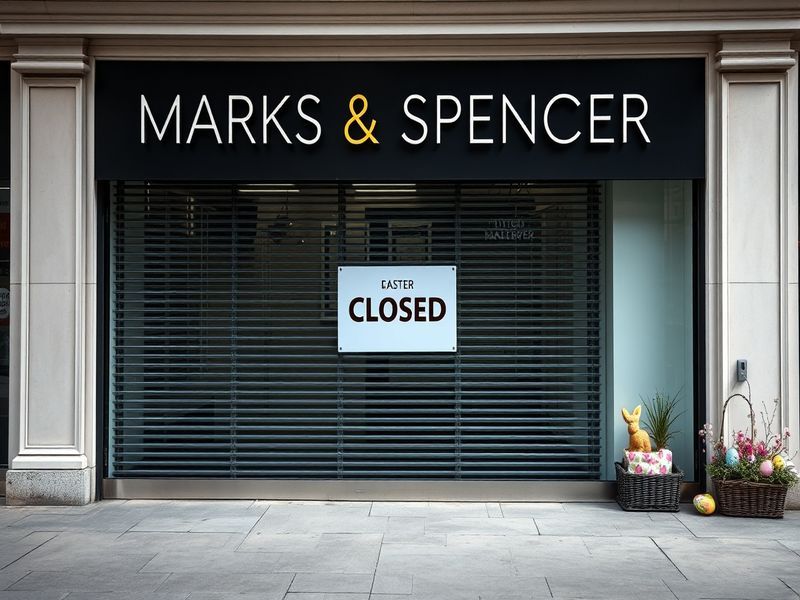
M&S Closes on Easter Sunday: A Cultural Examination
M&S Closes on Easter Sunday: A Cultural Examination
Marks & Spencer (M&S), the iconic British retailer, has made headlines with its decision to close on Easter Sunday. This choice is significant not only for its immediate impact on shoppers but also for what it reveals about broader cultural and economic trends. Retail closures on certain holidays have become a point of contention and discussion in various countries, reflecting differing values and practices.
The Historical Context of Easter Sunday Closures
Historically, Easter Sunday has been observed as a day of rest and reflection in many cultures. In the UK, this day often carries religious significance, which has influenced retail practices. M&S, with its deep-rooted connections to British tradition, aligns itself with these values by choosing to close its doors on this day.
In contrast, countries like the United States have a different approach. Many retailers remain open, catering to consumers seeking convenience and last-minute purchases. This divergence illustrates how cultural attitudes towards commerce can shape retail operations. The decision by M&S can be viewed as a commitment to maintaining traditional values in a rapidly changing retail environment.
Consumer Reactions and Implications
The response from consumers has been mixed. Some applaud M&S for honoring the traditional significance of Easter, while others express frustration over the inconvenience. This duality highlights the ongoing tension between tradition and modern consumerism.
- Support for the Closure: Many customers appreciate the gesture, viewing it as a nod to family time and religious observance.
- Criticism for Inconvenience: On the other hand, some shoppers feel that closing on a busy shopping day limits their options.
- Broader Retail Trends: This decision may also reflect a larger trend of retailers reevaluating their holiday hours in response to consumer feedback and societal expectations.
Global Perspectives on Holiday Retail Practices
Examining the practices of retailers around the world reveals a tapestry of cultural attitudes towards holidays and commerce. In some countries, such as Germany, strict laws regulate shop openings on Sundays and public holidays, emphasizing a strong cultural commitment to rest. In contrast, countries like Japan have a more relaxed approach, with many stores remaining open on holidays.
These differences can be attributed to various factors, including religious beliefs, consumer habits, and local economic conditions. As globalization continues to influence retail practices, M&S’s decision may inspire other retailers to consider their own policies regarding holiday openings.
The Future of Retail in a Changing Landscape
The closure of M&S on Easter Sunday raises questions about the future of retail. As consumer preferences evolve, retailers must find a balance between profitability and cultural sensitivity. The ongoing dialogue around holiday shopping hours suggests that businesses need to be adaptable and responsive to the societal values of their customer base.
Moreover, the rise of online shopping has transformed how people approach holiday shopping. Many consumers now turn to e-commerce, which operates 24/7, diminishing the importance of physical store hours. This shift may prompt traditional retailers to rethink their strategies regarding holiday closures.
Ultimately, M&S’s decision to close on Easter Sunday could serve as a catalyst for broader discussions about the role of retail in society. As the retail landscape continues to evolve, businesses will need to consider not only their bottom line but also the cultural and ethical implications of their operations.
In conclusion, M&S’s closure on Easter Sunday is more than just a retail decision; it reflects a complex interplay of tradition, consumer expectations, and global retail trends. As the conversation around holiday shopping practices continues, retailers will need to navigate these waters carefully, balancing consumer demands with cultural significance.
For more insights into retail trends and consumer behavior, check out our Business section, where we explore the latest developments in the retail industry.