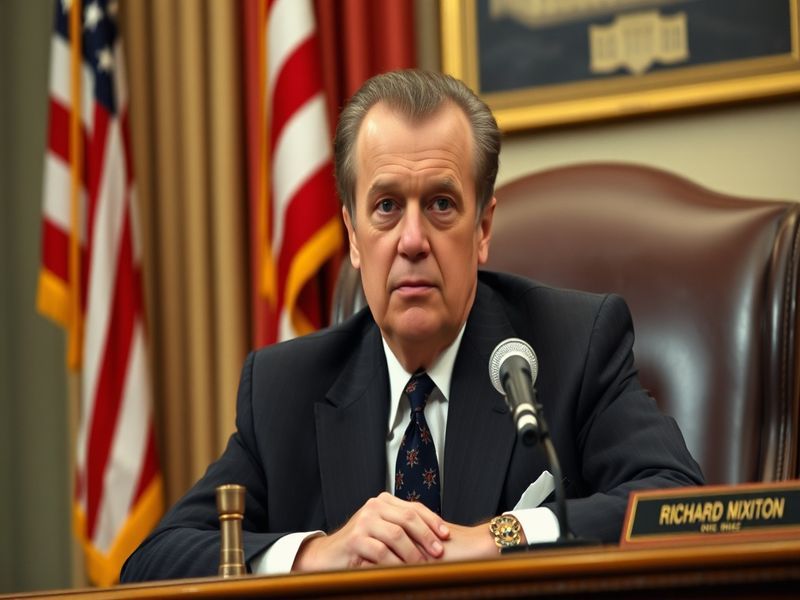
Exploring the Complex Legacy of Richard Nixon
A Complex Legacy: Richard Nixon’s Political Journey
Richard Nixon, the 37th President of the United States, remains one of the most controversial figures in American political history. His presidency, marked by significant domestic and foreign policy initiatives, was overshadowed by the Watergate scandal, which ultimately led to his resignation. Nixon’s life and career reflect a unique intersection of ambition, political strategy, and personal turmoil.
The Early Years
Born on January 9, 1913, in Yorba Linda, California, Nixon grew up in a modest family. His upbringing shaped his worldview, instilling a strong work ethic and a deep sense of loyalty to his country. After graduating from Whittier College and Duke University School of Law, Nixon entered politics, serving in the House of Representatives and later as a senator from California.
Nixon’s political career accelerated when he was chosen as Dwight D. Eisenhower’s running mate in the 1952 presidential election. His experience during this time was significant, as he navigated the complexities of Cold War politics and anti-communism sentiments. The famous “Checkers Speech,” delivered in 1952, showcased his ability to connect with the American public, preserving his place in the Eisenhower administration despite accusations of financial impropriety.
Presidency and Policies
Nixon’s presidency began on January 20, 1969, and he quickly set forth a series of ambitious policies that would leave a lasting impact on the nation and the world. His administration focused on several key areas:
- Foreign Policy: Nixon’s approach to foreign affairs included the groundbreaking policy of détente with the Soviet Union and the opening of diplomatic relations with China. His visit to China in 1972 marked a turning point in U.S.-China relations, fostering trade and dialogue.
- Domestic Initiatives: Domestically, Nixon implemented significant policies such as the establishment of the Environmental Protection Agency and the introduction of revenue-sharing programs to empower local governments.
- Social Issues: Nixon’s administration also dealt with contentious social issues, including civil rights and the anti-war movement, often walking a fine line between addressing public demand and maintaining political support.
Despite these achievements, Nixon’s presidency became increasingly complicated. The Vietnam War, which escalated during his term, led to widespread protests and civil unrest. His administration’s actions in Cambodia and the secret bombings further polarized the nation.
The Watergate Scandal
The Watergate scandal, which began with a break-in at the Democratic National Committee headquarters in 1972, would ultimately define Nixon’s legacy. The attempt to cover up the scandal revealed deep-seated corruption and abuse of power within the administration. As investigations unfolded, it became clear that Nixon had attempted to obstruct justice, leading to mounting pressure for his impeachment.
On August 8, 1974, Nixon became the first sitting U.S. president to resign from office. His departure marked a significant moment in American history, leading to a reevaluation of the presidency and the relationship between the government and the public. Gerald Ford, who succeeded Nixon, famously granted him a pardon, a decision that stirred further controversy.
Cultural Impact and Historical Reflection
Nixon’s legacy extends beyond political achievements and failures; it has permeated American culture and global perceptions of leadership. His presidency is often cited in discussions about ethics in governance and the importance of accountability. The Watergate scandal has been the subject of numerous books, films, and documentaries, reflecting a societal fascination with political intrigue and the consequences of power.
Globally, Nixon’s foreign policy initiatives, particularly with China, have been viewed as a strategic pivot that reshaped international relations. The opening of diplomatic channels set the stage for economic partnerships that continue to influence global trade today.
In retrospect, Nixon remains a polarizing figure. Some view him as a shrewd politician who navigated complex issues with a pragmatic approach, while others see him as a cautionary tale of ambition unchecked by ethics. His life story serves as a reminder of the multifaceted nature of leadership and the potential for both greatness and downfall within the political arena.
Conclusion
Richard Nixon’s political journey is a compelling narrative of ambition, conflict, and consequence. His presidency encapsulates a critical period in American history, marked by significant achievements and profound failures. As society continues to grapple with the implications of his legacy, Nixon serves as a focal point for discussions about power, accountability, and the intricate dance of politics.
For more insights into political history, visit our Politics section or explore the Culture category for a broader perspective on influential figures.