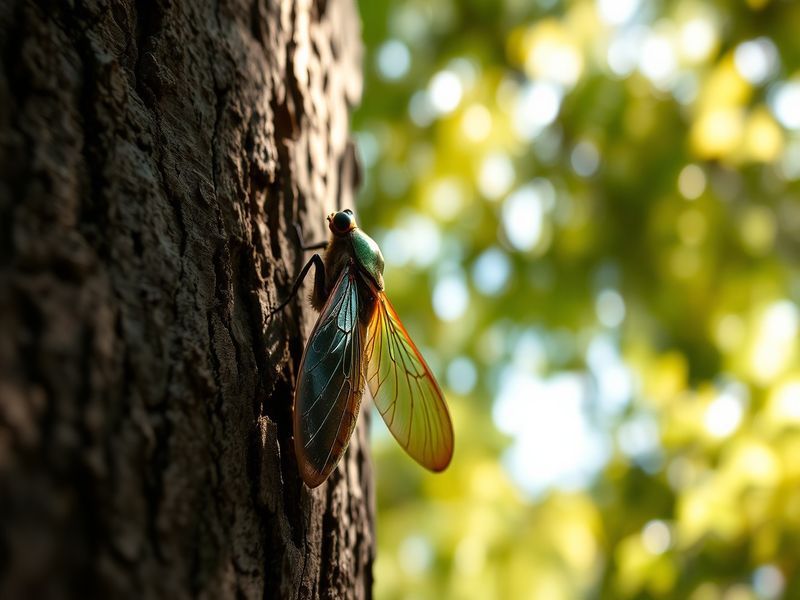
In the dense forests and quiet suburbs of the eastern United States, a phenomenon unfolds every 13 or 17 years that few people notice—until they do. Cicadas, those loud, winged insects, emerge in staggering numbers, their choruses filling the air with a sound that can reach 100 decibels. These insects are not just noisy neighbors; they are timekeepers, ecologists, and survivors whose life cycles offer lessons in precision and adaptation.
Their appearances are so predictable that scientists use them to mark time in the natural world. When the ground temperature hits 64°F (18°C), the insects begin to dig their way out, a synchronized effort that can involve millions of individuals per acre. This isn’t chaos—it’s a carefully orchestrated event, honed over millennia of evolution.
The Science Behind Cicada Emergences
Cicadas belong to the order Hemiptera and are divided into two main groups: annual cicadas, which appear every year, and periodical cicadas, which emerge in prime-numbered years (13 or 17). The latter are the stars of this story, particularly Brood X, which last surfaced in 2021 after 17 years underground. Their emergence is a marvel of biological timing, governed by a combination of environmental cues and internal clocks.
Scientists believe that cicadas use a combination of temperature sensors and circadian rhythms to determine when to surface. Their life cycle is a masterclass in efficiency: eggs hatch, nymphs drop to the ground, burrow in, and feed on tree roots for years before emerging as adults to mate and die within weeks. This strategy minimizes the time they spend vulnerable above ground while maximizing their chances of survival.
Periodical cicadas are also unique because their life cycles are prime numbers. Researchers speculate this may be an evolutionary tactic to avoid predators with shorter life cycles. If a predator’s life span is 2 or 5 years, it’s less likely to align with a 13- or 17-year cicada cycle, giving the insects an edge.
Key Adaptations of Periodical Cicadas
- Predator Saturation: By emerging in overwhelming numbers, cicadas overwhelm predators, ensuring enough survive to reproduce.
- Prime Number Life Cycles: Their 13- and 17-year cycles reduce the likelihood of predator synchronization.
- Underground Lifespan: Nymphs feed on tree roots for years, avoiding above-ground threats entirely.
- Rapid Maturation: Adults live only a few weeks, dedicating their time to mating and laying eggs before dying.
Ecological Impact: More Than Just Noise
Cicadas are often dismissed as a nuisance due to their loud calls and the mess they leave behind. However, their emergence has profound ecological benefits. When cicadas die, their bodies enrich the soil with nitrogen, acting as a natural fertilizer. This nutrient boost can lead to increased tree growth in the years following an emergence, a phenomenon observed in forests where cicadas are common.
They also serve as a food source for birds, mammals, and even fish. Studies have shown that some bird populations time their nesting cycles to coincide with cicada emergences, ensuring a steady supply of food for their chicks. This ripple effect extends through the food web, highlighting cicadas’ role as a keystone species in their ecosystems.
Yet, their impact isn’t limited to the wild. In suburban and urban areas, cicadas can pose challenges. Their loud calls disrupt sleep, and their carcasses can clog gutters and air conditioning units. Cities like Washington, D.C., and Chicago have had to adapt to these temporary invasions, using everything from leaf blowers to educational campaigns to manage the aftermath.
The Broader Implications of Cicada Cycles
The study of cicadas extends beyond biology into broader discussions about climate change and environmental disruption. As temperatures rise, some researchers worry that cicadas may emerge earlier or in patterns that don’t align with historical norms. A 2023 study published in Ecology Letters suggested that warming temperatures could cause cicadas to emerge as much as four days earlier per decade, potentially throwing off their carefully evolved schedules.
This raises questions about how other species with precise life cycles—like certain plants or fish—might respond to climate shifts. Cicadas could serve as a bellwether for ecosystem changes, offering early warnings of broader environmental disruptions.
There’s also a cultural dimension to cicadas. In many societies, they symbolize rebirth, given their dramatic return from the underground. In Japanese culture, for example, cicadas represent the fleeting nature of life, a theme echoed in haiku poetry. In the U.S., their emergence is a reminder of nature’s unpredictability, even in its precision.
What’s Next for Cicada Research?
The 2024 emergence of Brood XIII in the Midwest and the expected 2027 return of Brood X will provide fresh opportunities for scientists to study these insects. Researchers are particularly interested in understanding how cicadas navigate their environment, communicate, and respond to environmental stressors like drought or pollution.
Advances in genomics and bioacoustics are shedding new light on cicada behavior. For instance, scientists have discovered that some cicadas use their wings to amplify their calls, a trait that could inspire innovations in sound technology. Others are exploring how cicadas’ underground life might influence soil health, with potential applications in agriculture.
For the average person, cicadas are a fleeting but unforgettable experience. Their sudden appearance is a reminder of the hidden rhythms that govern the natural world—a world where even the noisiest creatures play a vital role.
Final Thoughts: Why Cicadas Matter
Cicadas are more than just a seasonal annoyance. They are a testament to the precision of nature, a reminder of the interconnectedness of ecosystems, and a subject of ongoing scientific inquiry. Their life cycles challenge our understanding of time, adaptation, and survival. As climate change reshapes the planet, the study of cicadas may offer clues about how other species—and ultimately, humans—will adapt to a warming world.
Next time you hear the buzz of cicadas in the trees, take a moment to listen. You’re witnessing one of nature’s most remarkable phenomena, a synchronized spectacle that has played out for millennia and will continue long into the future.
For those interested in learning more about the intersection of nature and technology, explore our Science category. If you’re curious about how other species adapt to human environments, check out our Environment section.