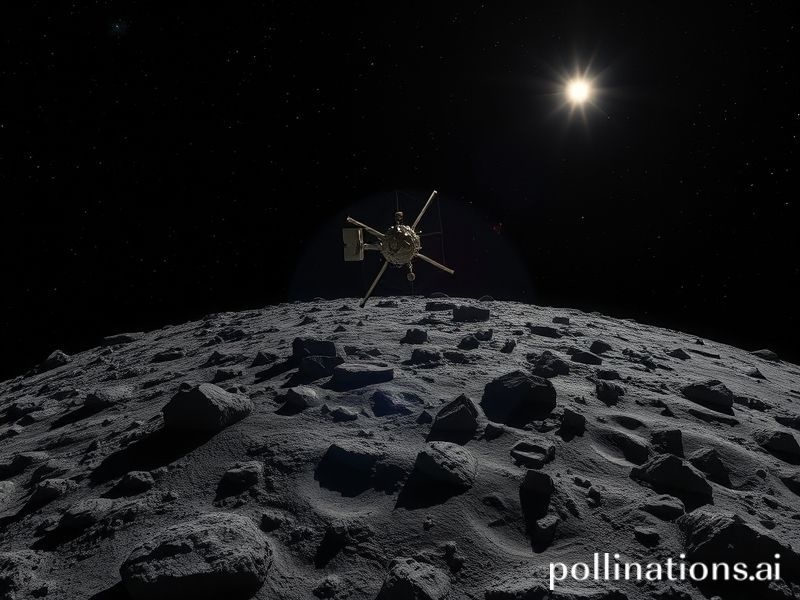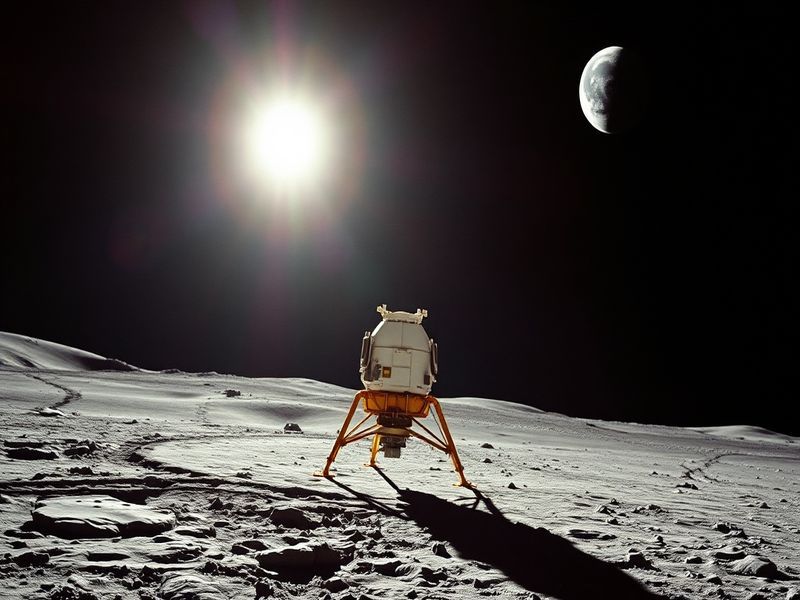
On July 20, 1969, humanity achieved what once seemed impossible. At 4:17 p.m. Eastern Daylight Time, NASA’s Apollo 11 mission successfully landed the lunar module Eagle on the surface of the Moon. The moment marked not just a technological triumph but a turning point in human history—one that demonstrated the power of collaboration, innovation, and sheer determination.
Neil Armstrong’s iconic words, “That’s one small step for [a] man, one giant leap for mankind,” echoed across the globe as he became the first person to set foot on the lunar surface. The event captivated an estimated 650 million people worldwide, who watched the grainy black-and-white broadcast in awe. This was more than a space mission; it was a cultural and scientific milestone that reshaped how we view our place in the universe.
The Road to the Moon: A Race Against Time and Expectations
The Apollo 11 mission was the culmination of nearly a decade of relentless effort. After President John F. Kennedy’s 1961 announcement that the U.S. would land a man on the Moon before the end of the decade, NASA embarked on one of the most ambitious projects in history. The space agency faced immense challenges, from designing the Saturn V rocket to training astronauts for an environment no human had ever experienced.
Behind the scenes, engineers, scientists, and technicians worked tirelessly to overcome obstacles. The Lunar Module, for instance, was a marvel of engineering—lightweight yet sturdy, designed to operate in a vacuum. Yet, it was also plagued by issues, including a faulty switch that nearly forced an abort during descent. The near-disaster highlighted the razor-thin margin between success and failure in space exploration.
- Saturn V Rocket: The most powerful rocket ever built at the time, standing 363 feet tall and capable of carrying 100,000 pounds to the Moon.
- Command Module Columbia: The only part of the spacecraft designed to return to Earth, serving as the crew’s home during the journey.
- Lunar Module Eagle: A two-stage vehicle with a descent stage to land and an ascent stage to return to orbit—designed to operate in the Moon’s low gravity.
The Crew: Heroes of a New Frontier
Neil Armstrong, Buzz Aldrin, and Michael Collins formed the crew of Apollo 11, each playing a critical role in the mission’s success. Armstrong, the mission commander, was known for his calm demeanor and technical expertise. Aldrin, the lunar module pilot, was a skilled engineer who had pushed for the mission’s scientific objectives. Collins, the command module pilot, orbited the Moon alone in Columbia, ensuring the crew’s safe return.
Their backgrounds reflected the diverse talents required for spaceflight. Armstrong was a former naval aviator and test pilot, while Aldrin held a doctorate in astronautics. Collins, a graduate of the U.S. Military Academy, brought operational experience. Together, they embodied the spirit of exploration that defined the era.
Yet, their journey was not without personal sacrifices. The three men spent months in training, enduring grueling simulations and physical tests. They also faced the psychological strain of isolation and the ever-present risk of death. In 1967, the Apollo 1 fire had claimed the lives of three astronauts during a pre-launch test, a tragedy that loomed over the program. The crew of Apollo 11 carried the weight of those lost, knowing that failure was not an option.
The Landing: Triumph and Tension
The final minutes of the descent were among the most harrowing in spaceflight history. As Armstrong and Aldrin descended in the Lunar Module, alarms blared from the guidance computer. A 1202 alarm indicated an overload in the system, forcing the crew to rely on Aldrin’s quick thinking to override the issue. Meanwhile, the module’s fuel was running dangerously low. Had the descent taken just 30 seconds longer, the crew would have been forced to abort.
At 4:17 p.m., Armstrong manually piloted the Lunar Module to a safe landing site, avoiding a field of boulders. The moment was met with relief and jubilation at Mission Control in Houston. Yet, even as the world celebrated, the crew faced another challenge: the surface of the Moon was not as solid as expected. The Lunar Module’s footpads sank slightly into the lunar regolith, raising concerns about stability during liftoff.
Armstrong’s first steps onto the Moon were meticulously planned, but the reality of the moment defied expectations. The lunar surface was far more dusty and reflective than anticipated, creating challenges for visibility and mobility. Still, he pressed forward, planting the American flag and collecting samples of Moon rocks. Aldrin soon joined him, and together they spent 21 hours on the surface, including 2.5 hours outside the spacecraft.
Legacy: A Giant Leap for Science and Society
The Apollo 11 mission was more than a victory for the United States in the Cold War space race. It was a testament to human ingenuity and the boundless potential of science. The 21.7 kilograms of Moon rocks brought back to Earth provided invaluable insights into the Moon’s origins and the solar system’s formation. Scientists continue to study these samples today, uncovering clues about the early history of our planet.
The mission also sparked a wave of innovation that extended far beyond spaceflight. Technologies developed for Apollo—such as freeze-dried food, memory foam, and improved thermal insulation—found applications in everyday life. The mission’s success inspired generations of scientists, engineers, and dreamers, proving that even the most audacious goals could be achieved with persistence and collaboration.
Yet, the legacy of Apollo 11 is not without controversy. Some critics argue that the mission’s $25.8 billion price tag could have been better spent addressing poverty and inequality on Earth. Others point to the environmental impact of the Saturn V rocket, which consumed massive amounts of fuel. These debates remind us that even the most celebrated achievements come with complex trade-offs.
Fifty years later, the world is once again looking toward the Moon. NASA’s Artemis program aims to return humans to the lunar surface by 2025, this time with a focus on sustainability and international collaboration. Private companies like SpaceX and Blue Origin are also vying for a role in the new era of lunar exploration. The spirit of Apollo 11 lives on, driving humanity to reach for the next frontier.
Why Apollo 11 Still Matters Today
In an age of instant gratification and digital distractions, the Apollo 11 mission stands as a reminder of what humanity can achieve when it sets its sights on the impossible. It was a moment of unity in a divided world, a time when people from all walks of life paused to watch history unfold. The mission’s success was not just a victory for NASA; it was a victory for all of humanity.
Today, as we face new challenges—climate change, global pandemics, and political divisions—the story of Apollo 11 offers a lesson in perseverance. It reminds us that progress is possible when we dare to dream big and work together. The Moon landing was not just a technological feat; it was a triumph of the human spirit.
The crew of Apollo 11 may have been the first to walk on the Moon, but they were not the last. Their achievement paved the way for future explorers, proving that the sky is not the limit. As we look to the stars once more, we do so with the knowledge that the impossible is only a matter of time—and determination.