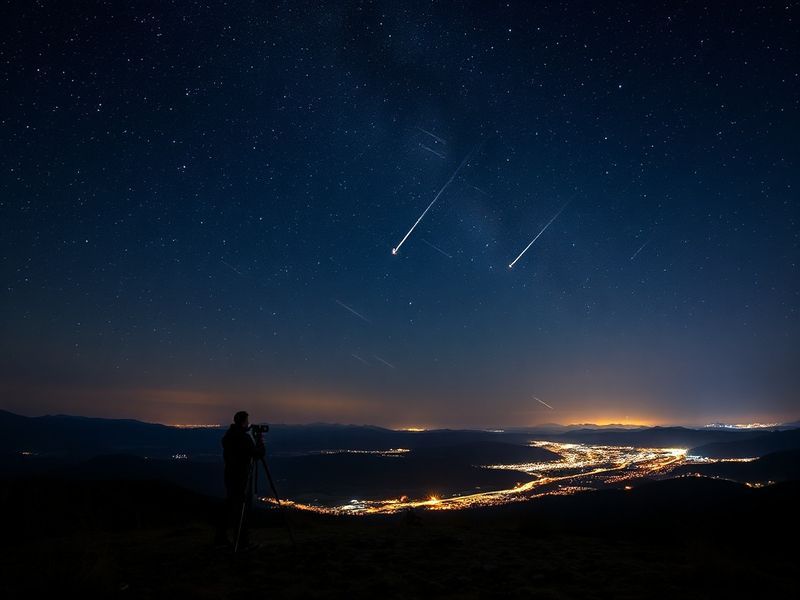
Exploring the Lyrid Meteor Shower: A Celestial Event
Understanding the Lyrid Meteor Shower
The Lyrid meteor shower is one of the oldest recorded meteor showers, with observations dating back over 2,600 years. This annual celestial event occurs each April, captivating stargazers and amateur astronomers around the globe. The Lyrids are associated with the comet C/1861 G1 Thatcher, which leaves behind a trail of debris that enters Earth’s atmosphere, creating the spectacular light show.
Typically peaking around April 16 to 25, the Lyrid meteor shower can produce up to 20 meteors per hour under ideal viewing conditions. This makes it a popular event for both seasoned sky watchers and those experiencing their first meteor shower. The meteors themselves are known for their bright, fast streaks across the sky, often accompanied by lingering trails.
Cultural Significance of the Lyrids
Throughout history, the Lyrid meteor shower has held various meanings across different cultures. Ancient Chinese astronomers were among the first to record the event, referring to it as the “Yuan Xiao” or “Shower of the Humming Stars.” Meanwhile, the Greeks associated the Lyrids with the constellation Lyra, which is linked to the myth of Orpheus, the legendary musician.
In many cultures, meteor showers have been seen as omens or messages from the gods. The Lyrids, in particular, have inspired countless stories and legends. In some traditions, witnessing a meteor was thought to bring good fortune or herald significant life changes. This cultural reverence for the Lyrids continues today, as many people gather to celebrate and observe the natural beauty of the night sky.
How to Best Experience the Lyrid Meteor Shower
To fully appreciate the Lyrid meteor shower, a few practical tips can enhance your viewing experience. Here are some steps to consider:
- Find a Dark Location: Light pollution can significantly hinder your ability to see meteors. Seek out remote areas away from city lights.
- Timing is Key: The best time to view the Lyrids is typically after midnight, peaking around dawn.
- Get Comfortable: Bring blankets or reclining chairs to relax while you gaze at the sky. Dress appropriately for the weather.
- Be Patient: Meteors can be sporadic. Allow time for your eyes to adjust to the darkness; it may take around 20 minutes to fully adapt.
Additionally, consider using astronomy apps to help locate constellations and track meteor activity. Many apps provide real-time updates and can guide you through the night sky, enhancing your overall experience.
The Science Behind the Lyrids
The Lyrids are composed of tiny particles that are remnants from the comet Thatcher. As Earth orbits the Sun, it passes through this debris field, leading to the meteoric display. When these particles enter the atmosphere at high speeds—about 110,000 miles per hour—they disintegrate, creating bright streaks of light.
These meteors can vary in color, often appearing white, yellow, or even green. The colors depend on the composition of the particles and the atmospheric conditions. The Lyrids are unique in their consistency; they often produce a few bright fireballs, which can leave persistent trails that linger for several seconds.
In recent years, interest in meteor showers, including the Lyrids, has surged. This is partly due to the accessibility of information through online platforms and social media. Observers share their experiences, tips, and photographs, fostering a sense of community among astronomy enthusiasts.
Conclusion
The Lyrid meteor shower offers a fascinating blend of scientific wonder and cultural significance. As people gather to witness this celestial event, they not only enjoy the beauty of the night sky but also connect with traditions that span centuries. Whether you are an experienced astronomer or a curious newcomer, the Lyrids are an opportunity to marvel at the universe and reflect on humanity’s place within it.
For those interested in more astronomical events or related topics, check out our Science section for additional insights and articles.