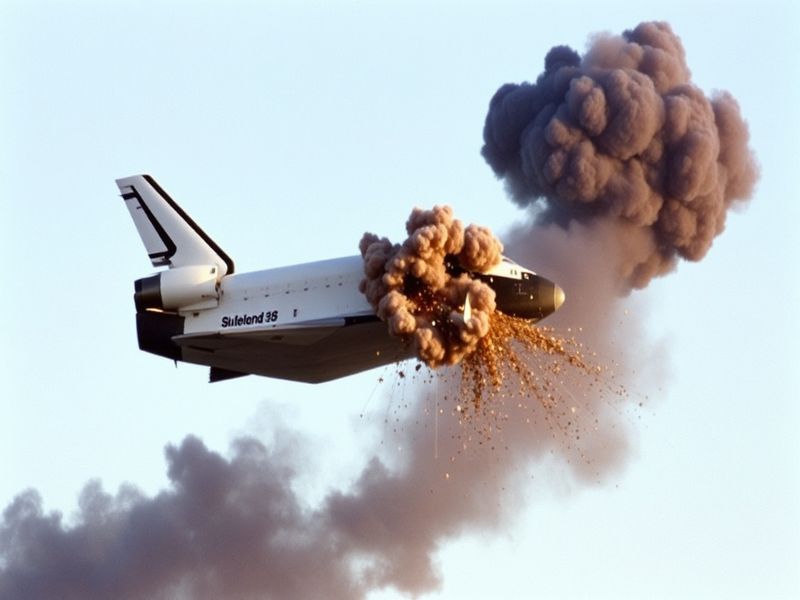
The Space Shuttle Challenger disaster remains one of the most tragic and consequential events in the history of space exploration. On January 28, 1986, just 73 seconds after liftoff, the shuttle broke apart over the Atlantic Ocean, killing all seven crew members aboard. The disaster was a stark reminder of the risks inherent in spaceflight and exposed critical flaws in NASA’s decision-making processes.
This tragedy occurred during a time when NASA was under immense pressure to maintain a frequent launch schedule. The shuttle program was designed to make spaceflight routine, but the accident proved that the technology and procedures of the era were far from infallible. The loss of Challenger forced a reevaluation of safety protocols and ultimately reshaped the future of human spaceflight.
The Crew: Lives Lost in an Instant
The seven astronauts aboard Challenger represented a mix of experience and ambition. Among them was Christa McAuliffe, a high school teacher from New Hampshire, who was selected as part of NASA’s Teacher in Space program. Her presence on the mission was intended to inspire students and the public, making the disaster even more heartbreaking.
The crew also included Francis R. Scobee, the mission commander; Michael J. Smith, the pilot; Ellison S. Onizuka, Judith A. Resnik, and Ronald E. McNair, all mission specialists; and Gregory B. Jarvis, a payload specialist. Their backgrounds reflected the diversity of NASA’s astronaut corps at the time, but their loss was a universal tragedy that resonated across the nation.
- Christa McAuliffe – High school social studies teacher from Concord, New Hampshire. Selected as the first civilian teacher in space.
- Francis R. Scobee – A veteran Air Force pilot and experienced astronaut, serving as mission commander.
- Michael J. Smith – The pilot, known for his calm demeanor and expertise in flight systems.
- Ellison S. Onizuka – An Air Force lieutenant colonel and aerospace engineer of Japanese descent.
- Judith A. Resnik – A mission specialist and electrical engineer, one of the first women selected for the astronaut program.
- Ronald E. McNair – A physicist and accomplished saxophonist, selected for his scientific expertise.
- Gregory B. Jarvis – An engineer representing Hughes Aircraft, tasked with conducting experiments in fluid dynamics.
Technical Failures: The O-Ring That Doomed the Mission
The root cause of the Challenger disaster was traced to the failure of an O-ring in the shuttle’s right solid rocket booster. The O-rings were designed to seal the joints between segments of the booster, preventing hot gas from escaping. However, on the morning of the launch, the temperature was unusually cold—36°F (2°C)—which made the rubber O-rings less flexible and less capable of maintaining a proper seal.
Engineers at Morton Thiokol, the contractor responsible for the solid rocket boosters, had warned NASA about the risks of launching in such cold conditions. Their concerns were documented in a pre-launch teleconference, where they argued that the O-rings might not seal properly. Despite these warnings, NASA proceeded with the launch, prioritizing the mission schedule over safety concerns.
The failure occurred when hot gas breached the O-ring, igniting the external fuel tank. The resulting explosion caused the shuttle to break apart due to aerodynamic forces. The crew compartment, though intact, was subjected to extreme deceleration forces, leading to the astronauts’ deaths. The entire sequence was captured in horrifying detail by live television broadcasts, leaving an indelible mark on the public consciousness.
NASA’s Culture of Risk: Lessons from the Disaster
The Challenger disaster was not just a technical failure; it was a failure of organizational culture. Investigations by the Rogers Commission, led by former Secretary of State William P. Rogers, revealed deep-seated issues within NASA. The commission found that NASA’s decision-making process was influenced by schedule pressures, budget constraints, and a culture that discouraged dissenting opinions.
One of the most damning findings was that NASA managers had ignored the warnings of engineers who had expressed concerns about the O-rings. The engineers at Morton Thiokol had provided data showing that the O-rings were more likely to fail in cold temperatures, but their recommendations were overridden by NASA officials who were eager to meet launch deadlines. This culture of complacency and risk-taking was a direct contributor to the tragedy.
The Rogers Commission made several recommendations to improve NASA’s safety protocols. These included redesigning the solid rocket boosters, improving communication between NASA and its contractors, and establishing an independent safety oversight board. The commission also emphasized the need for a cultural shift within NASA, one that prioritized safety over schedule and budget considerations.
The Aftermath: A Nation in Mourning and a Space Program Transformed
The immediate aftermath of the Challenger disaster was one of shock and grief. President Ronald Reagan delivered a national address, famously quoting from the poem “High Flight” by John Gillespie Magee Jr.: “We will never forget them, nor the last time we saw them, this morning, as they prepared for their journey and waved goodbye and ‘slipped the surly bonds of Earth’ to ‘touch the face of God.'” The speech resonated deeply with the American public, who mourned the loss of the crew as a national tragedy.
In the years following the disaster, NASA underwent significant changes. The shuttle program was grounded for nearly three years as the agency implemented the recommendations of the Rogers Commission. The shuttle fleet was redesigned, with a focus on safety improvements such as stronger O-rings, enhanced crew escape systems, and better communication protocols.
Despite these changes, the legacy of the Challenger disaster continued to influence NASA’s approach to spaceflight. The agency became more cautious and deliberate in its decision-making, though critics argue that it never fully shed its culture of risk-taking. The disaster also highlighted the importance of transparency and accountability in public institutions, lessons that remain relevant today.
The loss of the Challenger crew serves as a sobering reminder of the dangers of space exploration and the need for constant vigilance. Their legacy lives on in the safety improvements that followed the disaster, as well as in the ongoing efforts to honor their memory through education and outreach programs.
Conclusion: Honoring the Legacy of the Challenger Crew
The Challenger disaster was a turning point in the history of space exploration. It exposed the flaws in NASA’s decision-making processes and forced the agency to confront the risks inherent in human spaceflight. While the tragedy was a devastating loss, it also served as a catalyst for change, leading to significant improvements in safety and communication within the space program.
The seven astronauts who lost their lives on that cold January morning will always be remembered for their courage, their dedication, and their unwavering commitment to the pursuit of knowledge. Their legacy endures in the ongoing efforts to make spaceflight safer and more accessible, as well as in the countless lives they inspired through their work and their example.
As we reflect on the Challenger disaster, it is essential to remember the lessons it taught us. Space exploration is a risky endeavor, but it is also a vital one. By honoring the memory of the crew and learning from the mistakes of the past, we can continue to push the boundaries of human achievement while ensuring that the sacrifices of those who came before us are never forgotten.