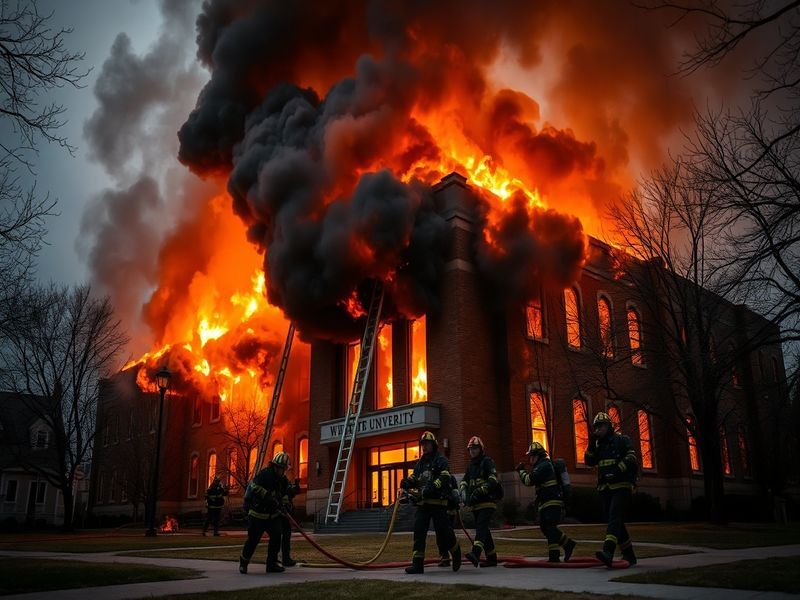
The recent fire at Wayne State University has once again brought campus safety to the forefront of discussions among students, faculty, and administrators. On the evening of October 12, 2023, a fire broke out in a residential hall on the university’s main campus in Detroit, resulting in significant property damage but, fortunately, no serious injuries. While the exact cause remains under investigation, the incident serves as a reminder of the broader challenges universities face in maintaining safe living and learning environments.
The Incident and Immediate Response
The fire was reported around 8:45 PM in a mid-rise dormitory, prompting an immediate response from the Detroit Fire Department and Wayne State’s campus security. Firefighters arrived within minutes and contained the blaze before it could spread to adjacent buildings. According to preliminary reports, the fire originated in a first-floor lounge area, possibly due to an electrical malfunction or improper use of cooking equipment.
Students were evacuated safely, though some reported minor smoke inhalation. The university activated its emergency notification system, ensuring that residents and nearby buildings were informed of the situation. Wayne State’s emergency response team worked closely with local authorities to secure the area and begin damage assessment.
Broader Implications for Campus Safety
Fires in university housing are not uncommon, and Wayne State’s incident reflects a pattern seen at other institutions nationwide. According to the National Fire Protection Association (NFPA), there are roughly 3,800 structure fires in dormitories and fraternity houses annually in the U.S. These incidents often stem from cooking equipment, candles, or electrical faults—risks that universities must continually address.
Wayne State has invested in fire safety measures in recent years, including updated sprinkler systems and regular inspections. However, the fire raises questions about whether these efforts are sufficient. Some students have expressed concerns about enforcement of safety policies, particularly regarding prohibited items like space heaters and extension cords, which are common fire hazards.
The university’s response to this incident will likely influence future safety protocols. Fire drills, mandatory safety training, and stricter penalties for violations could become more prominent. Additionally, the incident may prompt a review of emergency communication systems to ensure faster, more precise alerts in future emergencies.
Lessons from Past Incidents
Wayne State is not alone in facing campus fire safety challenges. In 2022, a fire at the University of Toledo led to the evacuation of 400 students, while a 2021 blaze at the University of Central Florida resulted in significant damage to a dormitory. These incidents highlight the need for universities to balance student autonomy with strict safety enforcement.
One of the most critical lessons from past fires is the importance of proactive measures. Universities that have reduced fire incidents often share key strategies:
- Regular inspections: Ensuring that electrical systems, heating units, and fire alarms are up to code.
- Student education: Mandatory fire safety training for incoming students to familiarize them with evacuation routes and hazard prevention.
- Clear policies: Enforcing strict penalties for violations, such as tampering with sprinklers or blocking exits.
- Collaboration with local fire departments: Conducting joint drills to improve response times and coordination.
Wayne State has taken steps in these directions, but the recent fire suggests there may still be gaps in implementation. Moving forward, the university must assess whether its policies are being followed and whether additional resources are needed to mitigate risks.
The Path Forward for Wayne State
In the aftermath of the fire, Wayne State officials have pledged to strengthen safety measures. A university spokesperson stated that a comprehensive review of fire safety protocols is underway, with input from students, faculty, and local fire officials. Potential changes could include stricter enforcement of existing rules, enhanced monitoring of high-risk areas, and increased funding for safety upgrades.
For students, the incident has served as a wake-up call. Many have taken to social media to share their concerns and demand greater transparency from the university. Some have called for more frequent fire drills, while others have urged the administration to address long-standing issues, such as outdated wiring in older dormitories.
Ultimately, the Wayne State fire is a reminder that campus safety is an ongoing process. Universities must remain vigilant, adapting to new risks while ensuring that students feel secure in their living environments. For Wayne State, this incident presents an opportunity to reinforce its commitment to safety and rebuild trust with the campus community.
As the investigation continues, the university’s actions in the coming weeks will be closely watched. Will Wayne State take bold steps to prevent future incidents, or will the fire fade into the background, forgotten until the next emergency arises? The answer will shape the university’s reputation for years to come.
For now, students and faculty are left to reflect on the importance of safety—and the role each individual plays in maintaining it. Whether through reporting hazards, participating in drills, or adhering to policies, everyone has a part to play in preventing future tragedies.
Read more News articles on Dave’s Locker or explore Education coverage for deeper analysis on campus safety trends.