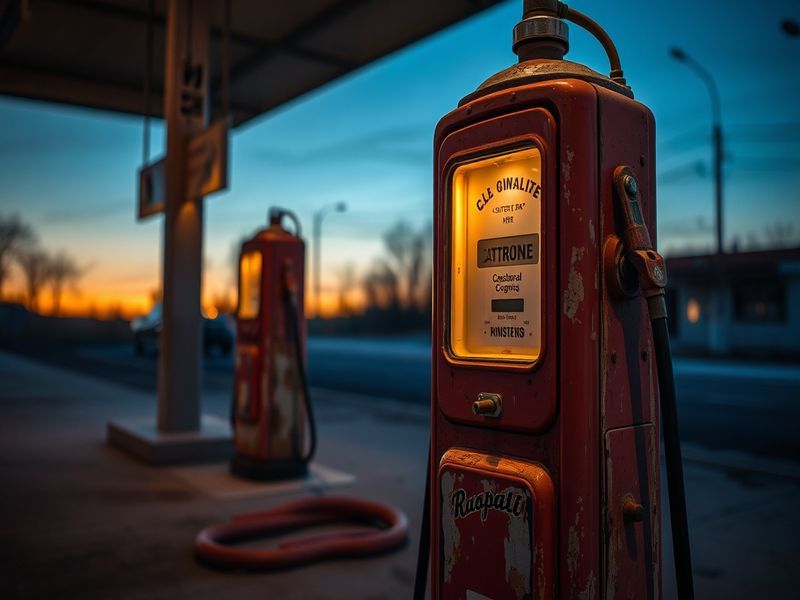
Gasoline: The Fuel Powering Modern Society
Gasoline is one of the most ubiquitous and essential fuels in the modern world, driving everything from personal vehicles to industrial machinery. Its refined composition and high energy density make it the dominant energy source for internal combustion engines, despite growing environmental concerns. Understanding gasoline requires examining its chemical makeup, historical development, economic impact, and the shifting landscape of energy alternatives.
The Chemistry and Production of Gasoline
Gasoline is a transparent, petroleum-derived liquid composed primarily of hydrocarbons, including paraffins, cycloparaffins, and olefins. The refining process begins with crude oil, which undergoes fractional distillation to separate different components based on boiling points. Gasoline is derived from the lighter fractions, typically the naphtha range, which boils between 30°C and 200°C.
Refineries further enhance gasoline through several processes:
- Catalytic cracking: Breaks down heavier hydrocarbons into lighter, more volatile molecules.
- Reforming: Converts low-octane compounds into higher-octane aromatic hydrocarbons.
- Blending: Combines various streams to meet specific octane and volatility requirements.
- Additive incorporation: Includes detergents, corrosion inhibitors, and oxygenates like ethanol to improve performance and reduce emissions.
The octane rating, displayed as numbers like 87, 89, or 93 on fuel pumps, measures a gasoline’s resistance to knocking—a destructive engine condition where fuel ignites prematurely. Higher octane fuels allow engines to operate more efficiently under higher compression ratios. Environmental regulations have also driven the adoption of reformulated gasoline (RFG) in many urban areas, which contains fewer volatile organic compounds (VOCs) to reduce smog formation.
Historical Evolution and Technological Impact
Gasoline’s rise to prominence began in the late 19th century with the invention of the internal combustion engine. Early engines used a variety of fuels, including coal gas and ethanol, but gasoline proved superior due to its energy density and ease of storage. The Ford Model T, introduced in 1908, cemented gasoline’s dominance by standardizing the automobile industry around this fuel.
Technological advancements have continually refined gasoline’s formulation and combustion efficiency. The introduction of leaded gasoline in the 1920s significantly reduced engine knocking, though it was later phased out due to health concerns related to lead pollution. The 1970s oil crisis spurred innovations in fuel efficiency and alternative energy sources, while the Clean Air Act of 1970 led to the development of unleaded gasoline and catalytic converters.
Today, gasoline remains the backbone of transportation, powering over 90% of the world’s vehicles. However, the rise of electric vehicles (EVs) and hybrid technologies is challenging gasoline’s long-standing monopoly. The automotive industry is undergoing a seismic shift, with major manufacturers pledging to phase out internal combustion engines in the coming decades. Despite this transition, gasoline will likely remain critical for decades, particularly in heavy-duty transportation and aviation.
The Economic and Geopolitical Landscape
Gasoline prices are among the most closely watched economic indicators worldwide, influenced by a complex web of factors including crude oil production, refining capacity, distribution networks, and geopolitical events. The Organization of the Petroleum Exporting Countries (OPEC) plays a pivotal role in regulating oil supply, often adjusting production quotas to stabilize or influence prices. Disruptions such as hurricanes, pipeline leaks, or geopolitical conflicts in oil-producing regions can cause sudden price spikes.
Governments also shape the gasoline market through taxes and subsidies. In the United States, federal and state taxes account for roughly 15-20% of the retail price of gasoline, with variations depending on location. For example, as of 2023, the average tax on a gallon of gasoline in California was about $0.73, while in Texas it was around $0.38. These disparities reflect differences in infrastructure investments, environmental regulations, and political priorities.
The gasoline market is also influenced by seasonal demand fluctuations. Summer blends, formulated to reduce evaporative emissions, often cost more due to the additional refining steps required. Additionally, the transition to renewable energy sources has introduced new dynamics, with biofuels like ethanol blending into gasoline supplies. The automotive industry is navigating these changes, investing in both traditional and alternative fuel technologies to meet regulatory and consumer demands.
Environmental Concerns and the Future of Gasoline
Despite its convenience and energy density, gasoline poses significant environmental challenges. Burning gasoline releases carbon dioxide (CO₂), a greenhouse gas that contributes to climate change. The transportation sector accounts for approximately 20% of global CO₂ emissions, with gasoline-powered vehicles being the largest contributors. Additionally, gasoline combustion emits nitrogen oxides (NOₓ), volatile organic compounds (VOCs), and particulate matter, all of which degrade air quality and pose health risks.
To mitigate these impacts, governments and industries are pursuing several strategies:
- Improving fuel efficiency: Advances in engine technology, such as direct injection and turbocharging, have reduced gasoline consumption per mile traveled.
- Expanding biofuel integration: Ethanol and biodiesel blends reduce net CO₂ emissions by incorporating renewable carbon sources.
- Promoting electrification: Hybrid and electric vehicles are gaining market share, particularly in urban areas with robust charging infrastructure.
- Enhancing carbon capture: Some refineries are exploring technologies to capture and store CO₂ emissions from gasoline production and combustion.
The future of gasoline will likely be shaped by a combination of regulatory pressure, technological innovation, and consumer preferences. While gasoline is unlikely to disappear entirely in the near term, its role in the energy ecosystem is evolving. The technology sector is at the forefront of developing alternatives, from advanced battery systems to hydrogen fuel cells, which could eventually supplant gasoline in many applications.
For now, gasoline remains a critical resource, underpinning global transportation and commerce. Its legacy is one of innovation and adaptability, but the challenges ahead demand a fundamental rethinking of how we power our world. The transition away from gasoline will require coordinated efforts across industries, governments, and consumers to ensure a sustainable and equitable energy future.
The challenge ahead is not merely to replace gasoline but to reimagine the entire energy infrastructure in a way that balances efficiency, equity, and environmental stewardship.
Conclusion
Gasoline has been the lifeblood of modern transportation for over a century, fueling economic growth, technological progress, and personal mobility. Its production, distribution, and consumption are deeply intertwined with global markets, geopolitical dynamics, and environmental realities. As the world shifts toward cleaner energy sources, gasoline’s dominance will inevitably wane, but its historical significance and ongoing role in energy transitions cannot be overstated.
The path forward requires a nuanced approach—one that acknowledges gasoline’s contributions while actively pursuing sustainable alternatives. Whether through incremental improvements in efficiency or bold leaps in renewable energy, the goal remains clear: a future where energy powers progress without compromising the planet. For now, gasoline endures as a testament to human ingenuity and a reminder of the complex trade-offs inherent in energy consumption.