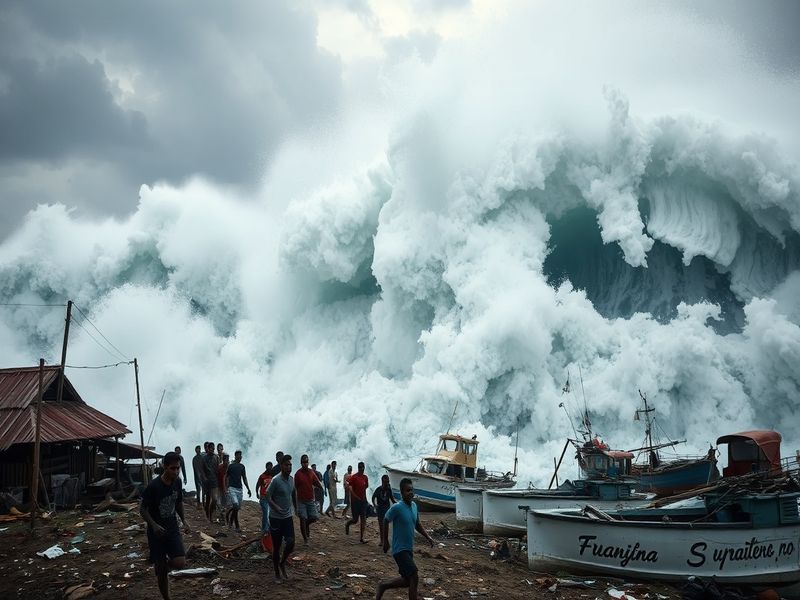
Indonesia faced another seismic jolt today as a significant earthquake struck the archipelago, raising immediate concerns about potential tsunami waves along vulnerable coastal regions. The temblor, centered near the Sunda Trench, measured 7.2 on the Richter scale according to the Meteorology, Climatology, and Geophysical Agency (BMKG). Authorities issued tsunami warnings shortly after the quake, urging residents in low-lying areas to evacuate to higher ground.
While the full extent of damage remains under assessment, early reports indicate structural collapses in nearby cities and towns. Emergency response teams have been mobilized across West Sumatra, Bengkulu, and Lampung provinces, where tremors were felt most strongly. The situation remains fluid as aftershocks continue to rattle the region, complicating rescue and recovery efforts.
Understanding the Geological Context
Indonesia sits on the Pacific Ring of Fire, a horseshoe-shaped zone encircling the Pacific Ocean where tectonic plates frequently collide. This particular earthquake occurred along the Sunda Megathrust, a major fault line where the Indo-Australian Plate dives beneath the Eurasian Plate. Such subduction zones are notorious for generating powerful quakes capable of displacing massive volumes of water, hence the tsunami risk.
Historical data shows that the Sunda Trench has produced some of the deadliest tsunamis in modern history, including the 2004 Indian Ocean tsunami that claimed over 230,000 lives across 14 countries. While today’s quake was not as strong as that catastrophic event, its proximity to densely populated coastal communities heightens the stakes. Seismologists warn that even moderate quakes can trigger tsunamis if they occur close to the trench and involve vertical movement of the seafloor.
Key Factors Influencing Today’s Tsunami Risk
- Epicenter Location: The quake’s proximity to the Sunda Trench increases the likelihood of seafloor displacement, which is the primary driver of tsunamis.
- Magnitude and Depth: A 7.2-magnitude quake at shallow depth (estimated at 10-20 km) is more likely to generate waves compared to deeper tremors.
- Aftershock Activity: Continued seismic activity could either exacerbate the tsunami risk or, conversely, release built-up pressure in a way that reduces it.
- Coastal Topography: Shallow, gently sloping shorelines in regions like West Sumatra allow tsunamis to travel farther inland, amplifying destruction.
Immediate Response and Public Safety Measures
Within minutes of the earthquake, Indonesia’s disaster management agency (BNPB) activated emergency protocols, including sirens in high-risk zones and coordination with local governments. Social media platforms became critical channels for disseminating evacuation notices, with residents sharing videos of swaying buildings and fleeing streets. The BMKG later lifted the tsunami warning after sea level readings showed no significant wave activity, but officials emphasized that conditions could change rapidly.
Disaster response teams, including the Indonesian Red Cross and military personnel, are conducting rapid assessments in affected areas. Power outages and communication disruptions have been reported, hindering efforts to gather real-time data. Meanwhile, neighboring countries such as Malaysia and Singapore have offered assistance, reflecting the regional nature of such crises.
For residents in tsunami-prone areas, preparedness is paramount. Experts recommend having an emergency kit ready, identifying evacuation routes, and participating in regular drills. Today’s event serves as a stark reminder of the importance of these measures, particularly in a country where natural disasters are an ever-present reality.
Broader Implications and Long-Term Concerns
Beyond the immediate humanitarian response, today’s earthquake raises questions about Indonesia’s infrastructure resilience and urban planning. Many coastal communities in Sumatra and Java remain densely populated, with buildings often constructed without adequate earthquake-resistant designs. The government has made strides in retrofitting schools and hospitals, but gaps persist in rural and informal settlements.
Climate change adds another layer of complexity to disaster management. Rising sea levels and coastal erosion can worsen the impact of tsunamis, while changing weather patterns may alter seismic activity in unpredictable ways. Researchers are increasingly studying the interplay between these global phenomena, though predictive models remain limited.
The economic toll of such events is also substantial. Indonesia’s tourism-dependent regions, particularly Bali and Lombok, could face short-term setbacks as travelers reassess safety risks. Meanwhile, the agricultural sector in Sumatra may suffer due to damaged infrastructure and disrupted supply chains. Rebuilding efforts will require significant investment, straining resources that could otherwise be allocated to development projects.
Lessons from Past Disasters
The 2018 Sulawesi earthquake and tsunami, which killed over 4,300 people, demonstrated the devastating consequences of inadequate early warning systems and urban planning failures. In contrast, the 2012 Indian Ocean earthquakes off Sumatra saw fewer casualties due to improved public awareness and infrastructure. Today’s event will likely prompt further reviews of Indonesia’s disaster preparedness strategies.
International cooperation remains vital in mitigating risks. Organizations like the United Nations Office for Disaster Risk Reduction (UNDRR) provide technical support and funding for early warning systems. However, local ownership and community engagement are equally critical to ensuring that warnings translate into action.
What Comes Next?
As search and rescue operations continue, the focus will shift to damage assessment and recovery. The BMKG will monitor aftershocks closely, while the BNPB coordinates with regional authorities to address humanitarian needs. For now, the priority is ensuring public safety and restoring essential services in the most affected areas.
Looking ahead, Indonesia must balance rapid urbanization with disaster resilience. Investing in early warning technology, retrofitting critical infrastructure, and educating the public are not optional—they are necessities in a country where geological hazards are a way of life. Today’s earthquake is a reminder that preparedness is the only defense against nature’s unpredictability.
For those seeking more information on disaster preparedness or regional seismic activity, resources are available through Dave’s Locker News and Dave’s Locker Science sections. Staying informed and proactive can make all the difference in the face of such events.