Iran-Israel War: Escalation Risks and Global Impact Explained
The simmering tensions between Iran and Israel have once again reached a critical juncture, threatening to destabilize an already volatile Middle East. This latest flare-up follows a series of direct strikes and retaliatory actions that have pushed the two regional adversaries closer to all-out war than at any point in the past two decades. The conflict is no longer confined to proxy battles through militant groups like Hezbollah or Hamas—it has become a dangerous game of direct military confrontation.
Recent events have demonstrated how quickly localized skirmishes can escalate into broader crises. The October 7, 2023, Hamas-led attack on Israel from Gaza triggered a devastating Israeli military response. While Hamas is not directly controlled by Iran, Tehran provides substantial financial, military, and logistical support to the group. Iran’s Supreme Leader Ayatollah Ali Khamenei praised the attack, calling it a “successful blow” against Israel. This endorsement underscored Iran’s strategic interest in weakening Israel through proxy forces.
Direct Strikes and Retaliatory Cycles
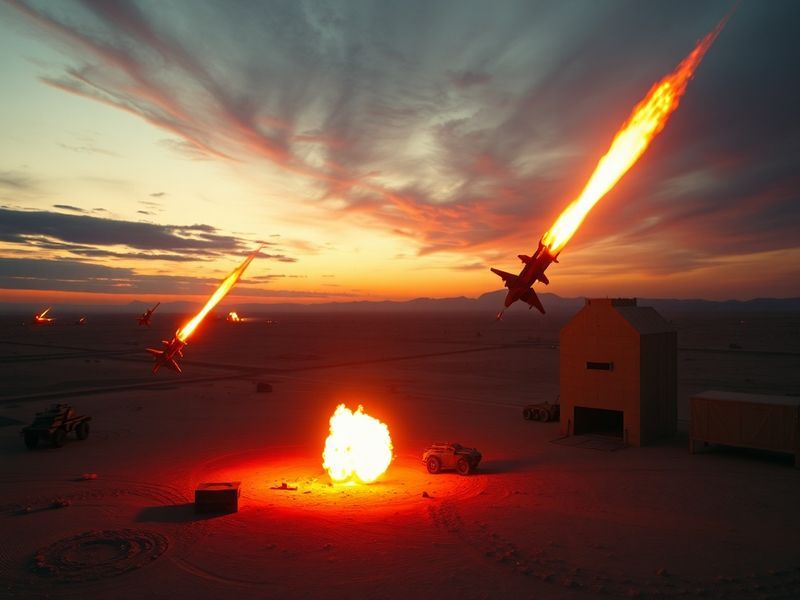
The most alarming development has been the shift from indirect confrontation to direct strikes. In April 2024, Iran launched a massive drone and missile attack on Israel in retaliation for an Israeli strike on its consulate in Damascus, Syria. The assault involved over 300 drones, cruise missiles, and ballistic missiles—most of which were intercepted by Israel, the U.S., and regional allies. Despite limited damage, the attack marked the first time Iran had directly targeted Israel from its own territory.
Israel responded with a limited strike on military sites inside Iran, signaling a careful calibration of force. Both sides have avoided actions that could trigger a full-scale war, but the risk of miscalculation remains high. According to intelligence reports cited by Dave’s Locker News, Iran has been accelerating its nuclear program while expanding its ballistic missile capabilities, raising concerns that it may soon reach a point of nuclear latency.
The cycle of retaliation has created a fragile balance of deterrence, but each round increases the likelihood of unintended escalation. Military analysts warn that a single misfired missile or misinterpreted radar signal could spiral into a larger conflict involving multiple state actors.
Regional and International Alliances
The Iran-Israel conflict cannot be viewed in isolation. It is deeply embedded within a complex web of regional and international alliances that shape the strategic landscape. Iran’s “axis of resistance” includes militant groups across Iraq, Syria, Lebanon, and Yemen, all of which have launched attacks on Israel in recent months. These groups act as force multipliers, allowing Iran to project power without direct engagement.
On the other side, Israel has cultivated strong ties with Western nations, particularly the United States, and has secured tacit cooperation from Arab states like Saudi Arabia and Jordan in countering Iranian influence. The Abraham Accords, which normalized relations between Israel and several Arab countries, have indirectly strengthened Israel’s strategic position in the region.
Meanwhile, Russia and China have adopted more nuanced stances. Russia, while maintaining military cooperation with Iran, has also engaged in diplomatic outreach to Israel. China, a major buyer of Iranian oil, has positioned itself as a potential mediator—though its influence remains limited.
- Iran’s Axis of Resistance: Hezbollah (Lebanon), Hamas (Gaza), Houthis (Yemen), various Shiite militias in Iraq and Syria.
- Israel’s Alliances: United States (military aid, intelligence sharing), European Union (diplomatic support), Arab states (limited coordination against Iran).
- Russia’s Role: Arms supplier to Iran and Syria, but also engages in dialogue with Israel to prevent regional destabilization.
- China’s Position: Balances economic ties with Iran and strategic interests in Middle East stability.
Economic and Humanitarian Consequences
The potential for a wider war carries severe economic repercussions, particularly in energy markets. Iran is one of the world’s top oil exporters, and any disruption—whether due to direct conflict or sanctions—could send global oil prices soaring. A spike in energy costs would disproportionately affect developing nations, exacerbating food and fuel shortages.
Israel’s economy, though more resilient, is not immune to the fallout. The country has already diverted significant resources to defense, straining public budgets. Tourism, a key industry, has declined due to security concerns. Meanwhile, the humanitarian toll in Gaza, Lebanon, and Syria continues to mount, with civilian casualties rising and infrastructure being systematically destroyed.
The World Food Programme has warned that food insecurity in the region is at its highest level since the 1990s. Hospitals in southern Lebanon and northern Israel have reported shortages of medical supplies, while Gaza faces a severe shortage of clean water and electricity. The United Nations Office for the Coordination of Humanitarian Affairs estimates that over 100,000 people have been displaced in the past six months alone.
Diplomatic Pathways and the Risk of Miscalculation
Despite the rising tensions, diplomatic channels remain open—albeit fragile. Qatar and Oman have emerged as key mediators, hosting multiple rounds of indirect talks between Israel and Iran. The European Union has also signaled its willingness to facilitate negotiations, though its leverage is constrained by the geopolitical divisions among member states.
One potential pathway to de-escalation is a renewed commitment to the Joint Comprehensive Plan of Action (JCPOA), the 2015 nuclear agreement that placed restrictions on Iran’s nuclear program in exchange for sanctions relief. While the U.S. under President Biden has expressed interest in reviving the deal, negotiations have stalled due to mutual distrust and regional dynamics.
However, the window for diplomacy is narrowing. Israel has repeatedly stated that it will not allow Iran to acquire nuclear weapons, and recent intelligence suggests that Iran may be within months of achieving weapons-grade uranium enrichment. Should Iran cross this threshold, Israel’s military options would likely expand from targeted strikes to sustained campaigns aimed at crippling Iran’s nuclear infrastructure.
Meanwhile, the risk of miscalculation remains the greatest threat to regional stability. A single erroneous missile launch, a misinterpreted radar blip, or an accidental strike on a civilian target could trigger a chain reaction leading to all-out war. Military experts at the Dave’s Locker Analysis section highlight that both sides are operating under a doctrine of “flexible escalation”—a strategy that allows controlled responses but leaves little room for error.
Conclusion: A Crossroads for the Middle East
The Iran-Israel conflict is at a crossroads. On one hand, the two nations appear locked in a prolonged struggle for regional dominance, with each provocation met by a calibrated response. On the other, the potential for catastrophic escalation looms large, driven by miscalculation, technological failures, or third-party provocations.
What happens next will depend not only on the decisions of Tehran and Jerusalem but also on the actions of their allies and the international community. A failure to rein in hostilities could plunge the Middle East into a conflict that draws in multiple state actors, disrupts global energy supplies, and triggers a humanitarian catastrophe of unprecedented scale.
The path to peace remains unclear, but the cost of inaction is undeniable. Diplomacy must be given a fighting chance—before the next strike, before the next retaliation, and before the region is consumed by a war no one can afford.