Lee Zeldin’s political career has been defined by his Long Island roots, his military service, and his unapologetic conservative stance in an era of shifting political landscapes. Born in Brooklyn and raised in Suffolk County, Zeldin has spent decades navigating the complexities of New York politics, often positioning himself as a counterbalance to the state’s dominant Democratic establishment. His journey from a state senator to a U.S. representative—and a prominent voice in national conversations—reflects broader trends in American conservatism, particularly in suburban and exurban areas where traditional values intersect with modern challenges.
Zeldin’s rise to prominence accelerated during his tenure in Congress, where he became known for his vocal opposition to progressive policies and his advocacy for law enforcement and veterans. His gubernatorial bid in 2022 further cemented his role as a key figure in the Republican Party, drawing both fierce loyalty and sharp criticism. To understand Zeldin’s impact, it’s essential to examine his background, his political evolution, and the cultural forces shaping his career.
Early Life and Military Service: The Foundation of a Political Identity
Lee Zeldin’s upbringing in Shirley, a hamlet in Suffolk County, laid the groundwork for his political worldview. The son of a dentist and a nurse, Zeldin grew up in a middle-class Jewish household where civic engagement and community service were emphasized. His decision to attend the State University of New York at Albany, followed by a law degree from Albany Law School, reflected a commitment to public service rooted in education and discipline.
Military service became a defining chapter in Zeldin’s life. Enlisting in the U.S. Army Reserve in 1998, he later served in the Iraq War as a judge advocate general (JAG) officer. His deployment in 2006-2007, where he provided legal support to troops in combat zones, shaped his perspective on national security and the military’s role in global conflicts. This experience distinguished him from many of his contemporaries in Congress, reinforcing his reputation as a leader who understood the realities of war and its aftermath.
- Key Military Milestones:
- Enlisted in the U.S. Army Reserve in 1998
- Deployed to Iraq in 2006-2007 as a JAG officer
- Received the Bronze Star Medal for meritorious service
Zeldin’s military career also highlighted the challenges faced by veterans returning to civilian life, a theme he would later champion in Congress. His advocacy for veterans’ benefits and mental health support resonated with constituents who saw him as someone who walked the walk, not just talked the talk.
Political Ascension: From State Senate to U.S. Congress
Zeldin’s political career began in 2008 when he was elected to the New York State Senate, representing the 3rd District, which includes portions of Suffolk County. His tenure in Albany was marked by a focus on fiscal responsibility, opposition to unfunded mandates, and a staunch defense of Second Amendment rights. These positions aligned him with the growing conservative base in New York’s suburban and rural areas, where frustration with Albany’s Democratic supermajority was palpable.
In 2014, Zeldin ran for Congress in New York’s 1st District, a seat that had been held by a Democrat for nearly two decades. His campaign emphasized economic growth, border security, and a hardline stance on immigration—issues that resonated in a district with a significant veteran population and a mix of affluent and working-class communities. His victory marked a rare bright spot for Republicans in a state dominated by Democrats, signaling a shift in suburban politics.
Once in Congress, Zeldin quickly became a vocal critic of the Obama administration’s policies, particularly on foreign policy and healthcare. His opposition to the Iran nuclear deal and his calls for repealing the Affordable Care Act earned him a reputation as a hardline conservative. Yet, his willingness to work across the aisle on veterans’ issues and infrastructure projects demonstrated a pragmatic streak that set him apart from more ideologically rigid colleagues.
The 2022 Gubernatorial Bid: A Test of New York’s Political Climate
Zeldin’s decision to run for governor of New York in 2022 was a high-stakes gamble that underscored his ambition and his belief in his ability to reshape the state’s political trajectory. New York, a deep-blue stronghold, had not elected a Republican governor since George Pataki left office in 2006. The state’s Democratic establishment, led by Governor Kathy Hochul, faced challenges including crime surges, economic stagnation, and public dissatisfaction with progressive policies.
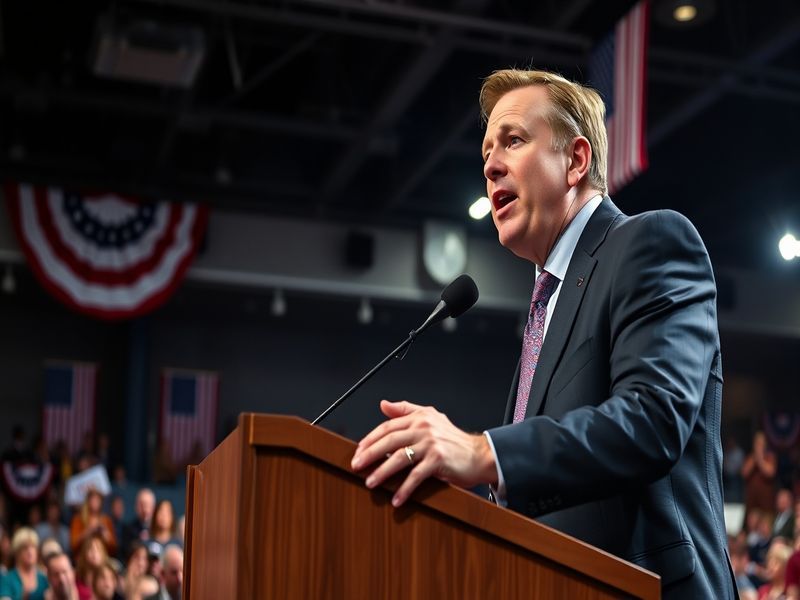
Zeldin’s campaign positioned him as a champion of law and order, a critic of progressive criminal justice reforms, and a proponent of fiscal restraint. His rallies drew large crowds, and his message resonated with voters frustrated by rising homelessness, subway safety concerns, and the state’s high taxes. However, the race was ultimately decided by New York City’s overwhelming Democratic majority, which overwhelmed Zeldin’s upstate and suburban support.
Despite the loss, Zeldin’s campaign demonstrated the potential for conservative candidates to make inroads in traditionally liberal states. His performance highlighted the growing divide between urban and rural New York, a dynamic that mirrors broader trends in American politics. The campaign also solidified his role as a leading voice in the Republican Party’s efforts to redefine its appeal beyond its traditional bases.
Legacy and Future: Zeldin’s Role in the Evolving Republican Party
Lee Zeldin’s career offers a window into the challenges and opportunities facing the Republican Party in the 2020s. His emphasis on law enforcement, veterans’ issues, and fiscal conservatism reflects a party increasingly focused on suburban and exurban voters who feel alienated by progressive policies. Yet, his ability to connect with these voters while maintaining a tough stance on immigration and national security also highlights the party’s struggle to balance inclusivity with ideological purity.
Looking ahead, Zeldin’s future in politics remains uncertain. While he has not ruled out another run for office, his next steps may depend on the evolving priorities of the Republican Party and the broader political landscape. One thing is clear: his career has been shaped by his willingness to challenge the status quo, whether in Albany, Washington, or Albany again. In an era where political polarization often overshadows substantive debate, Zeldin’s journey serves as a reminder of the power of conviction and the complexities of representing a diverse constituency.
For those interested in the intersection of military service and politics, Zeldin’s career offers valuable insights into how veterans can shape public policy. Similarly, his experience in New York politics provides a case study in how conservative ideas can gain traction in unlikely places. As the Republican Party continues to evolve, figures like Zeldin will play a crucial role in defining its future direction.
For more on the intersection of military service and political leadership, explore our Politics section. To understand how suburban politics are reshaping national conversations, visit our News category for in-depth analysis.