NASA’s upcoming Artemis 2 mission isn’t just about making history as the first crewed lunar flyby in over 50 years. Beyond the spectacle of space exploration, the mission is quietly revolutionizing one of humanity’s most fundamental needs: going to the bathroom. The Orion spacecraft’s waste management system, often overshadowed by propulsion and life-support systems, represents a critical innovation in microgravity sanitation.
The Artemis program’s success hinges on solving problems most people never consider. After all, how do you design a toilet that works in zero gravity without creating a floating biohazard? This challenge has forced engineers to rethink bathroom technology from first principles, with solutions that could eventually benefit life on Earth as well.
The Engineering Challenge of Zero-Gravity Sanitation
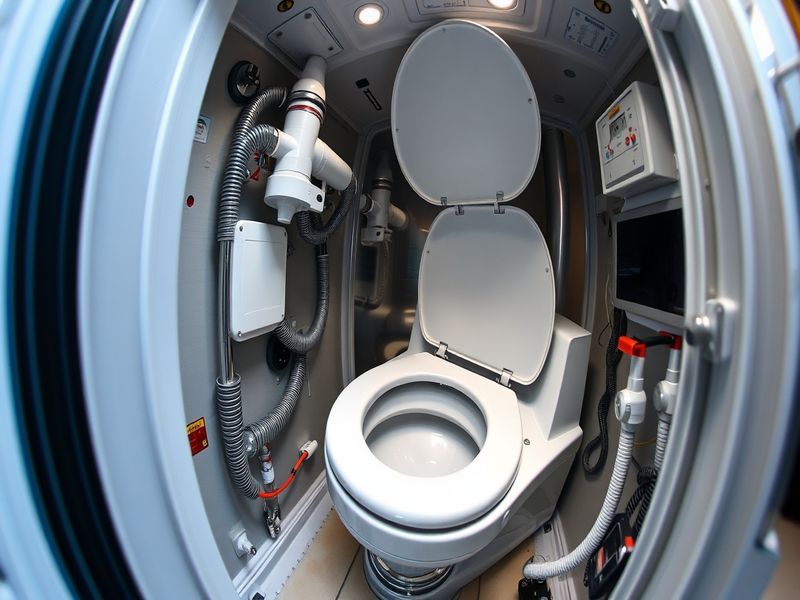
Creating a functional toilet for space involves physics that defy everyday experience. Without gravity, waste doesn’t simply fall into a bowl—it floats. The Artemis 2 toilet, officially called the Universal Waste Management System (UWMS), addresses this through a combination of suction, airflow, and careful positioning.
The system uses differential air pressure to pull waste away from the user. A separate urine collection system handles liquid waste, which can be recycled back into drinkable water—a necessity for long-duration missions. Solid waste is compacted and stored for disposal upon return to Earth. The entire apparatus must operate quietly, efficiently, and without creating unpleasant odors that could compromise the spacecraft’s environment.
NASA’s engineers drew inspiration from previous space toilets, including those used on the International Space Station. However, the Orion spacecraft presented unique constraints. Its smaller size required a more compact design, while the limited crew size meant the system had to handle waste from four astronauts during the approximately 10-day mission.
Key Innovations in the Artemis 2 Toilet System
- Dual Waste Collection: Separate systems for urine and feces prevent cross-contamination and simplify recycling processes.
- Automated Odor Control: Activated carbon filters and airflow management keep the spacecraft smelling fresh.
- Compact Foot Restraints: Astronauts secure themselves using knee bars and foot loops to maintain position during use.
- Improved Hygiene: Hands-free operation reduces the risk of bacterial transfer in the confined space.
- Energy Efficiency: The system operates on minimal power while maintaining peak performance.
Why This Matters Beyond the Moon
The innovations developed for Artemis 2 could have far-reaching implications for both space exploration and terrestrial applications. The recycling of urine into drinkable water, for instance, demonstrates a closed-loop system that could support future missions to Mars and beyond. On Earth, similar technologies might address water scarcity challenges in arid regions or provide solutions for disaster relief scenarios where sanitation infrastructure is compromised.
Moreover, the compact design of the UWMS could inspire more efficient bathroom systems in areas with limited space, such as tiny homes, mobile homes, or urban apartments. The emphasis on hygiene and odor control also has applications in healthcare settings or high-density living environments where disease prevention is critical.
NASA has made the technology accessible through licensing agreements, encouraging private companies to adapt these innovations for commercial use. This approach aligns with the agency’s broader strategy of fostering public-private partnerships to accelerate technological advancement.
Looking Ahead: The Future of Space Sanitation
While the Artemis 2 toilet represents a significant milestone, it’s just the beginning. Future missions will require even more advanced systems capable of handling waste from larger crews over longer durations. NASA is already exploring next-generation technologies, including robotic waste processing and resource extraction from biological waste.
For the upcoming Artemis 3 mission, which aims to land astronauts on the lunar surface, NASA is developing a more sophisticated system that can handle the challenges of partial gravity. The Moon’s one-sixth gravity will present different dynamics compared to the microgravity environment of Orion, requiring adjustments to the suction and airflow systems.
Beyond the Moon, these technologies will be essential for missions to Mars, where resupply from Earth becomes impractical. The ability to recycle water and extract resources from waste will be critical to sustaining human life during the long journey to the Red Planet.
Private space companies are also investing in sanitation solutions. SpaceX, for example, has developed its own waste management systems for the Crew Dragon spacecraft, while other firms are exploring even more advanced concepts like vacuum-based toilets that could improve efficiency in microgravity.
Conclusion: A Quiet Revolution in Space and on Earth
The Artemis 2 toilet may seem like a small component in the grand scheme of space exploration, but its design embodies the ingenuity and problem-solving that define NASA’s mission. By addressing one of humanity’s most basic needs in an environment where conventional solutions fail, engineers have created a system that pushes the boundaries of what’s possible.
As humanity prepares to return to the Moon and venture onward to Mars, these innovations will play a crucial role in ensuring the health and comfort of astronauts. Yet the impact extends beyond space. The technologies developed for lunar missions could transform how we think about sanitation on Earth, offering solutions to pressing challenges in water conservation, hygiene, and resource management.
In this way, the Artemis 2 toilet is more than just a bathroom—it’s a testament to human creativity and adaptability. It reminds us that even the most mundane aspects of life can become groundbreaking when faced with the extraordinary challenges of space exploration.
For those interested in the broader context of space technology and its applications, Dave’s Locker Science section offers deeper insights into the innovations shaping our future. For a closer look at how space exploration intersects with popular culture, explore the Entertainment category.