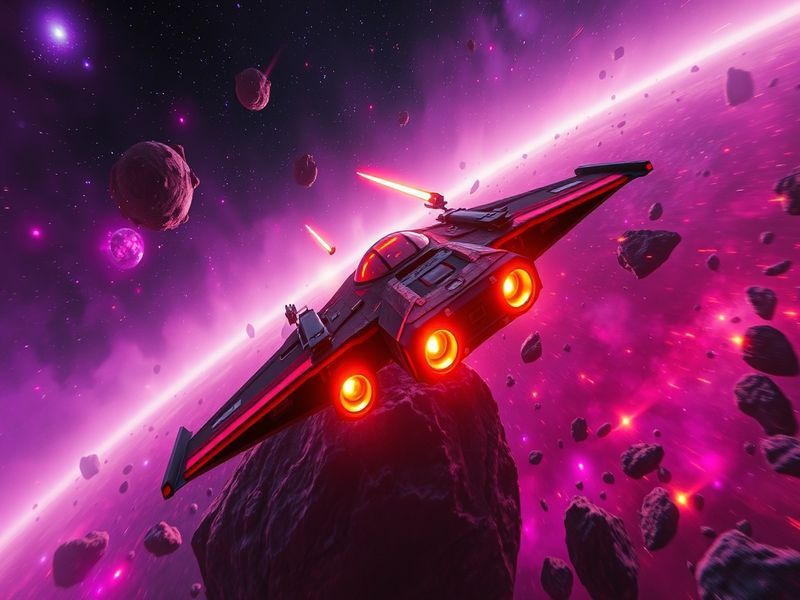
Star Fox: A Retrospective of Nintendo’s Spacefaring Saga
Since its debut in 1993, Star Fox has carved a permanent niche in gaming history. The franchise, developed by Nintendo and co-created by Shigeru Miyamoto and Takaya Imamura, introduced players to a world where anthropomorphic animals piloted advanced spacecraft in high-stakes aerial combat. More than just a shooter, Star Fox blended narrative depth, memorable characters, and groundbreaking technical achievements—particularly with its use of the Super FX chip in the original Star Fox on the Super Nintendo Entertainment System (SNES).
Over nearly three decades, the series has evolved across multiple platforms, each iteration reflecting the technological and cultural shifts of its time. From the isometric rail-shooting of the early games to the fully 3D environments of later titles, Star Fox has remained a touchstone for Nintendo fans and a symbol of the company’s willingness to experiment with genre and form.
The Origins: A Technical Marvel and Narrative Innovation
The original Star Fox arrived at a pivotal moment in gaming. Released in 1993, it was one of the first console games to use polygon-based 3D graphics, pushing the SNES beyond its 2D limitations. The Super FX chip, a custom graphics accelerator, enabled the game to render real-time 3D environments, a rarity at the time. This innovation wasn’t just a technical showcase—it redefined player expectations for what a console could achieve.
The game’s story, while simple by modern standards, introduced a cast that would become iconic: Fox McCloud, the courageous leader; Falco Lombardi, the hotshot pilot; Peppy Hare, the veteran strategist; and Slippy Toad, the tech-savvy engineer. Together, they formed the Star Fox team, battling the nefarious Andross, a former scientist turned warlord, across the Lylat system. The narrative’s blend of heroism, betrayal, and cosmic stakes resonated globally, appealing to players in Japan, North America, and Europe alike.
This universal appeal was no accident. Nintendo, already a dominant force in gaming, recognized the importance of creating characters and worlds that transcended language barriers. The anthropomorphic design—a nod to Disney and other animation traditions—made the cast instantly recognizable, while the game’s fast-paced action provided immediate accessibility. By the mid-1990s, Star Fox had become a cultural export, reinforcing Nintendo’s image as an innovator.
Evolution Across Generations: From 2D to 3D and Back Again
The franchise’s journey through gaming generations reflects broader industry trends. Star Fox 64, released in 1997 for the Nintendo 64, redefined the series with fully 3D environments and voice acting. It also introduced the Arwing’s iconic barrel rolls and boost mechanics, elements that remain central to the series today. The game’s use of the Nintendo 64’s analog stick allowed for unprecedented control, setting a new standard for 3D shooters.
Yet, as the series progressed, it faced challenges. Critics and fans often pointed to Star Fox Adventures (2002) and Star Fox Assault (2005) as missteps—games that strayed from the series’ core strengths. Adventures, developed by Rare, was a Zelda-style action-adventure, while Assault attempted to blend on-foot combat with traditional rail-shooting. Both titles struggled to reconcile their deviations with the expectations set by earlier entries.
Nintendo’s willingness to take risks is part of its identity, but the mixed reception of these games led to a period of reinvention. Star Fox Command (2006) for the Nintendo DS embraced a strategy-RPG hybrid approach, allowing players to manage missions across a map. While divisive, it demonstrated Nintendo’s commitment to experimentation. The series’ return to form came with Star Fox Zero (2016), a Wii U exclusive that combined rail-shooting with a unique twin-screen interface, though its reception was lukewarm.
Today, the franchise remains in a state of quiet anticipation. Rumors of new projects persist, and Nintendo’s recent focus on remasters—such as the 2024 release of Star Fox 2, originally developed for the SNES but unreleased until the Super NES Classic Edition—hints at a desire to revisit the series’ roots. These remasters not only preserve the past but also introduce the games to new audiences, ensuring the legacy of Fox McCloud and his team endures.
Global Influence: How Star Fox Transcended Gaming
Star Fox’s impact extends beyond its sales figures and critical reception. The franchise has become a cultural touchstone, referenced in films, TV shows, and even academic discussions about video game design. Its music, composed by Hajime Wakai and others, has been performed at orchestral concerts, including the Gaming Symphony series, which celebrates video game soundtracks in live settings.
The series’ influence is also evident in its crossover appearances. Fox McCloud has become a staple in Nintendo’s Super Smash Bros. series, where his aerial agility and special moves—like the Fire Fox and Reflector—make him a fan favorite. These appearances have introduced the character to players who may never have picked up a Star Fox game, further cementing his place in gaming lore.
Globally, Star Fox has been embraced in various ways. In Japan, the series is often celebrated for its connection to anime and manga traditions, with characters like Krystal, the fox mercenary introduced in Star Fox Adventures, becoming symbols of the franchise’s evolving identity. In Europe and North America, the games are remembered for their role in the 16-bit and early 3D eras, often cited in retrospectives about the history of gaming.
Yet, the franchise’s global reach hasn’t been without challenges. Localization issues, particularly in early translations, sometimes led to confusion or cultural missteps. For example, the name “Peppy Hare” was originally “Pepper,” a change that reflected Nintendo’s efforts to make the characters feel more approachable in Western markets. These adaptations highlight the balancing act Nintendo has always performed—creating games that feel both universal and locally relevant.
The Future of Star Fox: What’s Next for the Lylat System?
As of 2024, the future of Star Fox remains uncertain but full of potential. Nintendo’s recent focus on remasters and re-releases suggests a strategy of preservation, ensuring that classic titles remain accessible. However, fans continue to hope for a new mainline entry, one that could leverage modern hardware and storytelling techniques.
Speculation about a new Star Fox game often centers on the Nintendo Switch, particularly with the rumored development of a high-definition remaster of Star Fox 64. Such a project would not only modernize a beloved classic but also reintroduce the series to a new generation of players. Additionally, Nintendo’s experiments with hybrid gameplay—seen in titles like The Legend of Zelda: Tears of the Kingdom—could inspire a reinvention of the Star Fox formula, blending rail-shooting with open-world exploration.
Another possibility is a return to the series’ roots. The original Star Fox and Star Fox 64 remain beloved for their tight controls, memorable boss battles, and replayability. A game that captures the spirit of these titles—while updating the graphics and mechanics for modern audiences—could revitalize the franchise. Developers could also explore new narratives, perhaps introducing a new generation of pilots or revisiting the lore of the Lylat system in greater depth.
Regardless of what the future holds, Star Fox’s legacy is secure. The franchise represents a chapter in gaming history where innovation met accessibility, where technical breakthroughs served a larger narrative, and where a group of animal pilots became icons. As Nintendo continues to evolve, the lessons of Star Fox—its blend of creativity, risk-taking, and heart—will undoubtedly influence the next generation of games.
For now, fans can revisit the classic games, celebrate the series’ milestones, and keep the dream of a new Star Fox adventure alive. The Arwings may be grounded for now, but the stars—and the legacy—are always within reach.