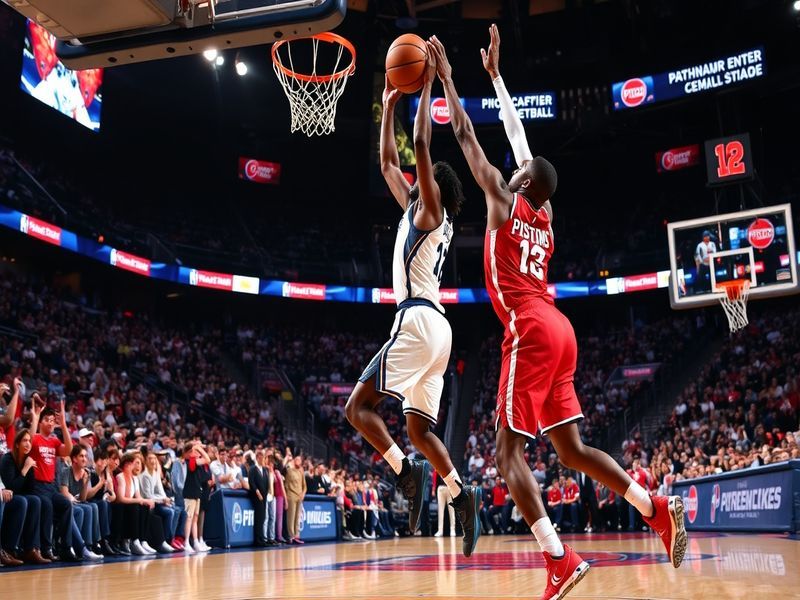
The Timberwolves and Pistons face off in a matchup that extends beyond mere competition. This rivalry, rooted in contrasting histories and playing styles, reflects broader trends in basketball’s global evolution. The Timberwolves, a franchise once defined by struggle, now embodies the resiliency of modern sports narratives, while the Pistons represent a legacy of grit that has shaped the league’s identity.
This game is more than statistics and standings—it’s a cultural snapshot. Basketball in the 21st century is a global language, spoken from Minneapolis to Detroit and beyond. As franchises adapt to shifting fan expectations and economic realities, these matchups offer a lens into how basketball shapes—and is shaped by—local and international communities.
The Evolution of Two Franchises
The Timberwolves entered the NBA in 1989 as an expansion team, burdened by early struggles and a fan base hungry for relevance. For years, they were defined by missed opportunities and near-misses, their narrative one of potential unfulfilled. Yet, the arrival of Kevin Garnett in 1995 transformed the franchise. Garnett, a high-energy forward with an unmatched intensity, became the face of a team that finally mattered. His MVP season in 2004 marked the apex of a golden era, one that temporarily silenced skeptics and elevated basketball culture in the Twin Cities.
The Pistons, by contrast, carry a legacy that predates the Timberwolves by decades. Founded in 1941 as part of the NBL before joining the NBA in 1948, the Pistons are a franchise steeped in tradition. Their identity has long been synonymous with defense, physicality, and blue-collar work ethic—qualities that defined the NBA in its formative years. The “Bad Boys” era of the late 1980s and early 1990s cemented this reputation, with players like Isiah Thomas and Dennis Rodman embodying a style of play that was as intimidating as it was effective. That legacy continues today, even as the team navigates a period of rebuilding.
These contrasting histories are not just sports trivia. They reflect broader themes in basketball’s global growth. The Timberwolves’ journey mirrors the rise of smaller-market teams that rely on homegrown talent and community engagement to build relevance. Meanwhile, the Pistons’ struggles highlight the challenges faced by storied franchises in an era where nostalgia often clashes with modern expectations.
Cultural Impact and Fan Identity
Basketball is more than a game—it’s a cultural touchstone. In Minneapolis, the Timberwolves represent a city that has long embraced its underdog status. The fan base, known for its passion, has weathered disappointment with a loyalty that borders on devotion. The Target Center, the team’s home arena, is a hub of local culture, hosting concerts, community events, and basketball games that bring the city together. The Timberwolves’ success is seen as a reflection of the city’s own resilience, a narrative that resonates far beyond the court.
In Detroit, the Pistons are intertwined with the city’s identity. The franchise is a symbol of the Motor City’s blue-collar ethos, a team that played with the same grit as the autoworkers who built the city. Even as Detroit has faced economic decline and urban challenges, the Pistons have remained a constant. The team’s struggles in recent years have sparked debates about loyalty, legacy, and the role of sports in revitalizing communities. For many fans, supporting the Pistons isn’t just about basketball—it’s about preserving a piece of Detroit’s soul.
This cultural significance extends globally. The NBA’s international reach has turned these matchups into events that transcend borders. Fans in Europe, Asia, and beyond follow the league with the same fervor as American audiences. The Timberwolves and Pistons, though not traditional powerhouses, play a role in this global narrative. Their games are broadcast in dozens of languages, and their players become ambassadors for the sport in markets where basketball is still growing.
How the Global Game Shapes Local Rivalries
The NBA’s globalization has influenced how teams like the Timberwolves and Pistons operate. The league’s emphasis on pace, spacing, and three-point shooting has forced even traditional teams to adapt. The Pistons, once known for their physical defense, now incorporate elements of modern spacing and player development. Meanwhile, the Timberwolves have embraced a more fluid, positionless style of play, reflecting the league’s shift toward versatility.
This evolution is evident in player development. The Timberwolves have become a destination for young talent, with players like Anthony Edwards and Karl-Anthony Towns embodying the new wave of NBA stars—athletes who are as comfortable on social media as they are on the court. The Pistons, meanwhile, have focused on rebuilding through the draft, with young players like Cade Cunningham and Jaden Ivey representing the future of a franchise in transition.
These changes reflect broader trends in sports entertainment. Fans today demand more than just games—they want stories, personalities, and experiences. The Timberwolves and Pistons, with their distinct narratives, are well-positioned to capitalize on this shift. Their matchups are not just about wins and losses; they’re about the evolution of the game itself.
Key Storylines in the Matchup
When the Timberwolves and Pistons face off, several storylines come into play. One of the most compelling is the contrast in playing styles. The Timberwolves, with their emphasis on speed and scoring, often rely on isolation plays and three-point shooting. The Pistons, meanwhile, tend to play a more structured, defensive-minded game, forcing opponents into tough shots. This clash of philosophies makes for compelling basketball.
The individual matchups are also worth watching. Players like Anthony Edwards for the Timberwolves and Cade Cunningham for the Pistons bring star power to the court. Edwards, with his explosive athleticism and charismatic personality, has become a fan favorite. Cunningham, a skilled point guard with a high basketball IQ, represents the future of the Pistons. Their duels are a microcosm of the broader rivalry between the two teams.
Another storyline is the battle for positioning in the competitive Western Conference. The Timberwolves are perennial playoff contenders, while the Pistons are in the midst of a rebuild. These matchups often serve as litmus tests for where each team stands in their respective trajectories. For the Timberwolves, a win reinforces their status as a legitimate contender. For the Pistons, it’s an opportunity to prove that their young core is ready to compete at a high level.
What Fans Can Expect
Fans attending or watching these games can expect a high-energy atmosphere. The Timberwolves’ home court, the Target Center, is known for its loud, passionate crowd. The Pistons’ home, Little Caesars Arena, offers a more intimate setting, with fans who are deeply invested in the team’s success. Both venues provide a unique experience for basketball enthusiasts.
The matchups themselves are often unpredictable. The Timberwolves’ offensive firepower can overwhelm opponents, while the Pistons’ defense can stifle even the most potent offenses. This unpredictability adds to the excitement, making each game a must-watch event.
For those looking to dive deeper into the teams’ histories and recent performances, the Sports section on Dave’s Locker offers a wealth of analysis and updates. Whether you’re a die-hard fan or a casual observer, these matchups provide a fascinating glimpse into the evolving landscape of basketball.
Conclusion: More Than Just a Game
The Timberwolves vs. Pistons rivalry is a microcosm of basketball’s global appeal. It’s a clash of histories, cultures, and playing styles that reflects the broader evolution of the sport. For fans in Minneapolis and Detroit, these games are about more than just wins and losses—they’re about identity, resilience, and the power of sport to bring communities together.
As the NBA continues to grow globally, matchups like these will only become more significant. They remind us that basketball is more than a game—it’s a cultural force that shapes and is shaped by the communities it serves. Whether you’re cheering for the Timberwolves or the Pistons, one thing is certain: these games are always worth watching.