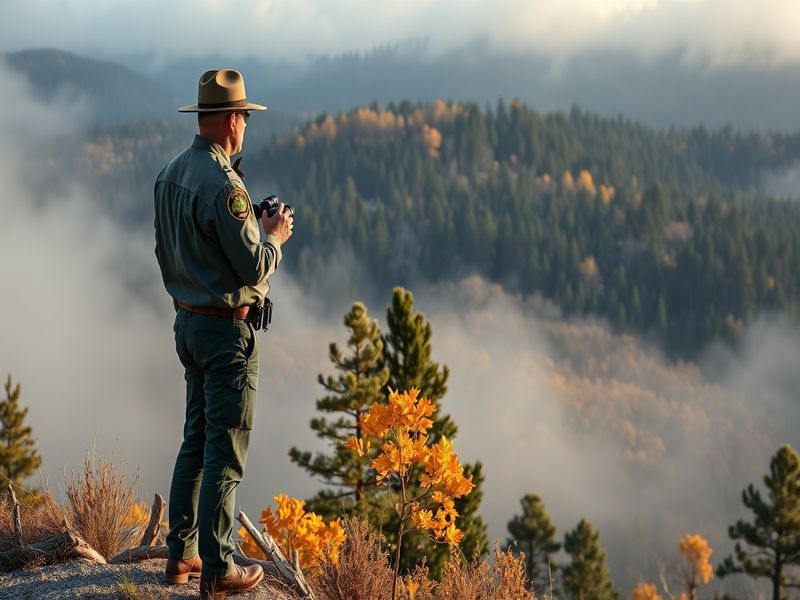
U.S. Forest Service: America’s Wild Lands and Their Future
“`html
The U.S. Forest Service: Guardians of America’s Wild Spaces
The U.S. Forest Service stands as one of the nation’s most vital institutions, managing 193 million acres of public land across 43 states and Puerto Rico. Established in 1905 under President Theodore Roosevelt, the agency has evolved from its origins as a timber conservation unit into a multifaceted steward of America’s forests, grasslands, and watersheds. Its mission—to sustain the health, diversity, and productivity of the nation’s forests and grasslands for present and future generations—remains as critical today as it was over a century ago.
The agency’s work extends far beyond firefighting and logging. It balances ecological preservation with recreational access, scientific research with economic development, and conservation with community engagement. In an era of climate change and increasing environmental pressures, the Forest Service’s role has never been more complex or more necessary. Understanding its structure, challenges, and impact provides insight into how America’s wild spaces are protected—and why that protection matters.
A Brief History: From Conservation to Modern Stewardship
The Forest Service’s origins trace back to the late 19th century, when rampant deforestation and unregulated land use threatened America’s natural resources. The 1891 Forest Reserve Act gave the federal government authority to protect forested lands, but it wasn’t until 1905 that President Roosevelt and Chief Forester Gifford Pinchot formalized the agency under the U.S. Department of Agriculture. Pinchot’s philosophy of “wise use”—balancing resource extraction with long-term sustainability—became the cornerstone of Forest Service policy.
The agency’s early years were marked by aggressive firefighting efforts, reforestation programs, and the construction of roads and trails to improve access. The Civilian Conservation Corps, created during the Great Depression, played a pivotal role in expanding the Forest Service’s infrastructure, planting billions of trees and building thousands of facilities still in use today. By the mid-20th century, the agency had shifted focus toward recreation and conservation, designating wilderness areas and developing campgrounds, ski resorts, and hiking trails that attract millions of visitors annually.
Today, the Forest Service manages lands that serve as critical habitats for wildlife, sources of clean water for millions, and economic engines for rural communities. Its history reflects broader national trends in conservation, from utilitarian resource management to a more holistic approach that values ecological health and public access equally.
Core Responsibilities: What Does the Forest Service Actually Do?
The Forest Service’s mandate is broad, encompassing everything from wildfire management to sustainable timber harvesting. Its responsibilities can be grouped into several key areas:
- Land Management: The agency oversees 154 national forests and 20 grasslands, ensuring that activities like logging, grazing, and mining comply with environmental laws and sustainability standards.
- Wildfire Suppression and Prevention: With wildfires growing more frequent and intense due to climate change, the Forest Service leads federal firefighting efforts, conducts prescribed burns, and invests in fire-resistant infrastructure.
- Recreation and Tourism: National forests draw over 160 million visitors annually, supporting local economies through campgrounds, ski areas, and trail systems. Popular destinations include the White Mountain National Forest in New Hampshire and California’s Angeles National Forest.
- Research and Development: The Forest Service’s research stations conduct studies on climate change, forest ecology, and invasive species, providing data that informs policy decisions nationwide.
- Watershed Protection: Forests are vital to water quality and supply, with over 60% of the nation’s freshwater originating from national forest lands. The agency works to prevent pollution and erosion while ensuring sustainable water use.
These roles often intersect, creating complex challenges. For example, balancing wildfire prevention with habitat conservation requires careful planning, as controlled burns can both reduce fire risks and protect endangered species. Similarly, recreational development must be balanced with preserving the ecological integrity of fragile ecosystems. The Forest Service’s ability to navigate these trade-offs defines its effectiveness as a land manager.
Challenges and Controversies: The Forest Service in the 21st Century
The agency faces a daunting array of challenges, many of which have intensified in recent years. Climate change is perhaps the most pressing, as rising temperatures and prolonged droughts increase the frequency of wildfires, insect outbreaks, and tree die-offs. The Forest Service’s 2023 budget allocated $1.5 billion to wildfire suppression, but experts argue that more funding is needed for prevention and restoration efforts.
Political and public scrutiny also complicate the agency’s work. Timber interests often clash with environmental groups over logging policies, while recreational users and conservationists debate the use of off-road vehicles and grazing rights. The 2020 Great American Outdoors Act, which dedicated $900 million annually to national forest maintenance and restoration, was a step forward, but critics say it doesn’t go far enough to address deferred maintenance projects.
Staffing shortages further strain the agency’s operations. A 2022 Government Accountability Office report found that the Forest Service was understaffed by nearly 2,500 employees, impacting everything from fire response to trail maintenance. Recruitment and retention remain hurdles, particularly in remote regions where living costs are high and job opportunities are limited.
Despite these obstacles, the Forest Service has demonstrated resilience. Innovative programs, such as the Collaborative Forest Landscape Restoration initiative, bring together scientists, landowners, and community groups to develop sustainable management plans. The agency’s response to the 2020 Creek Fire in California, which burned nearly 400,000 acres, showcased its capacity to mobilize quickly and effectively under extreme conditions.
The Broader Implications: Why the Forest Service Matters
The Forest Service’s work extends beyond its immediate responsibilities. Its lands serve as living laboratories for climate science, outdoor education, and sustainable development. For rural communities, national forests are economic lifelines, supporting industries like tourism, timber, and agriculture. For urban populations, they provide a vital connection to nature, improving mental health and fostering environmental stewardship.
The agency’s challenges also mirror broader societal debates about conservation, public land use, and climate adaptation. How the Forest Service navigates these issues will set a precedent for land management nationwide. Its successes could inspire more holistic approaches to environmental stewardship, while its failures might highlight the need for systemic reforms in federal land management.
For those interested in exploring America’s wild spaces firsthand, the Forest Service offers unparalleled opportunities. Whether hiking the Appalachian Trail, skiing in the Rockies, or simply enjoying a picnic in a local national forest, visitors contribute to the agency’s mission. By supporting sustainable recreation and advocating for strong conservation policies, the public can help ensure that these lands remain vibrant for generations to come.
To learn more about outdoor activities and conservation efforts, visit Dave’s Locker Sports for guides on hiking and camping, or explore Dave’s Locker Entertainment for stories about nature-inspired media and culture.
The U.S. Forest Service is more than an agency—it’s a testament to America’s commitment to preserving its wild heritage. Its work reminds us that conservation is not a luxury but a necessity, one that requires collaboration, innovation, and a shared sense of responsibility. As the challenges ahead grow more complex, the Forest Service’s role as a guardian of these lands will only become more indispensable.